Full Article
about Peñafiel
Cradle of Valladolid’s Ribera del Duero; known for its ship-shaped castle and the Plaza del Coso.
Hide article Read full article
A castle that defines the place
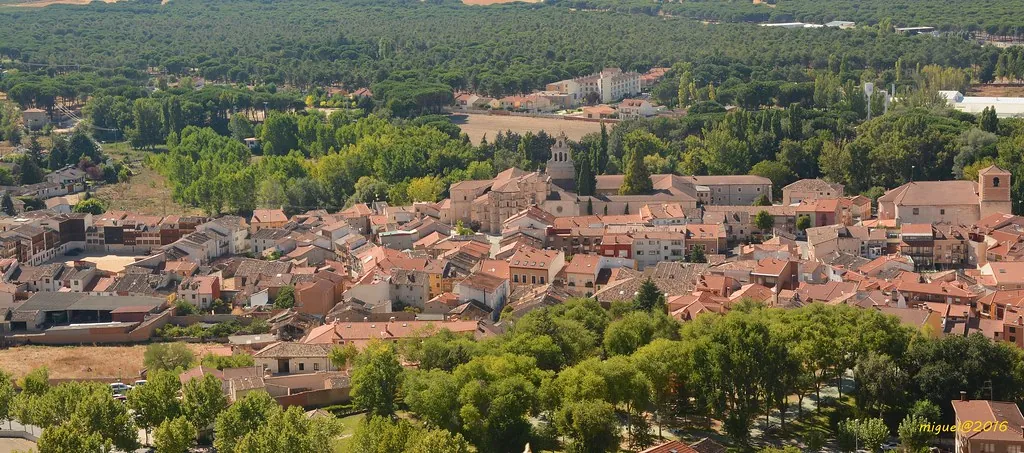
Before reaching Peñafiel, even from the road, the first thing that comes into view is its castle. It stretches along the ridge of a hill like a long, narrow prow. The comparison with a ship is often repeated here, and it fits. For centuries, this town watched over the Duero valley as if it were an open frontier, a place to oversee routes, harvests and goods.
The town sits below, between the river and the vineyard-covered slopes. That relationship between fortress, fertile plain and wine goes a long way towards explaining what Peñafiel is like today.
A landscape shaped by wine
In this part of Valladolid, vineyards are not isolated features. They form part of the wider pattern of the land. The vines cover the sunniest hills, while the Duero maintains a strip of market gardens and trees along the lower ground.
Peñafiel lies within the Ribera del Duero wine region, and wine has shaped the local economy for decades. The landscape, though, tells a longer story. Many plots are still marked by low stone walls. Old vines, twisted and low to the ground, appear in small family plots that exist alongside larger estates.
Beneath many houses in the old quarter are underground cellars dug into the earth. Traditionally, they were used to store wine and keep a stable temperature throughout the year. In some neighbourhoods, they can still be identified by the small ventilation chimneys that emerge between the streets.
Watching over the Duero valley
The walk up to the castle from the centre is not long, though the slope is noticeable. The building occupies the entire ridge, which explains its unusually elongated shape.
The fortress belongs to the military architecture of the Late Middle Ages. It was not designed as a comfortable residence, but as a point of control. From the top, the whole fertile plain and the natural course of the river are visible. Whoever held this hill also controlled movement through the valley.
Inside, the space is austere. Thick walls, wide courtyards and very little decoration. The real reward for the climb is the view. From the ramparts, the scale of the landscape becomes clear: the Duero winding between vineyard plots, and the high plains closing off the horizon.
Plaza del Coso: a square that still works as one
The centre of Peñafiel revolves around the Plaza del Coso. It has an elongated shape and is enclosed by wooden balconies facing inwards. This structure has been maintained for centuries.
During local festivities, sand fills the centre and the square functions as a bullring. Each balcony belongs to a specific home, and many families have kept their place for generations. Outside those days, the space returns to its everyday role: a thoroughfare where children play and neighbours cross from one side of the old town to the other.
The dark wood of the balconies and the irregular structure make it clear that this is not a square built in a single moment. It gradually took shape as houses expanded and closed the space.
San Pablo and Don Juan Manuel
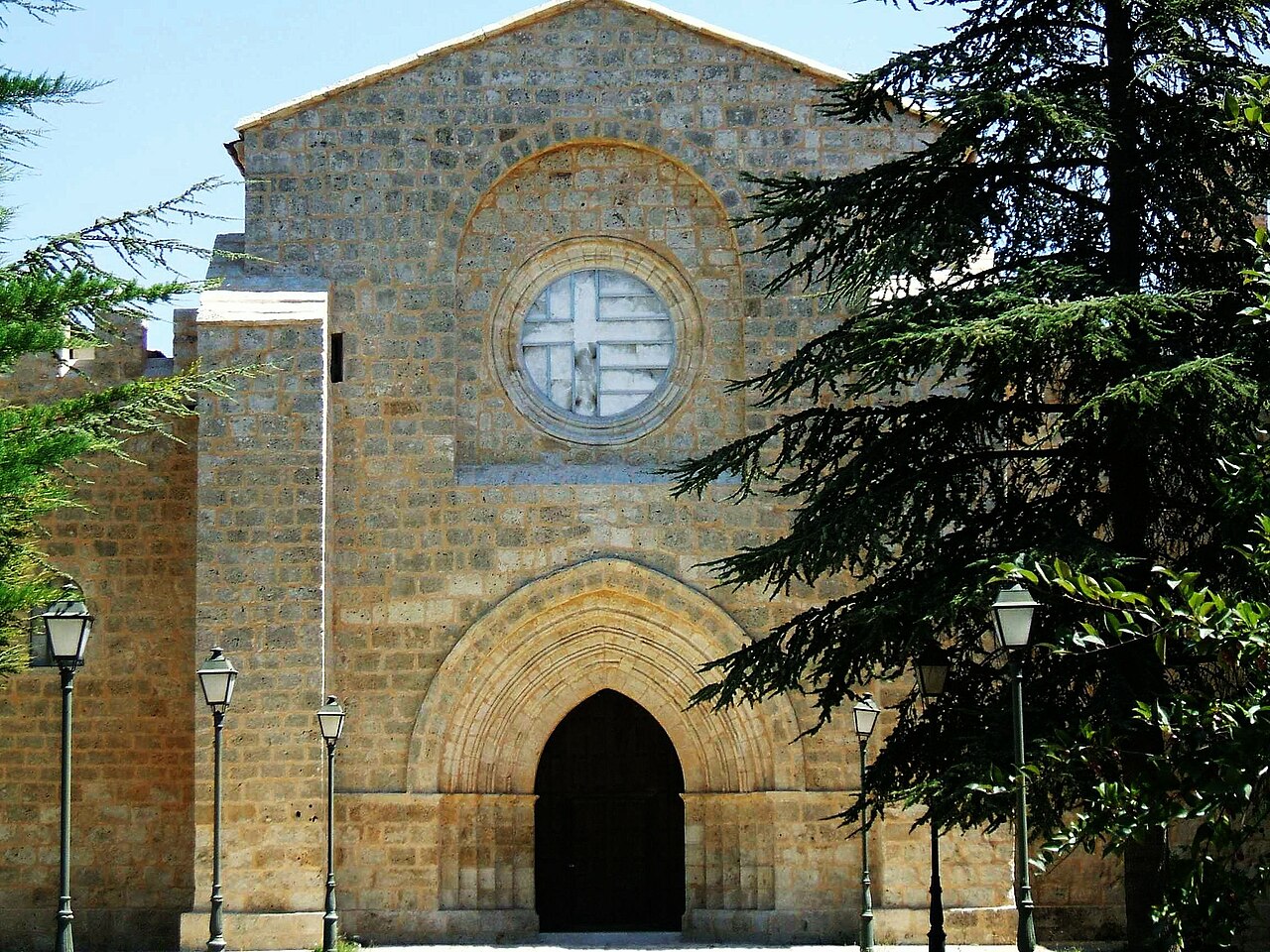
A short distance away stands the former convent of San Pablo. Its origins go back to the Middle Ages and it is linked to Don Juan Manuel, who was lord of the town for a time.
The complex follows a restrained religious style, close to Cistercian models: a single-nave church and a simple cloister. The interest of the site lies less in decoration and more in its cultural role. Tradition places part of the literary work of Don Juan Manuel here, the author of “El Conde Lucanor”, one of the best-known works of medieval Castilian prose.
Stepping inside allows for a slower look at the building. The church maintains a quiet atmosphere, with the cool light that stone often holds across the central Spanish plateau.
Eating in Peñafiel
Local cooking stays closely tied to nearby produce. The dish most often associated with the area is lechazo asado, roast suckling lamb cooked in a wood-fired oven, prepared with little more than water and salt. The key lies in the texture of the skin and the quality of the lamb.
Menus often include stewed pulses, local cured meats and Castilian cheeses aged to a medium or long maturity. There are few modern reinterpretations of these dishes. Tradition carries more weight than innovation, and the recipes remain recognisable.
Wine from Ribera del Duero almost always accompanies the meal. Here, it is more than a drink, it forms part of the identity of the place.
Walking the surroundings
The historic centre of Peñafiel can be explored without difficulty in an afternoon. The walk up to the castle and time spent around Plaza del Coso cover much of the route.
With more time, it is worth heading out along the paths that follow the course of the river or the tracks that cross the surrounding vineyards. These are quiet routes, through open fields and gentle hills, where the agricultural character of the region becomes clearer.
Peñafiel keeps its local life throughout the year. It is not only a weekend destination, and that steady rhythm can be felt in its streets and open spaces.