Full Article
about Pesquera de Duero
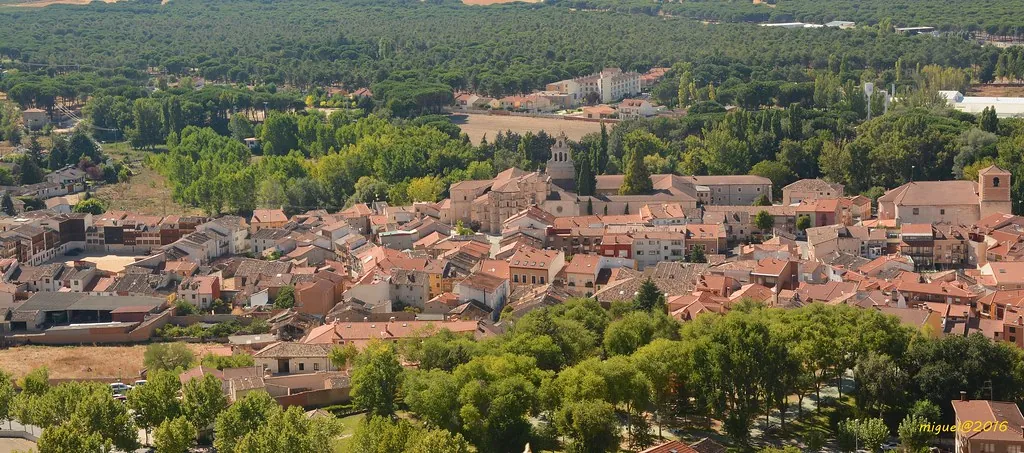
Town with a high concentration of prestigious wineries; noted for its entrance arch and traditional architecture.
Hide article Read full article
At seven in the morning, the frost still clings to the cordons of the vines. The light is thin, a pale wash over the rooftops of muted red tile. From a track down by the river, you can hear the low chug of a tractor starting its day. In Pesquera de Duero, the silence is a tangible thing, broken only by these sounds of work. It holds until the sun climbs high enough to warm the stone of the houses built from what this land provides.
The village follows a curve of the Duero, a line of adobe and stone against slopes stitched with endless rows. Up close, you see the pale, stony soil that defines the Ribera del Duero. The houses have a straightforward, weathered look, shaped by dry summers and winters that cut with a cold, clear edge.
Between the Church and the Cellar
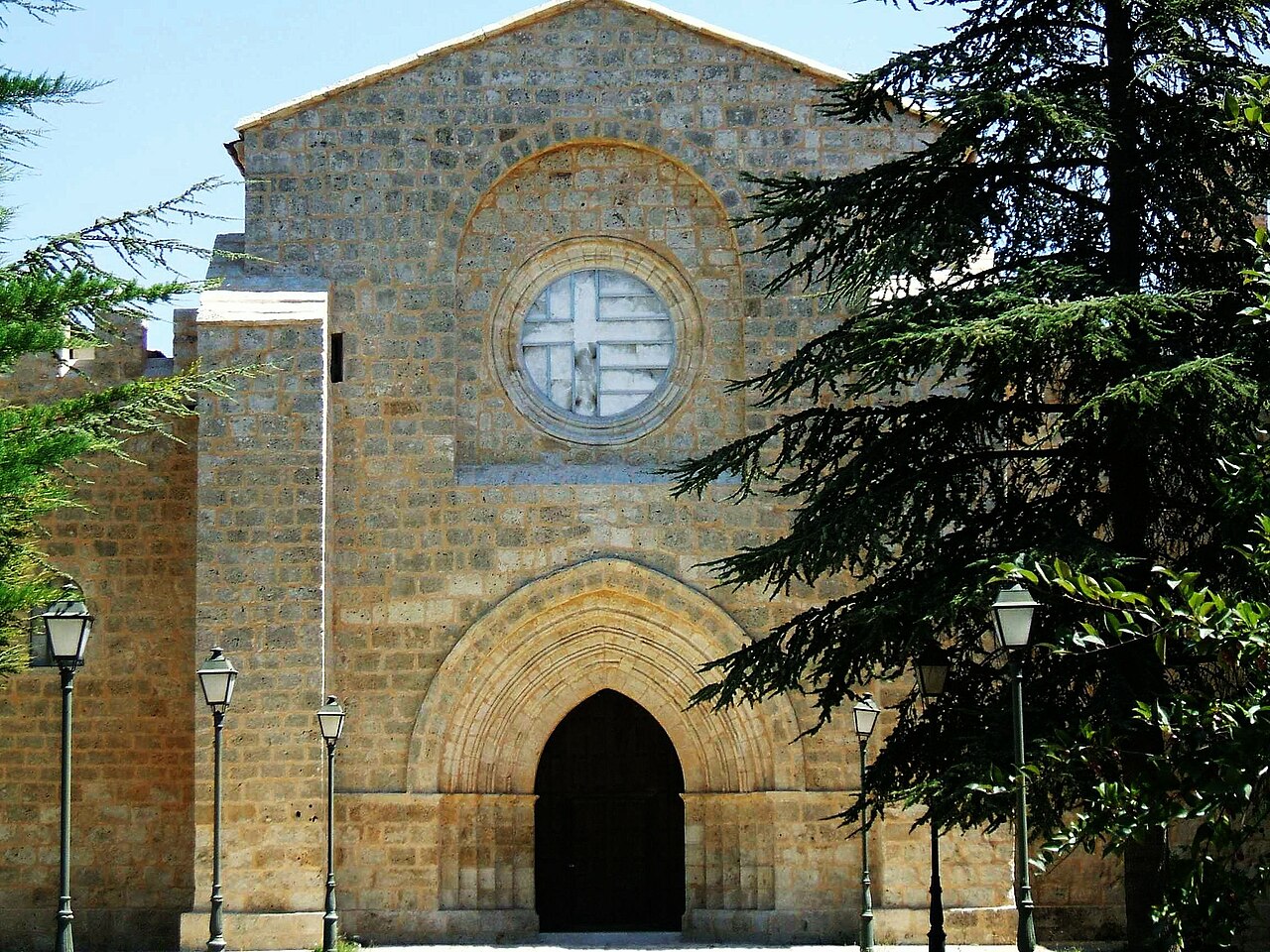
The streets slope gently toward the parish church of San Juan Bautista. Its tower is solid, unadorned. The quiet inside feels cool and dense, a contrast to the open square.
Look to the hillside at the village edge, and you’ll see small wooden doors set directly into the earth. These are the traditional bodegas, cellars carved into the hill for constant temperature. Some are still used. Finding one open often depends on asking at the right moment, on catching someone with time to show you the space where wine was made before electricity. Their chimneys are simple brick vents poking from the grass, the only sign of the rooms below.
A Landscape in Three Parts
The view from the higher lanes explains everything. Below, the Duero moves in a wide, slow bend, its banks fringed with poplars whose leaves chatter in the breeze. The vineyards dominate the middle distance, orderly lines running down to the darker, damp soil near the water.
Above it all lies the páramo, that high, open plateau of Castile. It is a world of dry wind and tough grass, a stark counterpoint to the river’s humidity. This trio—riverbank, vine, and plateau—defines every vista. It changes the quality of the light and alters how far sound carries.
Down by the water, the air is softer. The path is level, easy underfoot. You hear the current working against roots and stone. The walk is gentle, a circuit for an hour when the sun is too high on the vineyards.
The Tracks Through the Vines
Farm tracks leave from every side of the village. They are made for tractors moving between plots, but you can walk them. They lead you into the heart of the vineyards, past parcels with old gnarled vines and younger plantings, to slight rises that offer new angles on the valley.
There are no signs. Carry water. In summer, start early; by eleven, the sun on these open slopes is relentless. A basic sense of direction is useful.
These routes exist for work. Using them gives you a direct feel for the scale and rhythm of viticulture here. The secondary road linking to nearby villages is quiet save for harvest time, its long inclines testing any cyclist against a backdrop of endless sky and ordered vines.
The Scent of Harvest
Life here moves to a viticultural calendar. The shift is most palpable during the vendimia in early autumn. Trailers laden with grapes rumble down lanes meant for cars. Work in the plots begins at dawn. Near certain buildings, a sharp, sweet scent of fermenting must hangs in the air.
Several bodegas in the area organise visits. If you come on a weekend or during harvest, book ahead. Wine here isn’t an abstraction; it’s the reason for winter pruning, spring’s green hope, and autumn’s focused exhaustion.
On Food and Season
The food mirrors this cycle. Lechazo asado, roast suckling lamb from local flocks, is cooked in wood-fired ovens. It comes with morcilla and cured sheep’s cheese. This is cooking born from necessity: robust flavours for cold winters and long days spent outdoors.
A Practical Moment
Come during the vendimia for energy and purpose. Come in late spring for green vines under huge skies. If you seek quiet, aim for a weekday outside of August or local fiesta dates in summer when squares fill briefly before returning to their usual stillness.
The appeal here is not spectacle. It’s found in walking without hurry along a farm track, understanding how village, vineyard, and river exist in a steady relationship shaped by season, stone, and the enduring presence of water moving south.