Full Article
about Piñel de Abajo
Small farming village; known for its church and quiet streets.
Ocultar artículo Leer artículo completo
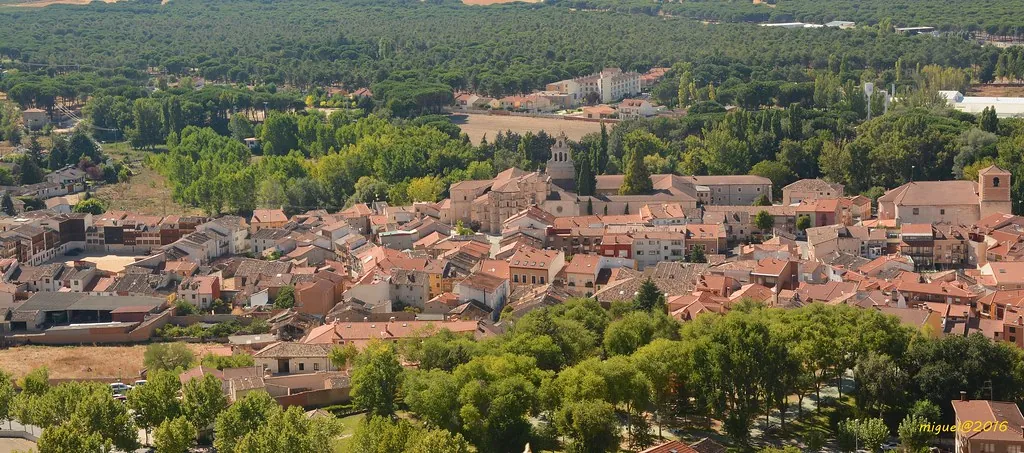
The church bell strikes noon and the only reply is a dog barking somewhere near the plaza. Piñel de Abajo, population 156, sits 790 metres above sea level on Spain’s high central plateau, and silence here is not absence but atmosphere. Wheat stubble stretches to every horizon; the Duero vineyards begin three kilometres west. This is Castile stripped of postcard frills: adobe walls the colour of dry biscuits, timber doors grey with age, and a sky so wide it makes the village feel like a punctuation mark in an endless sentence of land.
Adobe, Wheat and the Memory of Doves
No grand monuments compete for attention. Instead, the village itself is the exhibit. Houses are built from what lay within cart-distance: clay, straw, river stone. Walls bulge slightly, as if tired after centuries of holding up terracotta roofs. Notice the stone thresholds worn into shallow dishes by generations of boots; the iron knockers shaped like stylised hands. Above roof level the odd dovecote still rises – cylindrical, windowless, accessed by internal ladders. Pigeon breeding supplied meat and fertiliser until the 1970s; now the towers stand empty, their tiny entrance holes plugged with rag or old cork.
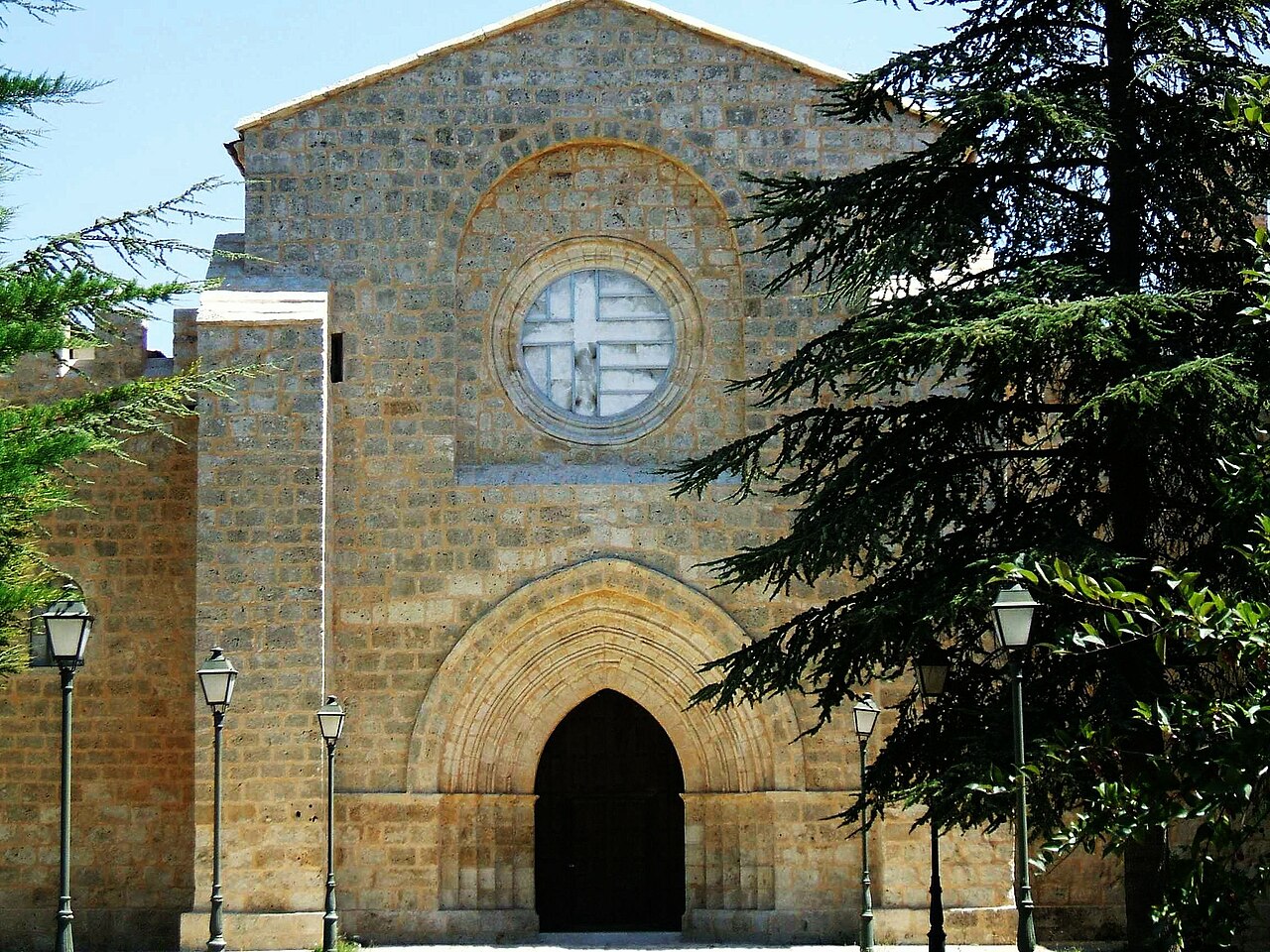
The 16th-century parish church of San Pedro keeps the same sobriety. A single nave, a modest baroque retable gilded only where candle-light once touched it, and a bell tower that doubles as the village time-piece. Step inside at dusk when the sandstone glows copper and you will hear, quite clearly, swallows shifting in the rafters.
Walk the two main streets slowly. Traffic volume is so low that locals leave their cars unlocked, keys on the seat. At Calle Real 14 the house façade still carries a painted stamp: “Año 1892 – labrador” – farmer. The lettering is fading, but the occupation has not changed. Out beyond the last streetlamp the wheat tracks run ruler-straight between square plots, each hedge trimmed like a military haircut. In April the fields are emerald; by late July they have bleached to parchment.
What You Can (and Can’t) Do After the Bells Stop
There is no tourist office, no gift shop, no Saturday market. Activities are self-generated. A 7-kilometre loop south-east follows agricultural service roads past three abandoned dovecotes and ends at the hamlet of Piñel de Arriba, where the only public building is a locked chapel. Early mornings bring stone curlews and the occasional little bustard; take binoculars and expect to explain your presence to curious farmers.
Serious walkers can link into the GR-14 long-distance path 12 km away at Peñafiel, but from the village itself routes rarely exceed 10 km. Mountain bikes work on the hard farm tracks; hire is available in Valladolid (50 minutes by car) not locally. There is no river swimming: the nearest stretch of the Duero is used for irrigation sluices and the current is dangerous.
The Ribera del Duero wine corridor begins 15 minutes west by car. Bodegas such as Protos or Vega Sicilia accept visits by appointment; tastings run €15–€35 depending on how many bottles they open. If you want to stay stone-cold sober, drive instead to the Castro de la Muela, a Celt-Iberian hillfort twenty minutes south – free entry, 360-degree views, and usually empty.
Eating: Expect to Share a Table with Tractor Drivers
Piñel contains one bar, Casa Galín, open irregularly. Phone ahead (+34 983 681 015) or listen for voices at 14:00 sharp. The menu is short: roast suckling lamb (cordero lechal), local sheep’s-milk cheese, and house red from a co-operative in nearby Pesquera. Prices hover around €14 for a three-course menú del día; wine is included, poured from a plain bottle with no label. Vegetarians get omelette or salad; vegans should bring supplies.
For choice, drive 10 km to Peñafiel. There the medieval plaza hosts half a dozen restaurants; Mesón del Duque does reliable lamb and a decent vegetarian judiones bean stew (mains €16–€22). If you are self-catering, the Dia supermarket in Peñafiel shuts on Sunday afternoons – stock up before 13:30.
Accommodation inside the village is limited to two village houses rented by the week: Casa de la Plaza (sleeps 4, €90 per night, minimum three nights) and an Airbnb studio in a restored barn (€65, no Wi-Fi). Both places leave a welcome basket of eggs, bread and a bottle of tinto. Anything grander – swimming pool, minibars, 24-hour reception – lies in the hotel bodegas outside Peñafiel, where doubles start at €120 and advance booking is essential during harvest (late September).
Timing the Weather, the Wheat and the People
April–mid-June delivers 20 °C afternoons, green wheat heads waving like a restless audience, and night temperatures cool enough to want a jacket. Mid-July to August is fierce: 35 °C by noon, cicadas screaming, almost everything shut between 14:00 and 17:00. September softens again; the grape harvest brings rumbling trailers and the sweet, sharp smell of crushed skins drifting on the breeze. Winter is not dramatic – rarely below –5 °C – but the wind across the Meseta feels colder than the thermometer admits; many houses rely on wood stoves and hot-water bottles rather than central heating.
Festivals follow the agricultural clock. The fiestas patronales around 15 August pull back families who left for Madrid or Valladolid; expect brass bands, outdoor dancing and one night of fireworks that bounce off the wheat silos. San Mateo on 21 September marks the grape blessing; most activity happens in Peñafiel but tractors parade through Piñel spraying confetti rather than pesticide for once. If you crave solemnity, the Vía Crucis at dusk on Good Friday is carried out in silence save for the creaking of the wooden cross – genuinely moving, no photography allowed.
Getting Here, Getting Out
No train reaches the village. From the UK, fly to Madrid, then drive north on the A-6 and A-11 for two hours (189 km, €24 tolls). Alternatively, Renfe runs regular trains Madrid–Valladolid (1 h 5 min), followed by a 40-minute taxi (€55) or a patchy regional bus to Peñafiel plus another taxi (€18) for the last stretch. Public transport on Sundays is close to non-existent; plan to rent a car at Valladolid if you are without wheels.
Roads are good but narrow; grain lorries hog the centre line. Sat-nav loses signal in the final 5 km – download offline maps. Petrol is sold only by staffed pumps in Peñafiel and closes at 22:00; after that you are stranded until morning.
Worth It – If You Pack the Right Expectations
Piñel de Abajo will not entertain you. It offers instead a place where mobile coverage drops to one flickering bar, where the night sky still outshines streetlights, and where the smell of newly threshed wheat can stop conversation. Come prepared – bring books, walking boots, a car full of groceries – and the village works its slow spell. Arrive expecting cafés, craft stalls or guided tours and you will last half a day before fleeing to the nearest city. In short, Piñel gives you the Meseta raw: take it or leave it – the bells will keep ringing either way.