Full Article
about Quintanilla de Arriba
Duero-side village with renowned wineries; noted for its church and vineyard landscape.
Hide article Read full article
Morning light over the Campo de Peñafiel
Early in the day, when the sun just begins to rise above the low hills of the Campo de Peñafiel, Quintanilla de Arriba sounds like open countryside. A tractor starts somewhere in the distance. A dog barks behind a wall. The air carries the dry scent of earth and straw. In that calm moment, the essence of tourism here starts to make sense. It is not tied to a single landmark, but to a blend of silence, wide horizons and agricultural life that still sets the pace of the village.
Just over 160 people live here. The houses cluster on a slight rise, surrounded by fields that change character with the seasons. Spring brings a soft green. By July the tones turn harsh yellow. After the harvest, the land settles into deep brown.
A village set on a gentle rise
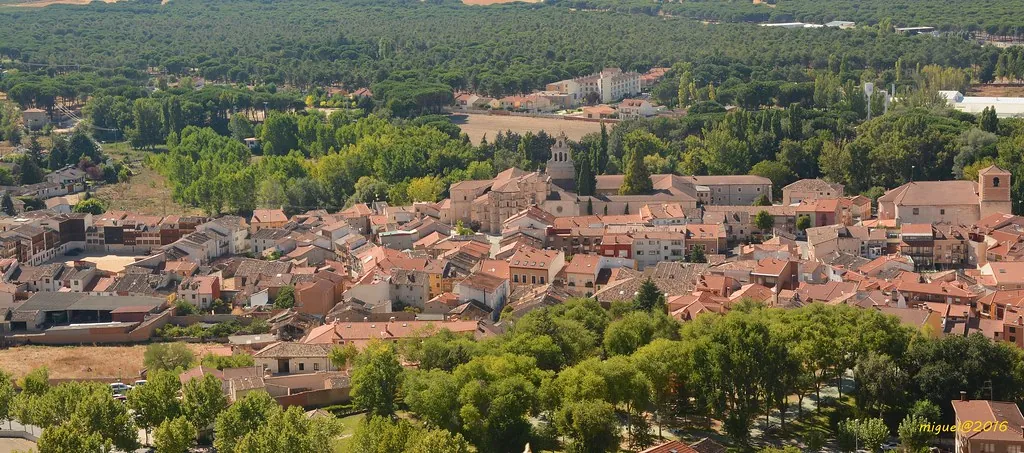
The name “de Arriba” is no coincidence. The settlement stands on a small elevation from which the soft relief of this part of Valladolid can be seen. There are no mountains, no sharp breaks in the terrain. Only long undulations and open fields stretching outwards.
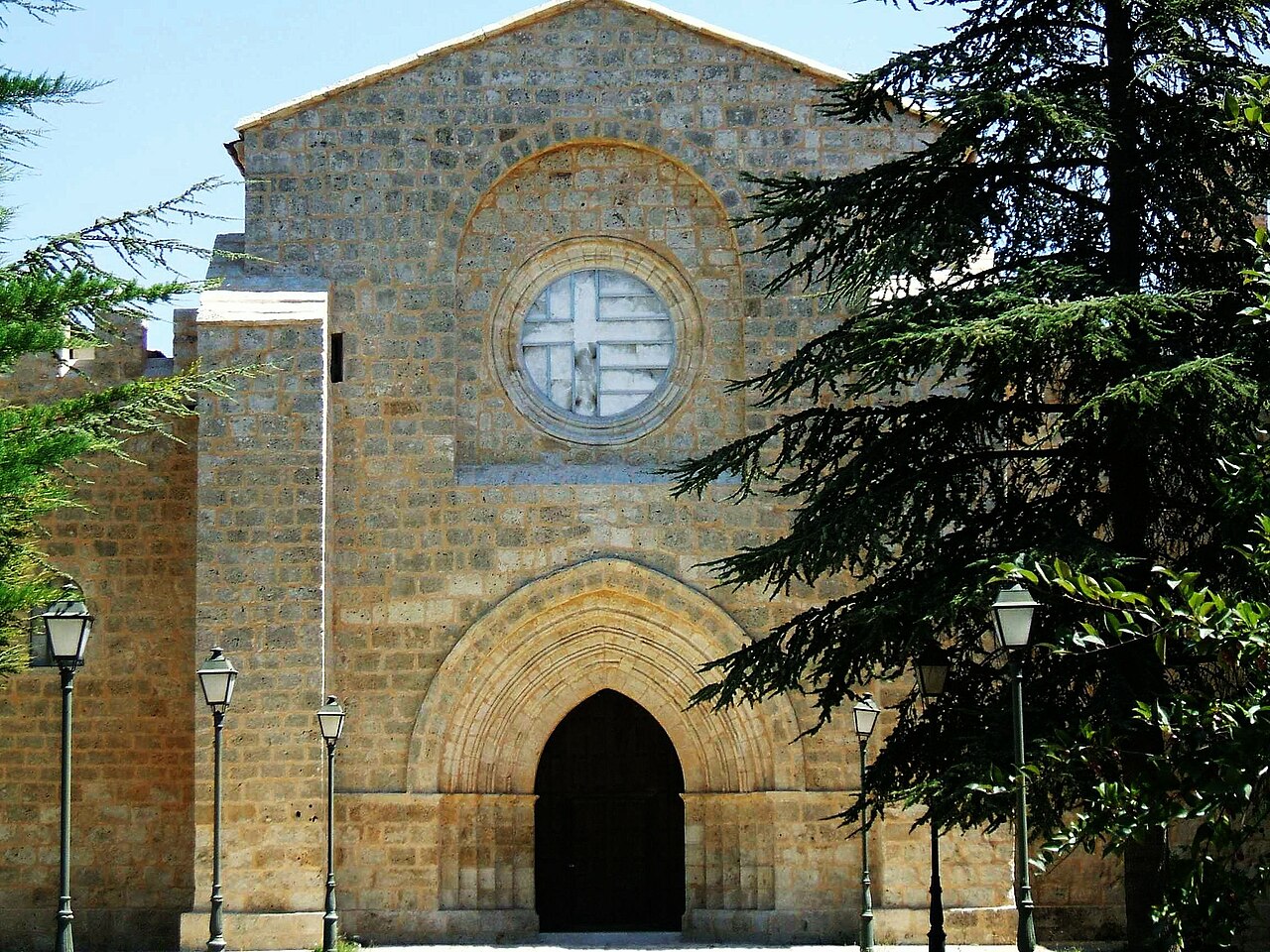
At the centre stands the parish church, its tower rising above the low roofs. The stone of the entrance contrasts with the adobe walls of many nearby houses. It is not a monumental building, yet it feels like the natural reference point of the village. From several streets, the tower keeps reappearing, steady and familiar, like a quiet compass.
This sense of orientation shapes how the place is experienced. There is no need for a map. The layout reveals itself gradually, with the church acting as a constant anchor among the narrow streets.
Adobe walls and worn gateways
Walking through Quintanilla de Arriba means slowing down. The streets are narrow, and some still preserve stretches of uneven cobblestones. Facades show layers of whitewash, repaired adobe and wooden gates that have weathered many winters.
Behind some of those gates lie small vegetable plots. Now and then there is the sound of water falling into a basin, or the solid thud of a door closing against its frame. These are small details, but they say a great deal about daily life here.
Time matters more than distance. The village can be covered quickly, yet the interest lies in what might be missed at a faster pace. A wide chimney, a stone bench set against a wall, a vine that casts shade over the pavement in summer. Each element adds to a quiet continuity between past and present.
There is no effort to present or frame these features for visitors. They simply exist as part of the everyday setting, and that is precisely what gives the place its character.
Paths through cereal fields
A short walk beyond the built-up area leads into a network of agricultural tracks. These dirt paths are used by locals to reach their plots. They are not signposted for tourism, but they are easy enough to follow.
The landscape opens up completely. Partridges dart across the ground. A harrier may glide low overhead. When the cereal is still green, the wind moves through it with a steady, rustling sound. On clear days, the view stretches far into the distance without interruption.
There is very little shade. In summer, the midday sun falls hard on the land, making those central hours less suitable for walking. Spring and autumn tend to offer more comfortable conditions for exploring these paths and taking in the surroundings at a slower pace.
What stands out is the sense of scale. Even though the terrain is gentle, the openness creates a feeling of space that is constant. The horizon is always present, and the village quickly recedes behind you.
Underground wine cellars
In the surrounding area, old underground wine cellars appear, dug into small slopes or mounds of compact earth. For years, they were used to store wine made at home from grapes grown in nearby plots.
Many of these cellars are now closed or show signs of abandonment. Even so, their entrances remain visible. Sometimes it is just a low door and a small օդ-like vent. Together they hint at a time when nearly every family produced its own wine.
This tradition is still part of the wider Duero Valley. In nearby towns such as Peñafiel or Valbuena del Duero, winemaking continues to play an important role. Quintanilla de Arriba sits within that broader landscape, even if its own cellars are quieter today.
These structures are easy to overlook at first glance. They blend into the terrain, almost disappearing into the earth. Once noticed, they add another layer to the understanding of the village and its surroundings.
When the village shifts pace
August brings a change. Many residents who live elsewhere return, and the streets become more animated, especially during local festivities. Voices carry further, doors open more often, and the sense of stillness softens.
For the rest of the year, life is much quieter. Mornings in spring or autumn show Quintanilla de Arriba much as it is for most of the calendar. There is little movement, and the rhythm is set by the land rather than by visitors.
Parking is simple, with space available along wider streets. Within minutes, it is possible to move from the edge of the village into its centre, or to leave the last houses behind and step onto the surrounding tracks.
There are no major attractions, no marked routes to follow. That absence shapes the experience. The place reveals itself more clearly without a fixed plan, simply by walking, noticing and listening. The wind moving across the fields, the distant sound of a tractor working the land, the steady presence of the church tower above the rooftops.
Quintanilla de Arriba does not ask for attention. It offers a setting where everyday rural life continues at its own pace, and where the landscape, the buildings and the small details all carry equal weight.