Full Article
about Rábano
Town in the Duratón valley; noted for its natural setting and parish church.
Ocultar artículo Leer artículo completo
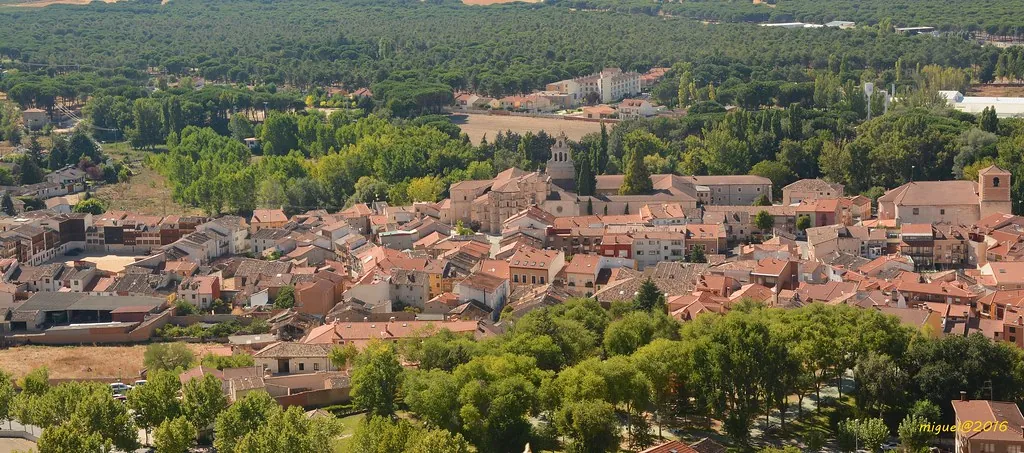
The church bell strikes noon, yet only a handful of shutters open. In Rábano, siesta stretches well past the conventional hour, and nobody's rushing to correct it. This hamlet of 160 souls sits 740 metres above sea level on the northern edge of Spain's central plateau, where the Duero valley begins its gentle roll towards Portugal. The air carries the dry snap of cereal fields and, when the wind shifts, a faint tannic note from vineyards that stripe the red-earth horizon.
Adobe walls the colour of toasted almonds line streets barely two cars wide. Timber doors hang on wrought-iron hinges forged in the village smithy before it closed in 1978; many still bear the original carpenters' marks—initials chiselled into the grain so workmen could claim their wages. Above them, terracotta roof tiles curl like old parchment, lichen recording decades of Castilian summers that regularly touch 35 °C and winters that plunge to –8 °C. The only new-build in sight is the 1990s brick bungalow on the approach road, universally referred to as la casa del madrileño, a gentle reminder that second-home money has largely bypassed Rábano.
A Landscape That Forgives No One
Step beyond the last stone house and the meseta swallows you whole. Wheat stubble scratches at ankles; furrows run ruler-straight to a horizon so flat it feels cartographic. There is no shade bar the occasional holm oak, and the sun reflects off calcium-rich soil with the glare of a mirror. Bring water—lots of it—because the 6 km circular track to the abandoned threshing floor climbs 120 metres of steady incline that feels steeper under that white light. Cyclists should budget for punchy headwinds that can gust to 40 km/h without warning; the reward is a 360-degree view across two provinces, Valladolid and Zamora, with the distant blur of Peñafiel castle floating like a stone ship.
Spring arrives late: by April the verges explode with purple viper's bugloss and the wheat glows emerald against ox-blood soil. Autumn is the photographers' window, when stubble fields turn bronze and the low sun paints long shadows behind the stone crosses that mark medieval boundary lines. Summer walking is best attempted at dawn; by 11 a.m. the heat shimmers and lizards retreat into wall cracks. Winter brings razor-sharp skies and the scent of burning grape prunings, but paths turn to claggy mud after rain—waterproof boots essential.
Wine, Lamb and the Politics of the Tapa
Rábano has no restaurant, only a bar that opens when the owner feels like it (usually Friday to Sunday, 10:00–14:00 and 18:00–22:00). Order a caña and you receive a saucer of local chorizo sliced so thick it curls like a rose; the price is still €1.50, unchanged since 2019. For anything more substantial, drive ten minutes to Peñaranda de Duero where Asador Palacio serves lechazo—milk-fed lamb roasted in a wood-fired oven at 220 °C for exactly 45 minutes. A quarter portion feeds two hungry walkers and costs €24; house crianza from the neighbouring Ribera del Duero cooperative adds another €3.50 a glass.
The village's own wine is made in family bodegas, underground caves hacked into clay banks during the 19th-century phylloxera boom. Knock politely at number 23 Calle Real and Don Julián may haul up a metal trapdoor to reveal a 12-metre tunnel lined with 400-litre tinajas. He sells unlabelled tinto at €2 a litre; bring your own bottle and expect a discourse on rainfall that can stretch to half an hour. Quality varies—some vintages taste like liquid velvet, others resemble sharp blackberry vinegar—but the purchase is as much about conversation as consumption.
When the Village Comes Back to Life
August turns the calendar upside down. Former residents return from Madrid, Barcelona, even Swindon, and the population quintuples overnight. The fiesta programme is printed on fluorescent A4 and taped to every lamppost: Saturday evening mass followed by a paella for 300 cooked in a pan two metres wide; Sunday morning encierro (no bulls, just two excitable heifers herded through barriers of hay bales) and midnight fireworks launched from the disused grain silo. Visitors are welcome but beds are scarce—book the three-room guest house on Plaza de España at least two months ahead (€45 B&B, shared bathroom, no Wi-Fi).
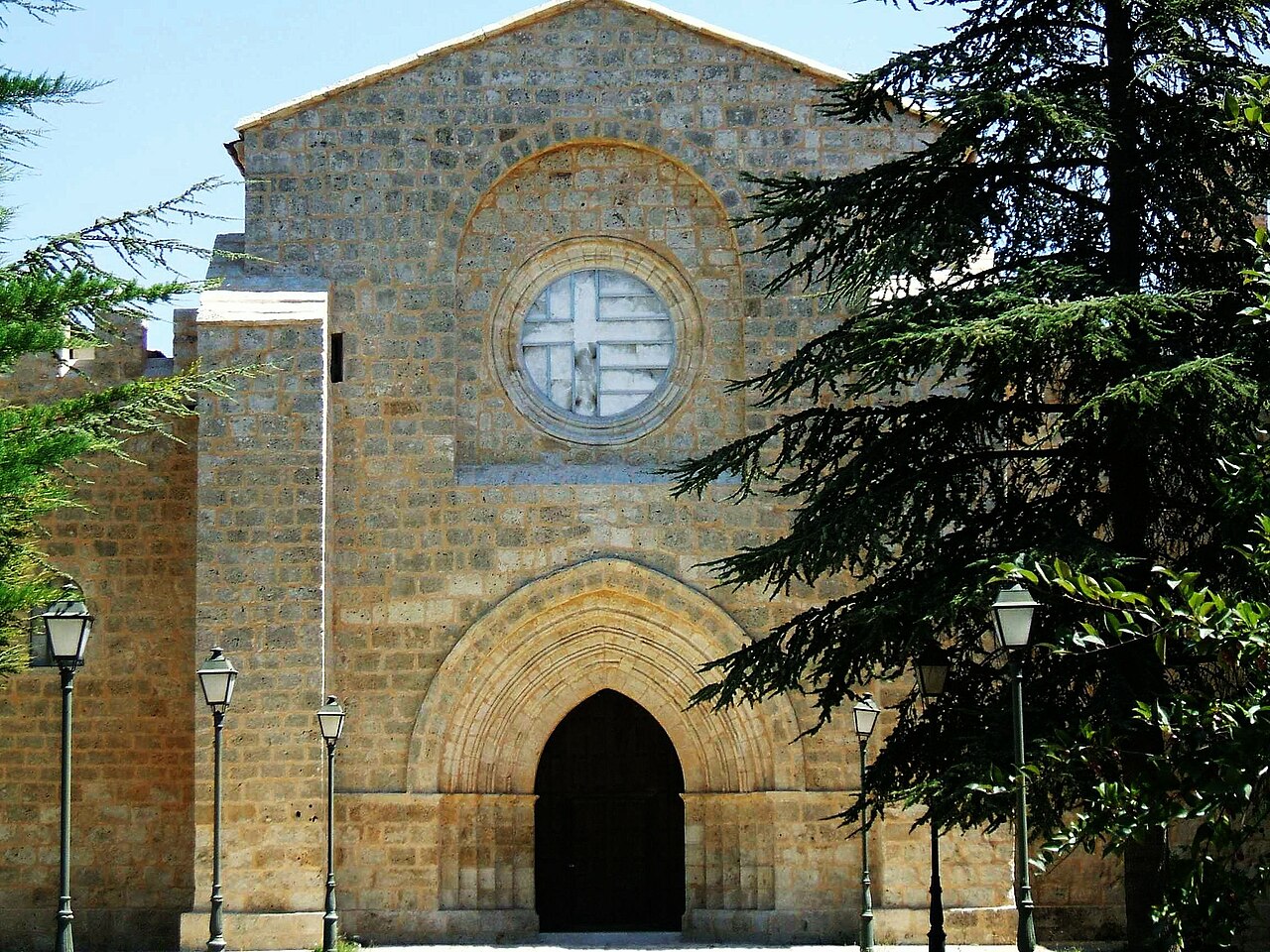
Outside fiesta week, silence reasserts itself. The village shop closed in 2012; the nearest petrol pump is 18 km away in Alaejos. Mobile coverage is patchy—Vodafone picks up one bar if you stand on the church steps, stretch, and don't mind the elderly señoras giggling behind their lace curtains. This is not a destination for tick-list tourism; the single heritage panel lists the 16th-century Church of San Miguel, its tower cracked by lightning in 1936 and never fully repaired. Step inside to find a faded fresco of St Christopher whose face was scratched out during the Civil War; the caretaker keeps the key next to the pan loaf in her shopping bag.
Getting There, Getting Out
Rábano lies 150 km north-west of Madrid, 40 minutes beyond Valladolid on the A-62. The final 12 km weave through wheat plains so hypnotic it's easy to miss the turning. Car is essential—there are two buses a week (Tuesday and Friday) that leave Peñafiel at 13:15, reach Rábano at 14:03, and return at 05:55 next morning, an hour that favours locals with hospital appointments more than casual visitors. Hire cars from Valladolid airport start at €35 a day; fill the tank before you set off because motorway services thin out west of the city.
Stay longer than a day and the plateau works its strange alchemy. Sunrise paints the adobe gold; swifts screech around the bell tower; somewhere a radio crackles with the weekly livestock prices. You begin to understand why the village shrugs at guidebooks—Rábano offers no spectacle, only continuity. When the church clock loses three minutes every week and nobody adjusts it, time itself becomes a local product, ripened slowly like the wine in Don Julián's cave. Take a bottle home, uncork it months later, and the meseta's dry wind is suddenly in the room with you.