Full Article
about San Llorente
A village on the moor overlooking the valley, known for its church and quiet.
Hide article Read full article
A village you pass through
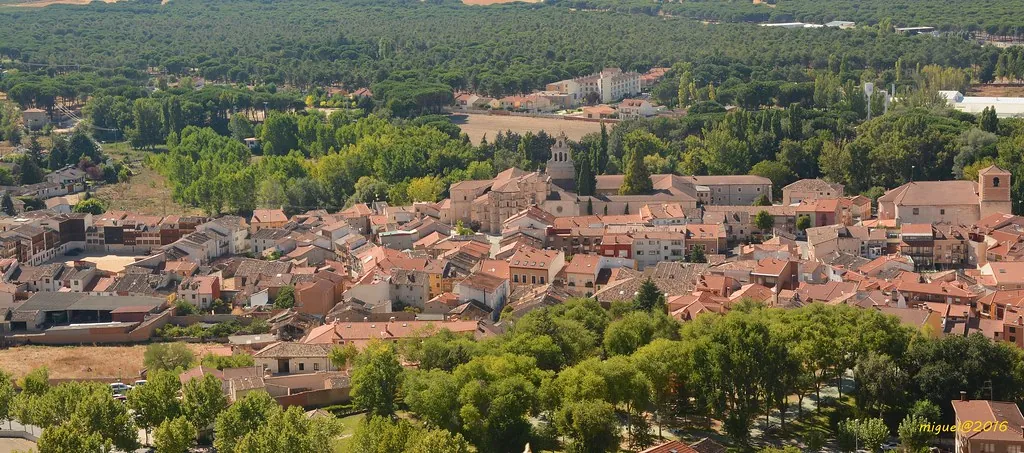
Tourism in San Llorente is straightforward: park, walk around, and move on. The village sits about 15 kilometres from Peñafiel, in the area known as the Campo de Peñafiel. Fewer than a hundred people live here. There are only a handful of streets, and the houses are built from adobe and stone, with a sober, practical feel. In winter, the wind makes itself felt.
A car is almost essential. At the entrance there is usually space to leave it along the sides of the road or on unused plots. There is no expectation of tourist signage or services. The centre can be seen in about an hour.
The outline of San Pedro
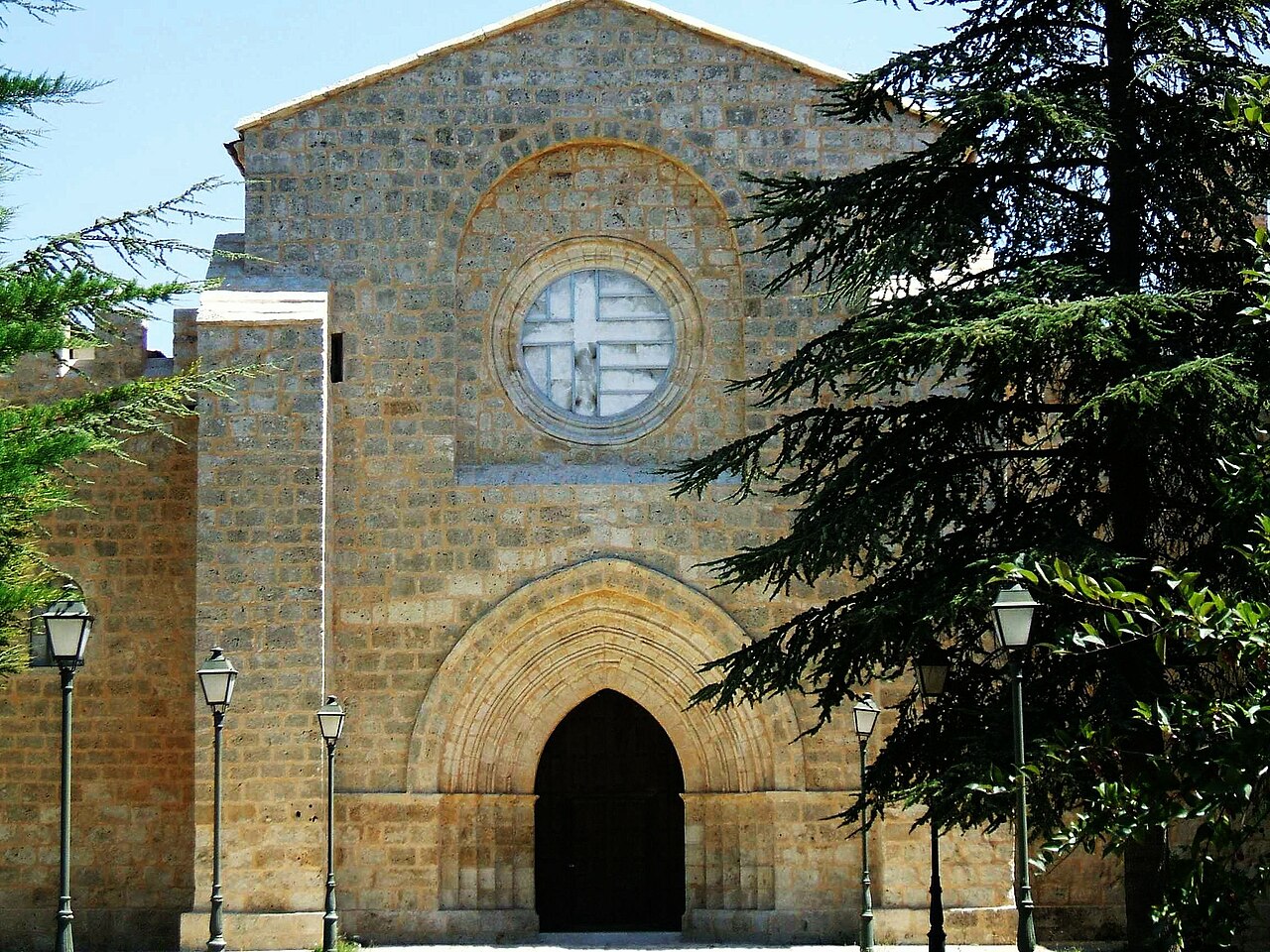
The church of San Pedro dominates the village skyline. It is probably from the 16th century. Its tower can be seen from the tracks that approach through the surrounding farmland, acting as a point of reference across the flat plateau. The building is not large or heavily decorated, but it anchors the view as you draw closer.
From there, the layout is easy to follow. The main street is Calle Mayor. This is where the oldest houses appear, with baked brick, thick walls and small windows. There are also corrals and agricultural buildings still in use. Everything points to the same way of life: cereal crops and sheep. That rhythm has shaped the place for generations.
Open land and changing seasons
The surroundings offer little visual cover. This is open plateau country, with long fields and gentle rises on the horizon. The landscape shifts with the seasons. In spring, the cereal crops change the colour of the fields. In summer, yellow tones take over. Autumn brings more movement, with hunters and people searching for mushrooms in the nearby pinewoods.
For those interested in birdwatching, there are higher points near the edge of the village. With some patience, griffon vultures and buzzards can be spotted. At times, small groups of great bustards appear across the open land.
San Llorente does not depend on visitors. Most people arrive from Peñafiel or Quintanilla de Arriba, take a short walk, and continue to other stops in the area.
Tracks across farmland
The agricultural tracks around the village can be used for walking or cycling. There are no major gradients. These are simple paths between cereal plots, some beet fields and relatively recent vineyards. Signposting is irregular. Some tracks end at private land, so it is worth checking a map before setting out.
In winter, the landscape becomes harsher. Frost, wind and a wide, open sky define the days. Anyone looking for cultural activity or a busy atmosphere will not find it here.
Food is not something to plan within the village. The usual option is to head to Peñafiel or Aranda de Duero. Services in San Llorente are very limited, so it helps to have plans in place before arriving.
Quiet nights and local rhythm
At night, the sky is clear when conditions allow. There is very little artificial light. Street lighting fades quickly once outside the centre, so a torch is useful if walking along the tracks after dark.
Local festivities are usually held around mid-August. There are processions, music from the area and gatherings among neighbours. It is a local celebration that briefly changes the rhythm, but outside those days, life continues at the same steady pace.
When it works best
Spring and early autumn are the most comfortable times for walking along the tracks. Summer heat can be intense on the plateau, and there is little shade. Winter has its own atmosphere, though it comes with cold temperatures, short days and a strong sense of quiet.
San Llorente is quickly seen. For those already travelling through the Campo de Peñafiel, it works as a short stop that helps explain the landscape once the main road fades away. Park, walk for a while, and carry on. Life here moves slowly and makes no effort to present itself otherwise.