Full Article
about Torre de Peñafiel
Wine-growing village near Peñafiel; noted for its church and vineyard landscape.
Ocultar artículo Leer artículo completo
Up Where the Tractor Noise Carries
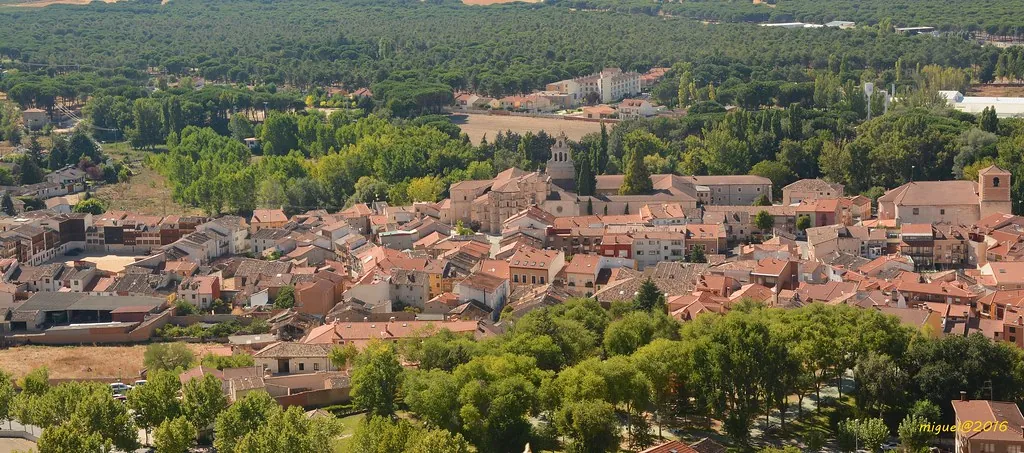
Morning frost lingers longer up here. Even in April the thermometer outside the single grocery shop reads 4 °C while Valladolid’s valley cafés are already wiping tables in the sun. Torre de Peñafiel sits at 789 m on the northern lip of Spain’s central plateau, high enough for the air to taste thin and for the wind to smell of cereal stalks and distant sheep. Forty-eight residents remain, plus one priest who doubles as custodian of the tiny brick tower-convent that gives the village its name. No coach parties, no souvenir stand, just the echo of your own footsteps on packed earth.
The village is not “hidden” (it sits 3 km off the A-11, the main link between Madrid and Burgos), but the slip road is so abruptly signed that most British motorists bound for Ribera del Duero tastings simply overshoot. Sat-navs politely recalculate while passengers scroll Instagram posts of Peñafiel’s cliff-top castle, unaware that the agricultural grid they are bypassing is still worked by families whose surnames appear on 17th-century baptism rolls inside the church.
Mudéjar Brickwork and a Bell that Might Not Be Answered
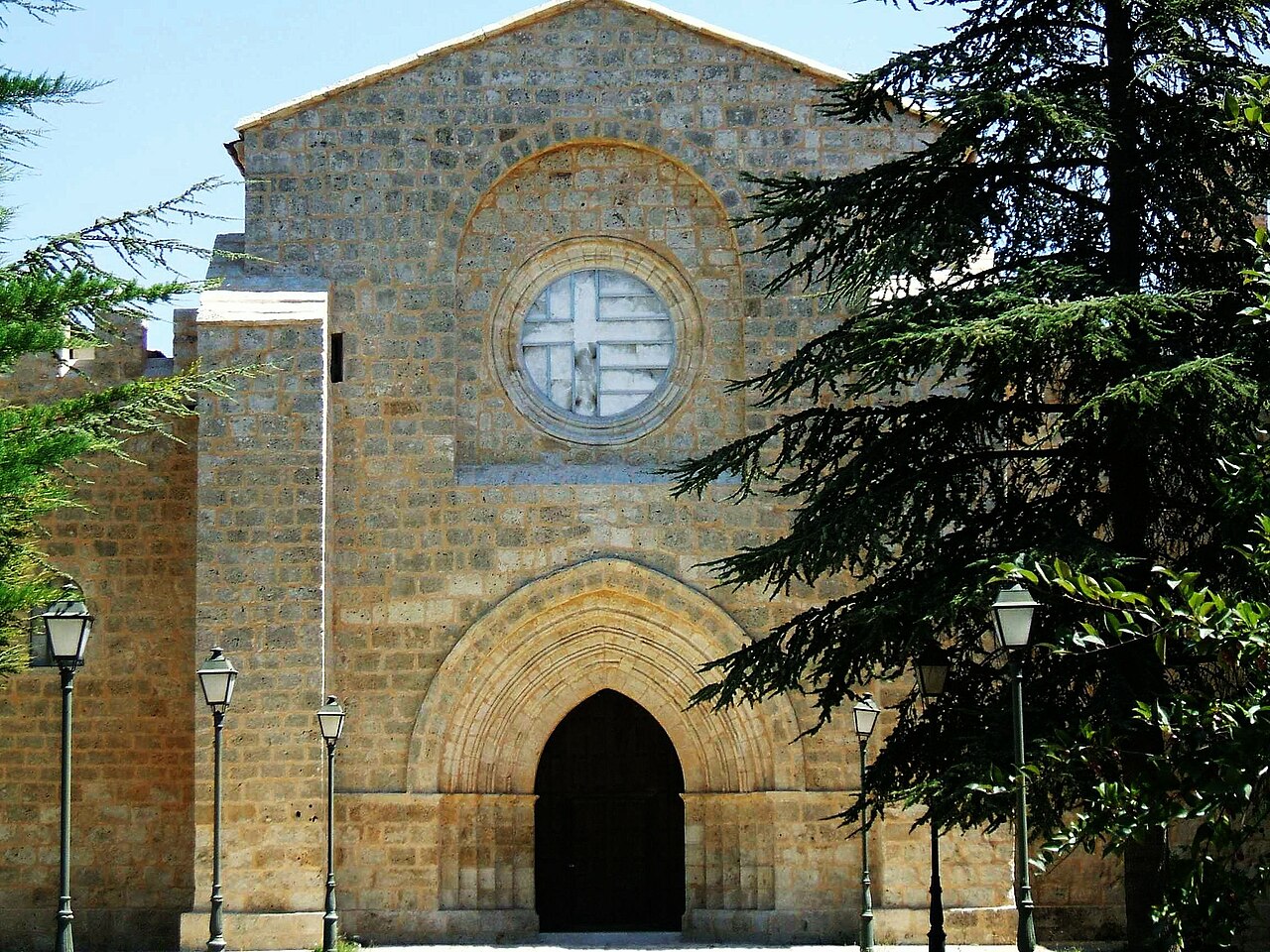
The Torre de los Padres Pasión—often mis-labelled “of Penafiel” on UK blogs—is not round, not especially tall, and has nothing to do with fortifications. What you see is a 15th-century Mudéjar rectangle of reddish brick wedged between two later wings, the whole lot looking, as one Yorkshire visitor wrote, “like a cheese toastie stood on edge.” The door is kept locked; ring the convent bell and wait. If Father Jesús is free he’ll appear with a giant key and a warning: “Inside is dark; mind the step.” Entry is free, though the wooden box by the altar hopes for a euro. Bring a phone torch; the only illumination is a single 40-watt bulb swinging above three carved tombs whose lettering has been rubbed smooth by centuries of wheat-dusty fingers.
Allow twenty minutes. The reward is not spectacle but silence—exactly the sort of acoustic vacuum that never exists in Segovia or Salamanca. When the door thumps shut behind you the outside world (vineyard appointments, motorway tailbacks, Brexit news alerts) simply vanishes.
A Walk That Resets the Compass
From the church porch a farm track strikes east across rolling durum-wheat fields towards the even smaller hamlet of Bocos de Duero, 5 km away. The path is un-signposted but obvious: two ruts, a median of poppies, and the occasional concrete post stamped “1968 Franco”. Gradient is negligible; boots are optional in dry weather. Halfway along, the castle of Peñafiel appears on its limestone ridge, the profile more aircraft-carrier than fairy-tale—useful confirmation you have not got irretrievably lost among the barley.
Spring brings calandra larks, in August you share the track only with a cloud of dust and the distant rasp of a combine, while October turns every vineyard row into a different shade of rust. Winter is sharp: night temperatures drop to –8 °C and the mud ruts freeze hard enough to twist an ankle. Snow is rare but possible; carry water anyway—there are no fountains, and the single bar in Torre keeps erratic hours.
Between Roast Lamb and Tinto from the Barrel
Torre itself has no restaurant, but a five-minute drive (or 45-minute riverside cycle) returns you to Peñafiel proper, where mesones cluster around the Plaza del Coso. Lechazo—milk-fed lamb roasted in a wood-fired clay horno—divides British opinion: some relish the pink, almost pork-like flesh; others recoil at the price (€24–28 per quarter). A safer half-way house is “lechazo al estilo antiguo”: the same cut finished until edges crisp, closer to Sunday British lamb. Vegetarians survive on grilled piquillo peppers drizzled with local Romesco, though you will still pay the meat surcharge that Castilian menus assume everyone wants.
Wine is unavoidable in a town that styles itself “capital of the Golden Mile”. House Ribera del Duero starts at €2.80 a glass, usually the current vintage of Bodegas Protos, whose English-language tour finishes with a sweet “muy oscuro” poured over 70 % cacao chocolate—an easy crowd-pleaser for northern palates. Booking online saves €3 but removes the spontaneity that makes a village day feel unscripted.
Timing: When the Wind Drops and the Castle Closes
Peñafiel’s fortress shuts at 18:00 October–March, 20:00 April–September. Last tickets are sold 45 min earlier; turn up late and you’ll share the battlements only with swifts. Combine sensibly: tower first (opens 10:30), castle second, late lunch, winery at 16:00, back in Valladolid for supper—no motorway driving after dark, when wild boar wander.
Avoid August weekends unless you enjoy sharing a single street with 2,000 Spanish day-trippers and a roaming brass band. Mid-week in May or late September you may get the entire wheat walk to yourself, plus restaurant staff who have time to explain why the local cheese tastes of thyme (the sheep graze fallow vineyards).
The Honest Exit
Torre de Peñafiel will never make anyone’s “top ten” list. It offers no gift shop, no postcard, and on some days no open loo. What it does provide—at precisely the moment you stop expecting anything—is a reminder of how quiet rural Europe can still be. Drive away slowly; the road crests a rise and the village shrinks to a church outline and a single cypress. Five kilometres on, the first winery billboard flashes and the signal bars leap back to life. Normal service, and the twenty-first century, resume.