Full Article
about Torrescárcela
A village on the plateau, known for its church and the Humilladero chapel.
Hide article Read full article
A village that moves at its own pace
Some places feel like switching off your phone and suddenly noticing the silence. At first it feels unusual. Then it settles in, and the idea of turning the noise back on loses its appeal. That is the mood around tourism in Torrescárcela, a small village in the Campo de Peñafiel where sound never disappears completely, but stays in the background: a tractor somewhere in the distance, a door closing, wind passing through the cereal fields.
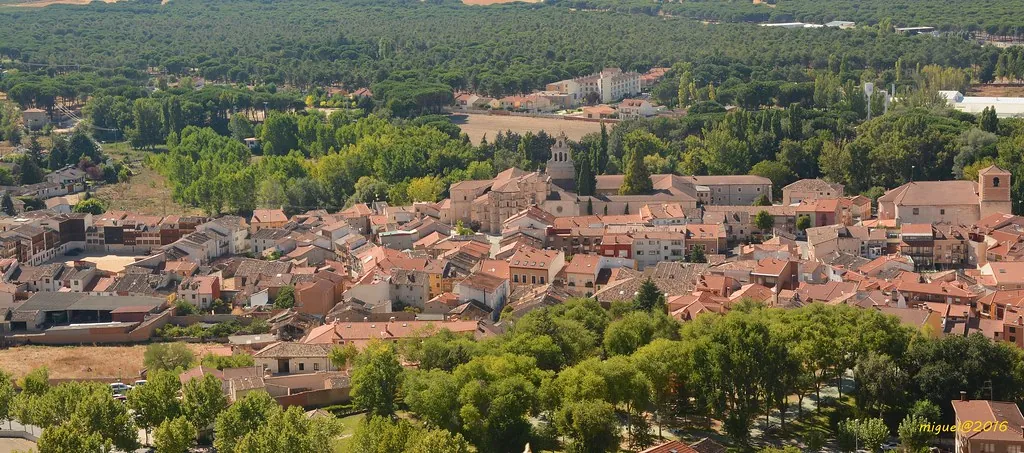
Around 160 people live here, and it shows straight away. It has the feel of a village bar mid-morning where everyone recognises everyone else. Torrescárcela is built to that scale. Adobe and brick houses line short streets, with open countryside stretching out in every direction. The colours shift with the seasons. Spring brings green, summer turns everything a strong yellow, and colder months soften the tones.
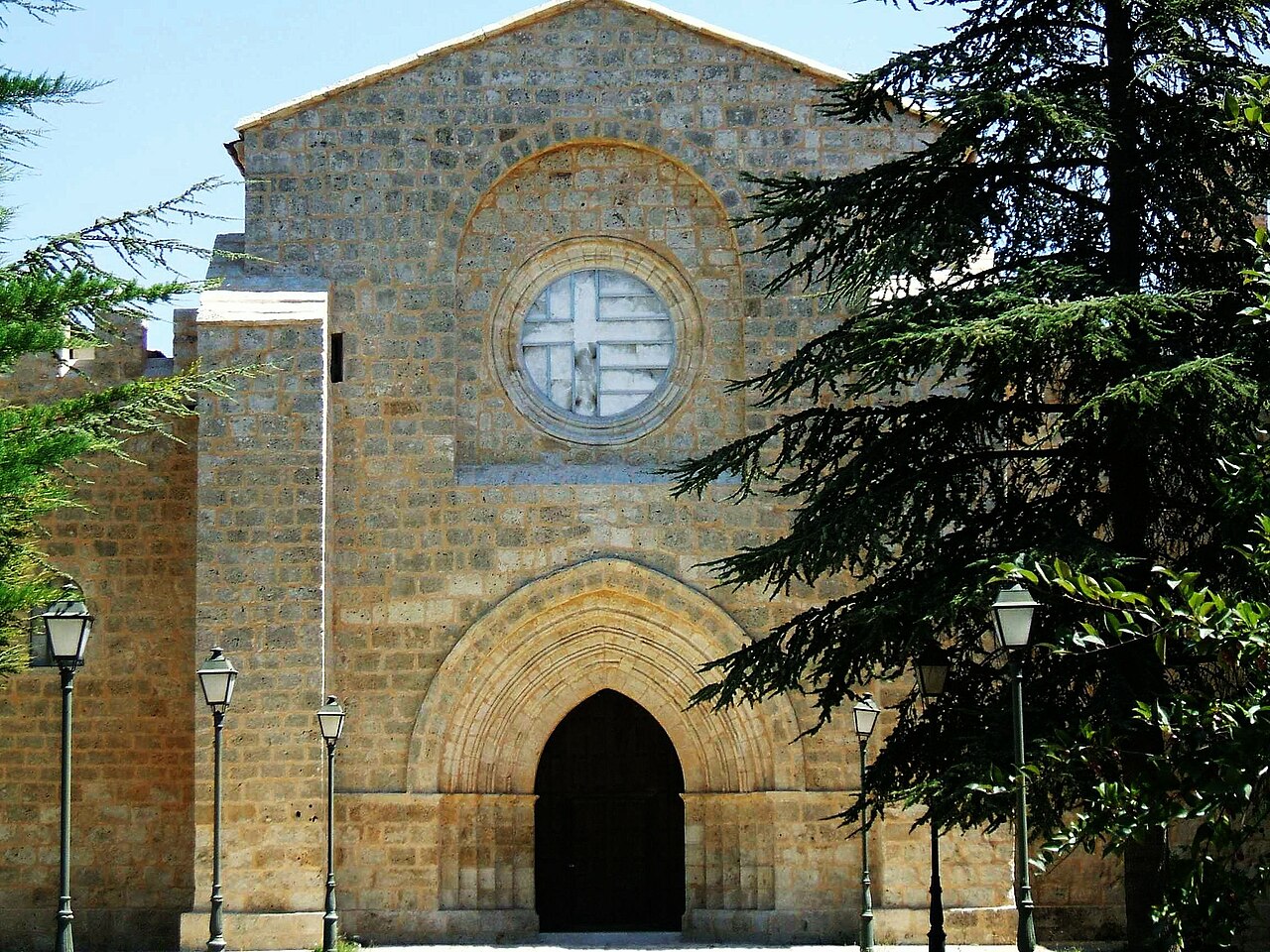
The church of San Andrés stands quietly at the centre of it all. It has been there for generations, with plain stone and simple lines. This is not a grand or imposing building. It resembles an old tool that has kept working over time, never drawing much attention but always doing its job.
Streets shaped by the weather
A walk through Torrescárcela makes its practical design clear. Thick walls help regulate temperature. Inner courtyards offer shelter. Some houses include covered corridors. This is architecture built with the climate in mind, closer to a reliable winter coat than a decorative statement.
There are also hints of underground cellars in some homes. This is common in the area. Temperatures remain more stable below ground, something that matters in Castilla where summers are hot and winters are cold.
The streets themselves are simple to navigate. Getting lost is unlikely. Instead, they invite slow wandering. Within ten or fifteen minutes, it is easy to get your bearings, much like arriving at a friend’s house and quickly knowing where everything is.
The open landscape of the Campo de Peñafiel
Beyond the village lies open countryside in its purest form. Fields of cereal stretch across the land, crossed by agricultural tracks and dotted with occasional structures once used for storing tools or offering shade. The view extends a long way. At times it can resemble looking out over the sea, except this is a sea of land, with a clear and uninterrupted horizon.
Walking here is straightforward. These are rural paths that have been used for generations, with no technical difficulty. Conditions change depending on the weather. Rain can leave mud behind, and some sections have loose stones, but the routes themselves remain uncomplicated.
For those interested in photography, early hours of the day tend to work well. The low light gives texture to the fields, making them look almost like a folded fabric. Later in the day, a similar effect appears with warmer tones.
Food in the surrounding area
The local cuisine follows traditional Castilian cooking. Dishes centre on ingredients such as legumes, lechal lamb and cured cheese. These are meals that fill the table and naturally lead into a slow afternoon.
Torrescárcela itself has limited options for sitting down to eat, which is typical for a village of this size. Most visitors head to nearby towns where there is more activity. The journeys are short by car, often quicker than crossing a large city.
Close to Peñafiel
A few kilometres away lies Peñafiel, where the atmosphere changes noticeably. There are more people, more movement, and a stronger sense of activity. The castle dominates the hill above the town, overlooking the valley as it has done for centuries.
This is also part of the Ribera del Duero wine region. Some wineries open their doors to visitors and show how wine is produced, adding another layer to a trip through the Campo de Peñafiel.
Seasons and local life
Festivities in Torrescárcela tend to take place in summer, especially in August. That is when people who live elsewhere during the year return. The atmosphere shifts during those days. Streets become busier, music fills the air, and gatherings in the main square last longer.
Spring brings a different kind of energy. April and May cover the surrounding fields in green. Summer follows with dry heat, the kind that encourages a search for shade after lunch. Autumn tones everything down, with more earthy colours and a quieter feel.
Winter is serious here. The sky is clear, the cold is sharp on the hands, and the pace of life slows even further. It can feel similar to a Sunday afternoon in a small village: little noise, few rushes, and time moving just a bit more slowly.
Torrescárcela does not try to impress. It simply continues at its own rhythm, and that is often exactly what draws people to this part of Valladolid.