Full Article
about Valdearcos de la Vega
Small village in the Cuco valley; known for its church and quiet surroundings
Hide article Read full article
Midday stillness in the Campo de Peñafiel
At midday, when the sun falls directly over the fields, the track leading out of Valdearcos de la Vega towards the crops becomes almost silent. The only sounds are the dry rustle of wind moving through the cereal and, now and then, the distant engine of a tractor. Adobe façades reflect a pale, dusty light, and many wooden doors still show layers of old paint lifted by years of winter cold.
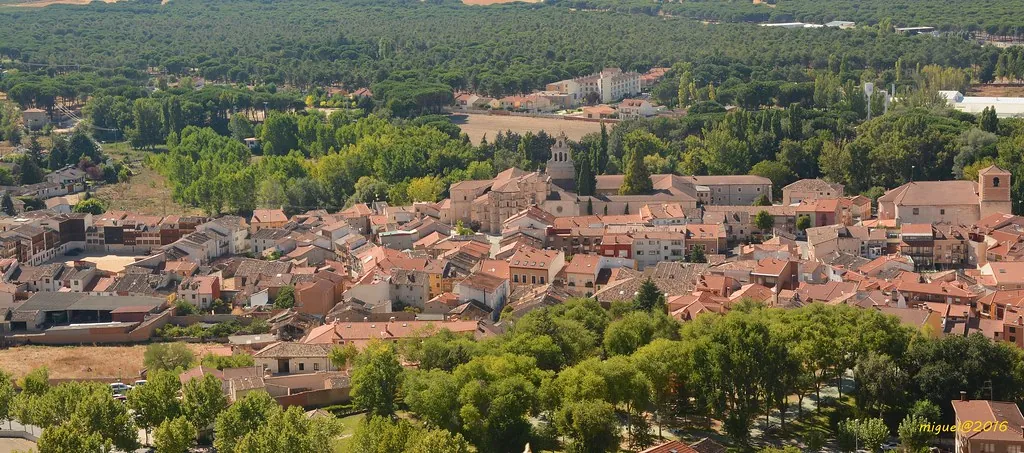
Valdearcos de la Vega sits in the Campo de Peñafiel area, within the province of Valladolid, and has just over fifty inhabitants. At around 770 metres above sea level, the village keeps a strong agricultural character. Houses are built from rammed earth, with curved clay roof tiles and short streets where animal pens once stood alongside the main living spaces. Large gates are still common, originally designed to store tools or shelter livestock.
The layout feels practical and close to the land. Nothing here distracts from the sense that daily life has long been shaped by farming and the seasons.
The church and the small square
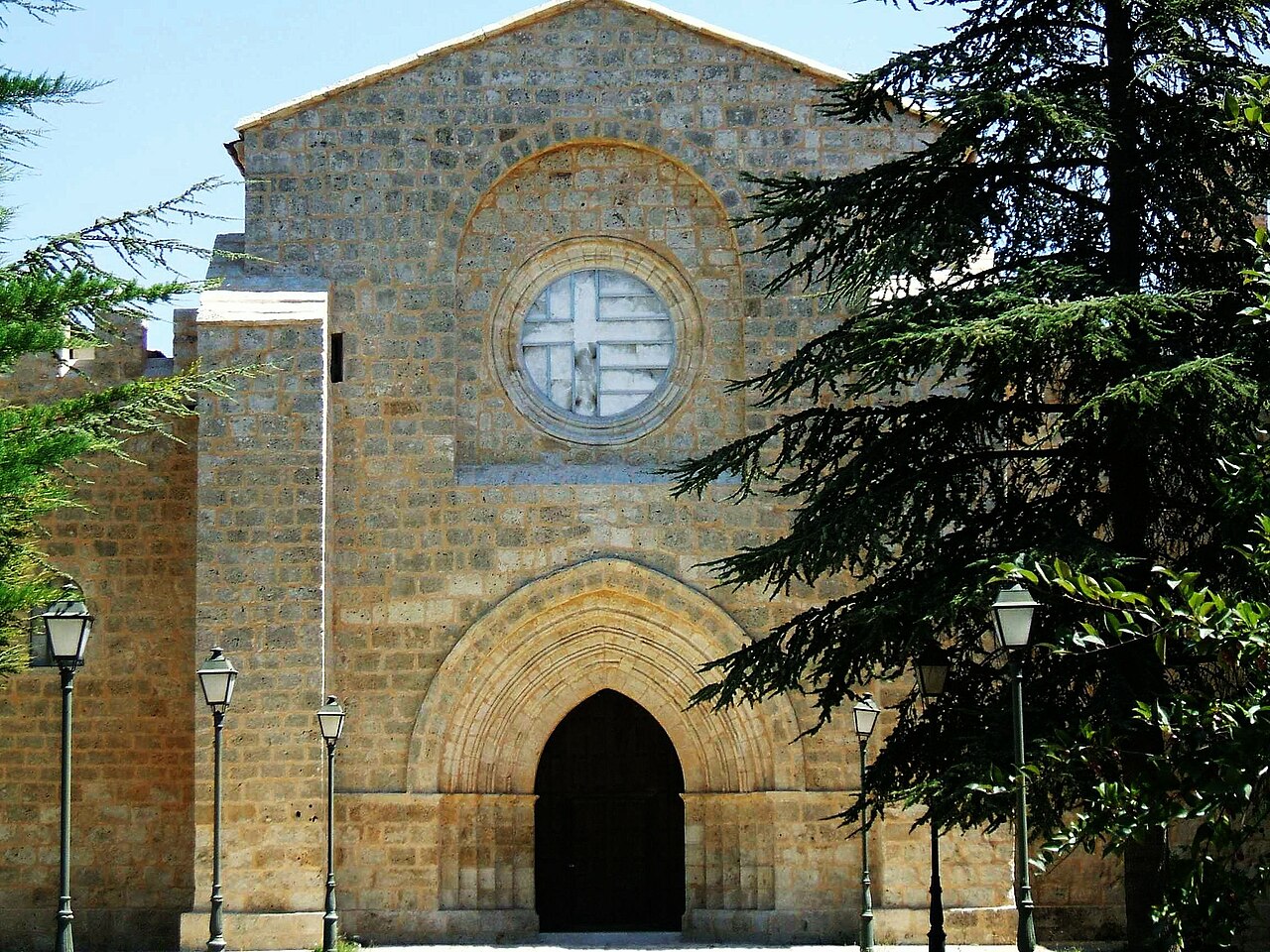
At the centre stands the Iglesia de la Asunción, overlooking a simple square where, at certain times of day, the only sounds are a shutter knocking or a dog barking from a side street. The building combines pale stone with sections of brick and is generally dated to around the 16th century, which is typical for villages in this part of Spain.
It is not a large church, but it defines the heart of Valdearcos de la Vega. When there is a celebration, this is where people gather, and the square briefly becomes the focal point of village life.
Several narrow streets lead away from here. Some houses are carefully maintained, while others show the expected wear of time. Cracks run through adobe walls, iron window grilles have aged in place, and doors creak when opened. In more than one courtyard, traces of former animal enclosures or storage sheds can still be seen.
The mix of upkeep and ageing materials reflects a place that continues to be used, rather than restored for appearance. It feels lived in, even when it is quiet.
Walking out into open countryside
A short walk is enough to leave the village behind and enter the wide, open landscape of the Campo de Peñafiel. The agricultural tracks are broad and easy to follow, making them suitable for walking or cycling without difficulty.
The character of the land changes with the seasons. In summer, once the cereal has been cut, the air carries a dry scent of straw and dust. In spring, the fields turn greener, and the wind moves through the crops in a way that resembles water rippling across a surface.
With a bit of patience, it is possible to spot steppe birds. This part of Valladolid still supports species such as bustards, little bustards and larks, although they do not always come close. Moving slowly helps, and in summer it is best to avoid the middle of the day. The sun can be intense and there is very little shade in the open fields.
The scale of the landscape stands out. There are few interruptions, and the horizon stretches without much variation, shaped more by light and weather than by built features.
Short trips around Valdearcos de la Vega
Many people who pass through Valdearcos de la Vega do so as a quiet stop while exploring the surrounding area. A few kilometres away lies Peñafiel, known for its elongated castle set along the ridge of a hill. Inside, there is a museum dedicated to wine, offering context for the Ribera del Duero, one of Spain’s well-known wine-producing regions.
From Peñafiel, the wider landscape becomes easier to understand, especially the role that vineyards have played here over time.
Other small villages are scattered along the Duero valley nearby. Some have wine cellars dug into the hillsides, while others retain remains of medieval walls. Distances between these places are short, though getting around generally requires a car, as public transport in this area is limited.
The region feels connected by geography and history rather than by busy routes or large towns. Each settlement shares elements of the same rural setting, even if details differ from one to another.
Food in the surrounding area
Valdearcos de la Vega itself does not have bars or restaurants, which is common in villages of this size. Eating means heading to a nearby town.
Across this part of Valladolid, traditional dishes remain closely tied to rural life and the colder climate of the plateau. Lechazo asado, roast lamb cooked in a wood-fired oven, is one of the best-known. Alongside it, sopas de ajo, a garlic soup often associated with simple, hearty cooking, and morcilla, a type of blood sausage, continue to feature in local cuisine.
These are dishes shaped by practicality and seasonality, rooted in what was available and necessary during long winters.
When the village changes
Valdearcos de la Vega shifts noticeably throughout the year. In winter, it can feel especially quiet, with few houses open during the week. The stillness becomes more pronounced, and daily activity is minimal.
In summer, there is more movement as families return to homes they keep in the village. Streets that might seem empty at other times begin to fill, and the rhythm of the place becomes more visible.
For walking in the surrounding countryside, spring and early autumn are usually the most comfortable periods. During July and August, the heat at midday can be strong enough to shape the day’s routine. Early starts or late afternoon walks become the more practical options, when the light softens and the wind once again moves across the fields.
Even then, the defining feature remains the same: a landscape and a village that move at their own pace, closely tied to the land that surrounds them.