Full Article
about Aldehuela de Yeltes
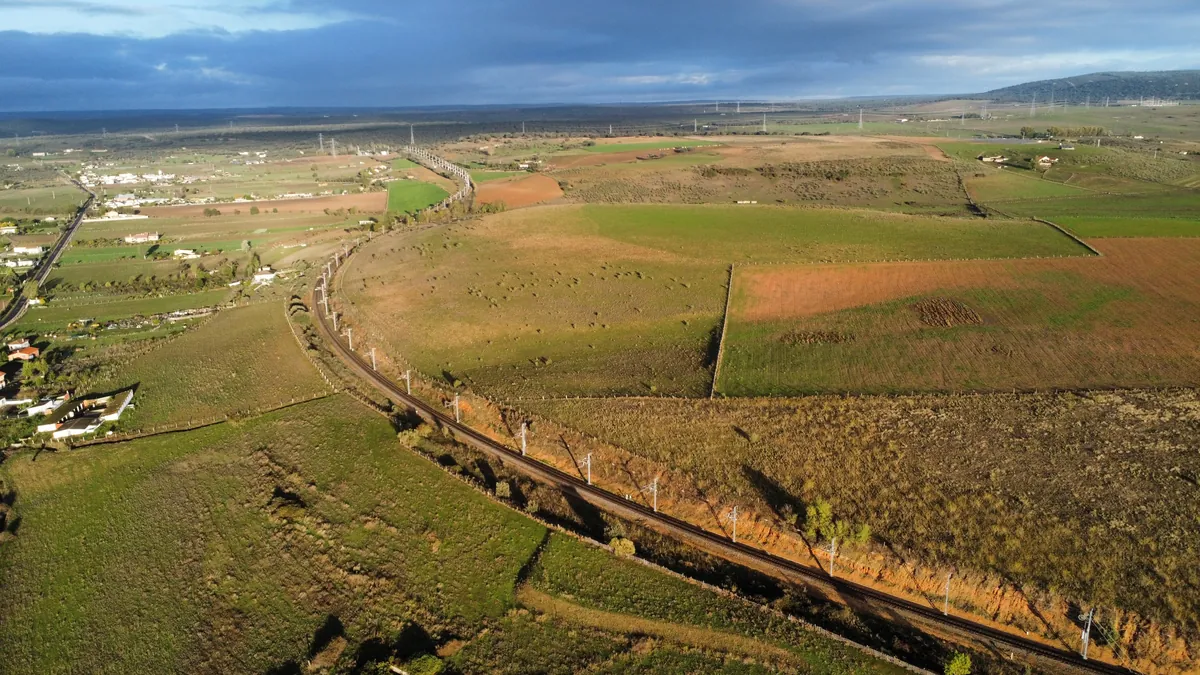
Municipality on the Yeltes plain, ringed by holm-oak pastureland and fighting-bull herds.
Hide article Read full article
The stone of the church in the square holds the day’s warmth long after the sun has slipped behind the arcades. Shadows stretch, two neighbours lean against a wall in quiet conversation, and the only sound is the distant clang of a gate. This is the hour when Aldehuela de Yeltes settles into itself, a village of one hundred and seventy-six souls in the open countryside west of Ciudad Rodrigo, where tourism is not a schedule but a pace you adopt.
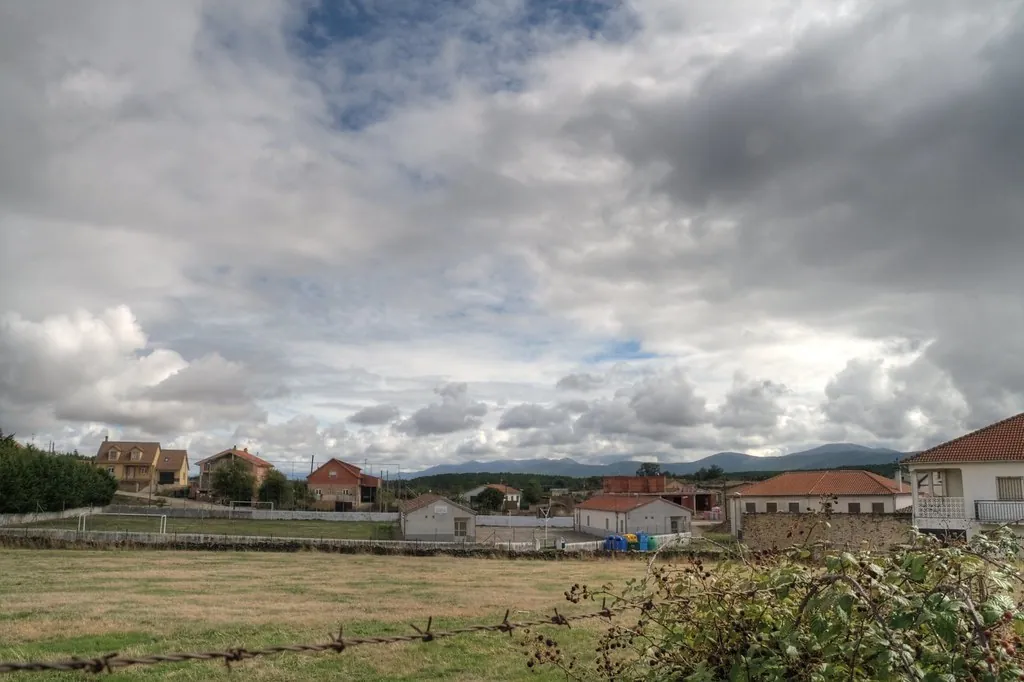
Streets are short, ending quickly in fields. The houses have thick walls of stone and timber, their large doors darkened by weather and hands. The tower of the parish church, dedicated to San Juan Bautista, is the first thing you see when approaching, a steady landmark above low rooftops.
A walk measured in details, not kilometres
You can walk every street in Aldehuela de Yeltes in half an hour, but the point is to stretch that time. The interest is in the grain of things: the deep grooves worn into a stone lintel from generations of use, the particular rust colour on an iron grille, a wooden cart parked in a yard whose wheels seem fused to the earth. Many houses still incorporate their agricultural spaces—a stable, a tool shed, a small pen—a reminder that life here is still tied to the land’s cycles. You hear it in the diesel rumble of a tractor heading out on a dirt track late in the afternoon.
There is no route to follow. The place reveals itself in fragments, and the quiet is not absolute; it’s punctuated by the sounds of livestock from beyond the last house, or a radio playing softly from an open window.
Where the streets give way to dehesa
Leave the last house behind and the landscape opens into dehesa. This is the classic terrain of southwestern Salamanca: widely spaced holm oaks, pale soil, and pasture grazed by cattle and Iberian pigs. On a calm day, the wind moving through the oak leaves is the loudest thing you’ll hear.
The dirt tracks that branch off are not signposted. Many cross active grazing land, so it’s wise to stick to obvious paths and always close any gate you pass through. If you’re unsure which way is public, ask someone washing a car or tending a garden; they’ll point you towards a track that won’t disturb the livestock.
This landscape wears its use openly. In spring, the air carries the scent of damp earth and new grass. By August, everything turns gold and dusty, and the evenings are thick with the sound of crickets. The dehesa is not wild; it’s a working landscape shaped by generations, felt in the alignment of a stone wall or the well-worn path to a water trough.
The subtle lines of water
Small streams trace through the pastures on their way to the Yeltes river. Their flow depends entirely on the season—sometimes just a trickle over stones—but even that modest presence encourages a thicker line of vegetation. Reeds, brambles, and occasional willows gather along these banks.
You won’t find picnic tables or swimming holes here. The value is in the change of atmosphere: the cooler air near the water, the chatter of birds in the thicker brush. It’s best walked early in the morning, when the light is low and your footsteps are the only ones disturbing the mud at the edge.
A note on light and expectation
Come here for a church tower, quiet streets, and walks into open dehesa, not for museums or curated sights. Tourist services are minimal; most visitors arrive from Ciudad Rodrigo for a few hours’ respite.
In summer, the midday sun is intense, with little shade save under the broad canopy of an oak. Plan your walking for early morning or late afternoon, when the light turns long and amber and the stone of the houses begins to release its stored heat. Aldehuela de Yeltes doesn’t demand your attention; it simply exists, offering a pause in a rhythm that feels older than haste.