Full Article
about Campillo de Azaba
Agricultural and livestock village in the Azaba river basin
Hide article Read full article
A Village Measured in Streets, Not Sights
Campillo de Azaba is small. Very small. You arrive, leave the car near the church or along one of the wider streets, and within half an hour you have seen it all.
There is no traffic to speak of and no regulated parking. In summer there may be a few more cars, mostly belonging to residents who return to the village for the holidays, but little beyond that. From Salamanca it is roughly 100 kilometres. The usual route follows the A‑62 towards the area of Ciudad Rodrigo, then continues along regional roads. The final stretch opens out into countryside and dehesa.
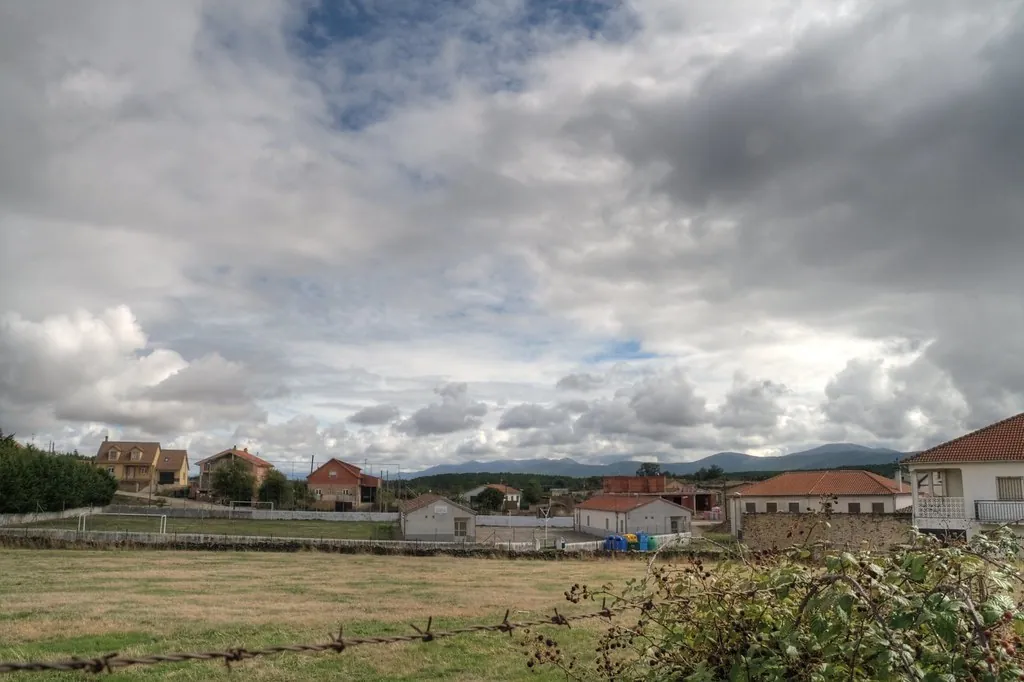
There is no defined centre. You park where there is space and walk two or three streets. Distances are short and the terrain is flat. With just over a hundred inhabitants, the size of the population shapes the atmosphere. Many houses remain closed for much of the year and the sense of movement depends heavily on the season.
This is not a place that overwhelms with landmarks. It is a rural settlement in the west of Salamanca province where daily life moves quietly and without spectacle.
Stone, Adobe and a Parish Church
Campillo de Azaba preserves the kind of architecture typical of this part of western Salamanca. Houses are built in stone or adobe, some whitewashed, with large wooden gates and interior courtyards hidden from the street. There is no monumental ensemble and no succession of buildings that demand a photograph at every turn.
The parish church stands out within the village. It sits beside a small square that tends to gather a bit of life when the weather is good. The church itself is not especially striking, yet it sets the rhythm of the place. Its presence defines the nearest thing Campillo de Azaba has to a focal point.
Beyond that, the walk is brief. Two or three streets, the occasional well-kept house, and long stretches of quiet. It is the kind of setting where sound carries easily and where the absence of noise becomes noticeable.
For visitors used to towns with busy historic quarters, the scale can feel surprising. Campillo de Azaba does not revolve around a packed programme of sights. Its appeal lies in something more subdued.
The Dehesa Landscape
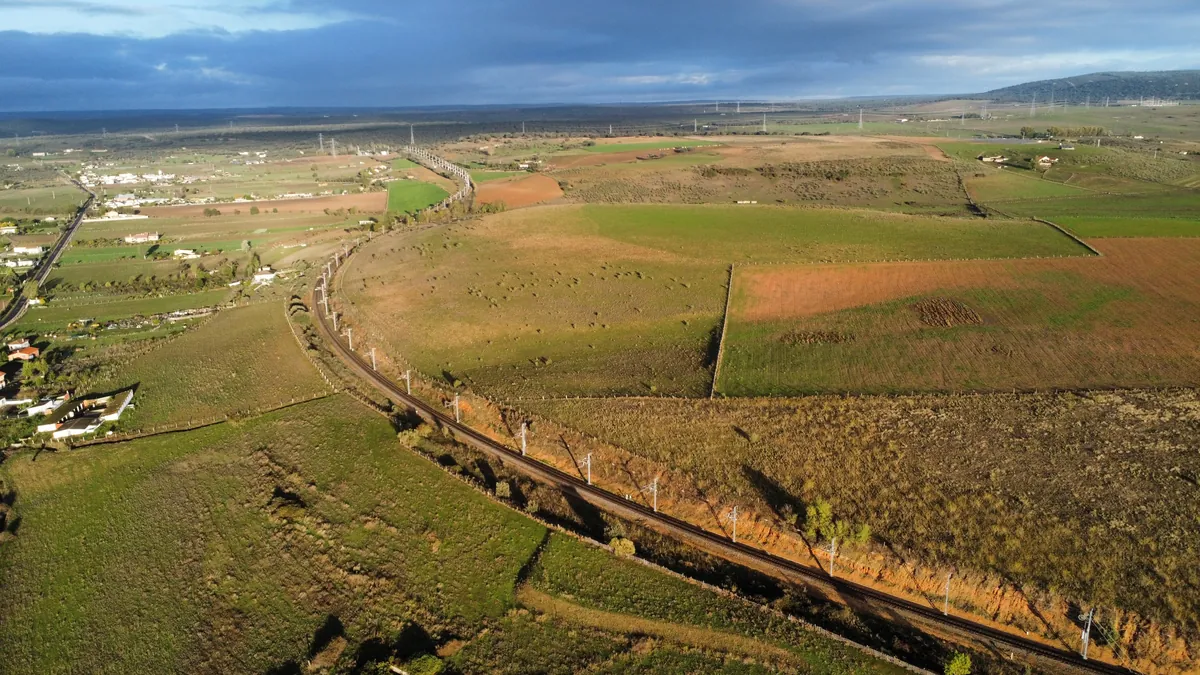
The real interest begins outside the built-up area. The entire municipal area is dehesa, a traditional agroforestry landscape found across parts of western Spain. Here it is clearly visible: open pasture dotted with holm oaks and cork oaks, livestock grazing at intervals, wide skies.
This is the characteristic scenery of the comarca of Ciudad Rodrigo, and in Campillo de Azaba it defines everything. The village sits within this working landscape rather than apart from it. Fields stretch in all directions and agricultural tracks run between them.
Nearby flows the river Azaba. Along some stretches there is riverside vegetation, creating a different texture from the open pasture. There are no boardwalks or prepared walking routes. These are traditional farm tracks and rural paths. Anyone heading out on foot is better off having a clear idea of the route in advance, as signposting does not always help.
With a little patience, large birds can be seen circling above the fields. Vultures, storks and kites are common in the area. Their silhouettes moving across the sky add to the sense of open space.
The dehesa is not a park designed for visitors. It is a working environment shaped by grazing and seasonal rhythms. That is precisely what gives it its character.
Food and Practicalities
In a village of this size, it is wise not to rely on a wide range of services. The sensible option is to arrive having eaten or to plan a meal in a larger nearby town.
What does make sense here is the produce of the countryside. Cheeses from the area, meat from livestock raised in the dehesa, and cured products from Iberian pigs are part of the local food culture. In some cases it is possible to buy directly from local producers, although this is not always straightforward if you do not know anyone in the village.
Campillo de Azaba is not organised around tourism infrastructure. There are no clear visitor circuits or clusters of services. The visit is simple by design: a walk through the streets, time spent in the surrounding countryside, and little else in terms of formal attractions.
That simplicity can be either the point or a limitation, depending on expectations.
Extending the Day in Ciudad Rodrigo
About 35 kilometres away lies Ciudad Rodrigo. There the scale changes completely. The town has a defensive wall, a cathedral, streets with more activity and a broader range of services.
Many visitors follow that pattern. A brief stop in Campillo de Azaba, perhaps a walk in the dehesa if the mood suits, and then on to Ciudad Rodrigo for a longer visit.
The contrast works. Campillo de Azaba offers countryside and quiet. Ciudad Rodrigo provides built heritage and movement. Together they give a fuller sense of this corner of Castilla Leon.
The approach to Campillo de Azaba is best taken with calm expectations. This is farmland and silence. Those looking for more activity will need to drive a few kilometres. Those content with open landscapes, short walks and the rhythm of a small rural community may find that half an hour stretches further than expected.