Full Article
about Casillas de Flores
Small border village ringed by wild nature; old smuggling trails
Hide article Read full article
A Small Village Near the Portuguese Border
Some places give the impression that time moves a little more slowly. Not because anything has been staged for visitors, but because that is simply how life has always been. That feeling defines tourism in Casillas de Flores, a small village in the southwest of Salamanca province, where just over 170 people live and daily life remains closely tied to the land.
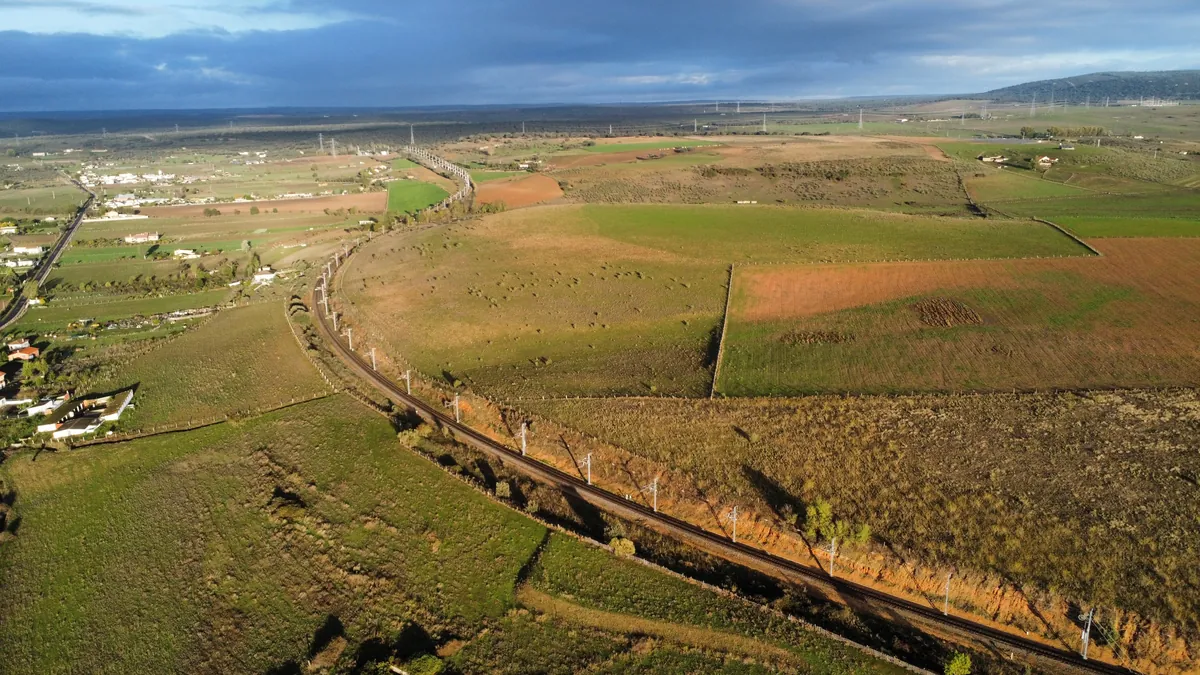
Casillas de Flores sits in the comarca of Ciudad Rodrigo, very close to the raya, the historic border with Portugal. The setting is immediately clear on arrival: open countryside, dehesa pastureland and tracks leading towards farms where work continues much as it has for generations.
This is rural Castilla y León without embellishment. There are no grand entrances or obvious attractions competing for attention. The landscape sets the tone from the start.
First Impressions on Arrival
The countryside around Casillas de Flores is the dehesa salmantina in a particularly pure form. Holm oaks and cork oaks stand spaced across open grassland, with cultivated plots fitted in between. There are no major roads and no buildings breaking up the horizon. Stop the car, wait a moment, and the usual soundtrack is livestock, birds and little else.
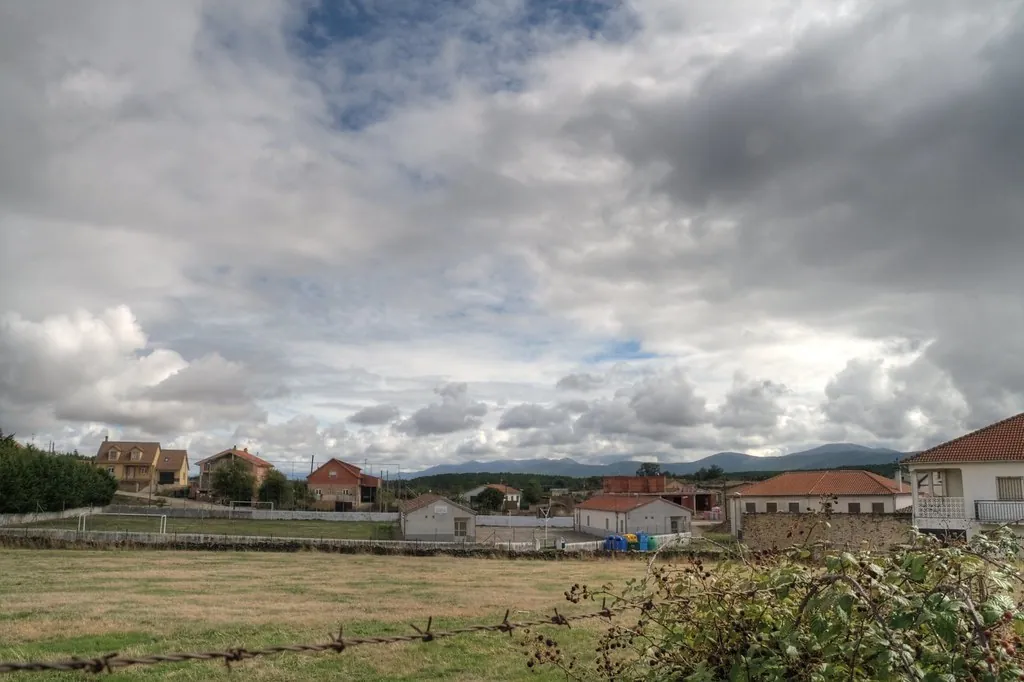
The village itself has a simple structure. Stone houses, masonry walls and short streets where most people know one another. There are no shop windows designed to draw you in, no bright signs trying to redirect your attention. It feels like a place where everyday routines continue in the same way whether anyone is visiting or not.
At the centre stands the parish church dedicated to Santa María. It is a sober building, like many in this part of Spain. It is not the kind of church that justifies a journey on its own, yet it helps explain the character of the village: practical, restrained and without unnecessary decoration.
Walking the Dehesa
The real interest of Casillas de Flores lies beyond the built-up area. Paths leave the village and quickly enter the surrounding dehesa, crossing livestock farms and small cultivated areas. These are traditional dirt tracks that link to other hamlets or simply disappear among the holm oaks.
Walking here appeals to anyone who enjoys quiet countryside. There is no programme, no checklist. The idea is simple: take your time, look at the landscape and see what appears. In winter, cranes are often spotted in the area. Birds of prey sometimes circle above the fields. Foxes are occasionally seen at dawn or dusk, although that depends more on patience than planning.
For those arriving by bike, or anyone who prefers running on unpaved tracks, the terrain is forgiving. Gentle rises, wide paths and plenty of space make it easy to move around without traffic. The scale of the landscape allows for long stretches of uninterrupted countryside.
The dehesa itself is worth a brief explanation for visitors unfamiliar with Spain. It is a traditional agroforestry system typical of western Spain, combining pasture, scattered trees and farming. In places like Casillas de Flores, it still shapes both the economy and the scenery.
Local Food and Seasonal Traditions
The food in this part of Salamanca follows the pattern you would expect in inland western Spain. Pork plays a central role, along with embutidos, cured sausages and other traditional pork products. There are legumes, substantial stews and local cheese. The cooking is straightforward and closely linked to what is produced nearby.
In autumn, when conditions allow, mushrooms make their way into some home-style dishes. It is not presented as a major event or a festival. It simply reflects the rhythm of the seasons, as it always has.
There is no attempt to reinvent local cuisine for visitors. The emphasis remains on tradition and continuity rather than innovation.
Combining Casillas de Flores with Ciudad Rodrigo
Most people who come to Casillas de Flores combine the stop with a visit to Ciudad Rodrigo, less than an hour away by car. The contrast is noticeable. In Ciudad Rodrigo, there are defensive walls, an imposing cathedral and a livelier atmosphere in the streets.
Pairing the two works well in a single day. Time in the city allows for a look at its heritage and plazas, then Casillas de Flores offers the rural side of the comarca. One place provides movement and history on a larger scale, the other a quieter view of everyday life in the countryside.
This proximity also helps place the village in context. Casillas de Flores is part of the wider territory shaped by Ciudad Rodrigo, yet it retains a distinctly agricultural identity.
If You Only Have a Short Stop
Casillas de Flores is not somewhere to fill an entire day with scheduled activities. It suits a brief, unhurried visit. Park, walk through the streets, step out along one of the tracks and within a couple of hours you will have a clear sense of the place.
There are no headline sights demanding attention. The appeal lies in the atmosphere: a small population, surrounding fields and a pace that feels different from urban Spain.
Sometimes that is exactly what is needed. A village of modest size, open countryside on every side and the sense that here, things continue according to their own steady rhythm. In a region known for its historic towns and monuments, Casillas de Flores represents something simpler, and for many visitors that contrast is reason enough to stop.