Full Article
about Castillejo de Martín Viejo
Municipality home to the Siega Verde rock-art site (World Heritage).
Hide article Read full article
A small village on open land
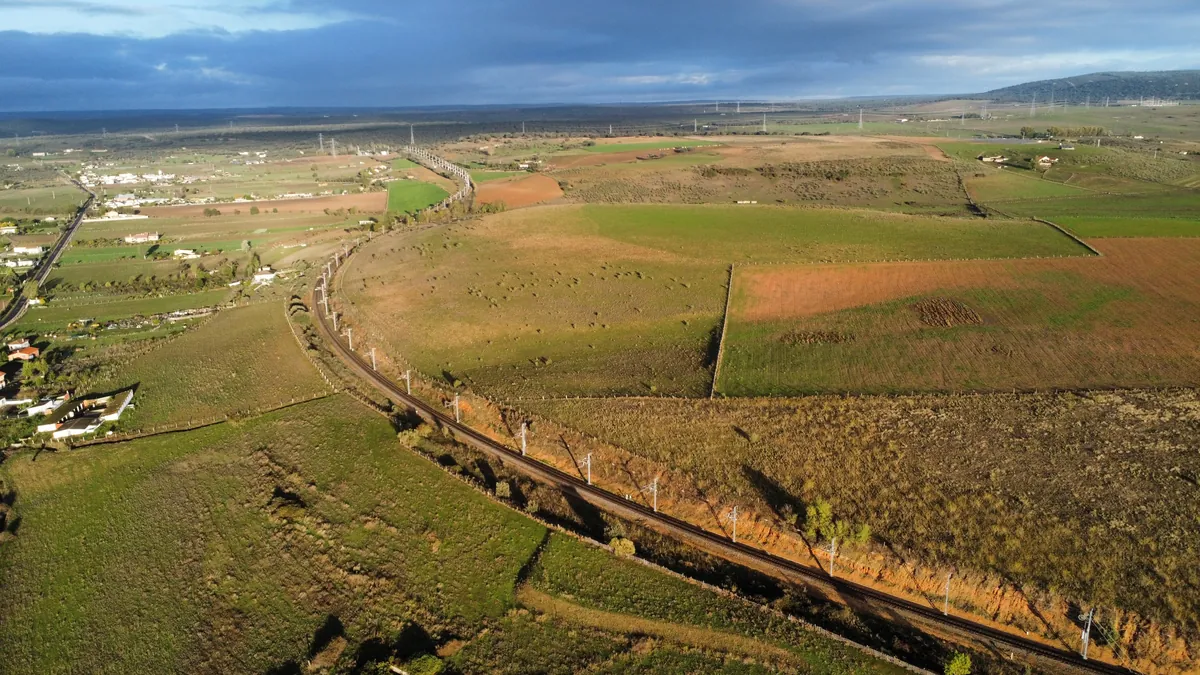
Castillejo de Martín Viejo sits in the comarca of Ciudad Rodrigo, in the western part of the province of Salamanca. The setting is one of wide dehesa landscapes, a traditional system of pastureland dotted with holm oaks, where livestock farming has shaped daily life for centuries. Today the municipality has around two hundred residents, and that close relationship with the land is still very visible.
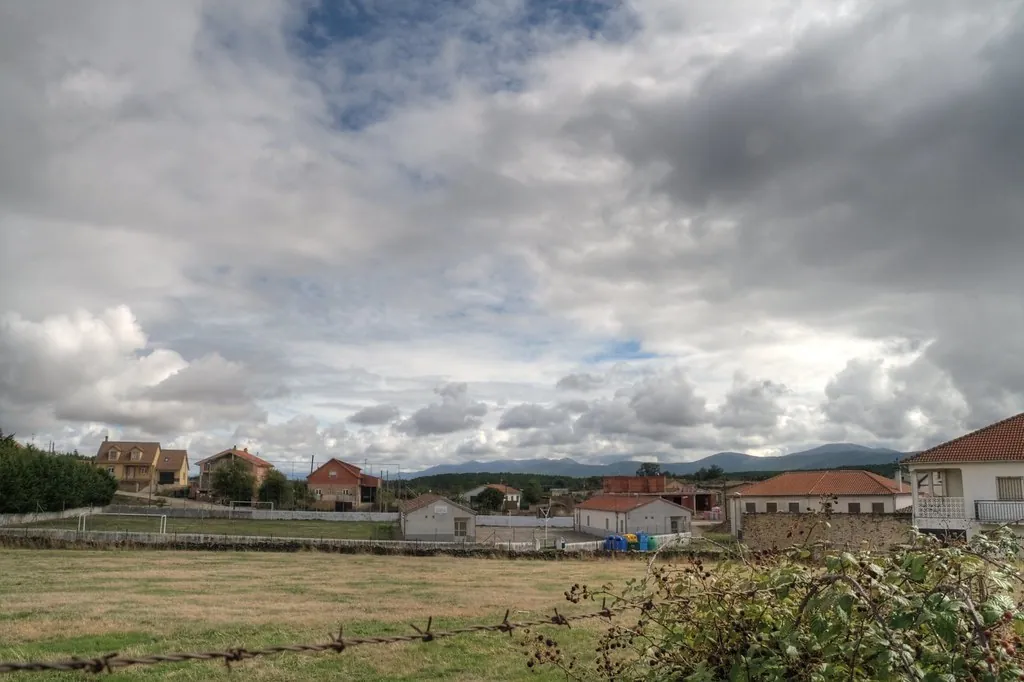
The village stands on gently rolling ground at about 670 metres above sea level. There are no grand urban landmarks or monumental squares. Instead, the layout follows a practical logic typical of agricultural settlements in this part of Castilla y León. From the edge of the built area, dirt tracks and grazing estates begin almost immediately, with large stretches of oak woodland extending outwards.
The village and the church of San Sebastián
The buildings in Castillejo de Martín Viejo combine stone and adobe, reflecting different periods of construction and repair. Many houses still have wide gateways, originally designed for carts or for moving livestock through the property. In some cases, marks left by stonemasons can still be seen on the lintels.
Animal life has long been part of the domestic space here. Corrals and stables are not set apart from the village but integrated into the plots themselves, forming part of the everyday layout rather than something separate.
At the centre stands the parish church of San Sebastián. Built in granite and usually dated to the 16th century, it has undergone later modifications. The interior is simple, without elaborate decoration. The most notable feature is the Baroque altarpiece on the main altar. It is modest in scale, yet its carved detail reflects the decorative style found in many churches along the Salamanca borderlands.
More than an isolated monument, the church continues to act as a meeting point during local celebrations and events throughout the year.
Everyday architecture and quiet details
Walking through Castillejo de Martín Viejo is less about seeking out landmarks and more about noticing small details. Worn wooden doors, irregular stone walls, and interior courtyards where tools or small groups of animals are still kept all form part of the scene. It is not a monumental ensemble, but it offers a clear example of how livestock villages in this area of Salamanca were organised.
Some houses retain enclosed upper galleries or corridors facing south. This architectural feature is common in the region and was designed to make the most of winter sunlight, offering a practical response to the local climate.
The overall impression is of a place shaped by use rather than display. The materials, layouts and alterations reflect everyday needs over time, rather than any attempt at uniformity or grandeur.
The dehesa around the village
The landscape surrounding Castillejo de Martín Viejo is defined by the traditional dehesa. Scattered holm oaks stand over wide grasslands, with stone walls or wire fencing marking out individual estates. This type of landscape is closely tied to extensive livestock farming.
In autumn and winter, it is common to see Iberian pigs feeding beneath the trees during the montanera, the seasonal period when they forage on acorns. These animals are always within private properties, so any movement through the area requires awareness of boundaries and gates.
There are no signposted walking routes as such, but several rural tracks lead out from the village towards nearby estates. These are working agricultural paths used by farmers and local residents. Care is needed when passing through, especially with gates and enclosures, as they form part of active farming land.
The area is quiet, with very little traffic. This makes it easier to spot typical wildlife of the dehesa. Birds of prey such as kites can often be seen overhead, along with smaller woodland species associated with the oak environment.
Festivities and local rhythms
The festive calendar follows patterns common across villages in the comarca. In January, celebrations are held in honour of San Sebastián, the patron saint of the parish. These include religious observances alongside gatherings of local residents.
The main festivities tend to take place in summer. At that time, many people with family ties to the village return for a few days, and the streets become noticeably livelier than usual. It is a period when the population temporarily grows and social life moves outdoors.
Food during these occasions reflects the culinary traditions of Salamanca. Iberian pork products are central, along with hornazo, a baked pastry typically filled with meat, and simple stews rooted in domestic cooking. These dishes are closely linked to the agricultural and livestock culture that defines the area.
Close to Ciudad Rodrigo
Castillejo de Martín Viejo lies about twenty kilometres from Ciudad Rodrigo, the historic centre of the comarca. This nearby city preserves one of the most complete walled enclosures in Castilla y León, along with its cathedral and several Renaissance palaces built during a time when the border with Portugal held strategic importance.
Many visitors choose to combine both places. On one hand, Ciudad Rodrigo offers a concentration of historic architecture and urban heritage. On the other, just a short distance away, villages like Castillejo de Martín Viejo present a very different rhythm, shaped by open landscapes and long-standing rural practices.
Together, they provide two complementary views of the region: the fortified city with its past tied to the frontier, and the quiet dehesa where daily life continues to follow patterns established over generations.