Full Article
about Dios le Guarde
Curious name for a small cattle-farming village in the Ciudad Rodrigo district.
Hide article Read full article
By mid-morning in the main square, a woman shakes damp soil from a concrete planter. The long shadows of elm trees stretch across the pale ground, and somewhere along the next street a door closes with a hollow echo. In Dios le Guarde, a municipality of around 116 residents, the day moves at the pace of small, ordinary gestures: someone sweeping the pavement, a brief conversation from a window, the silence settling again after the delivery van has passed.
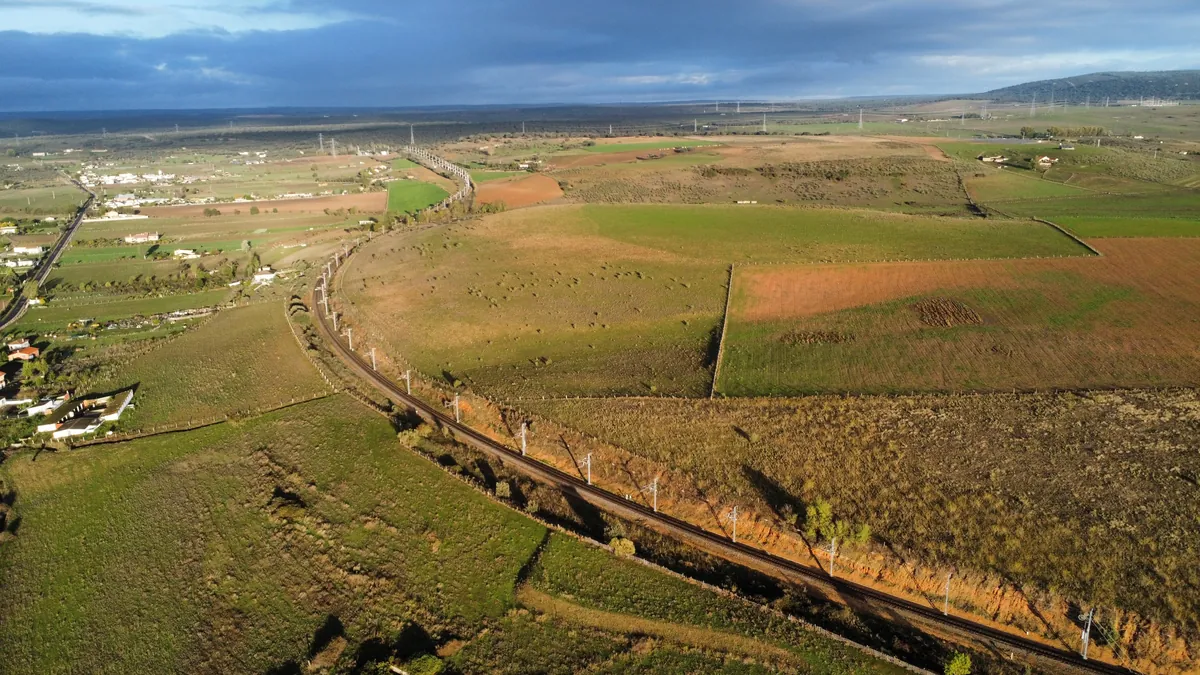
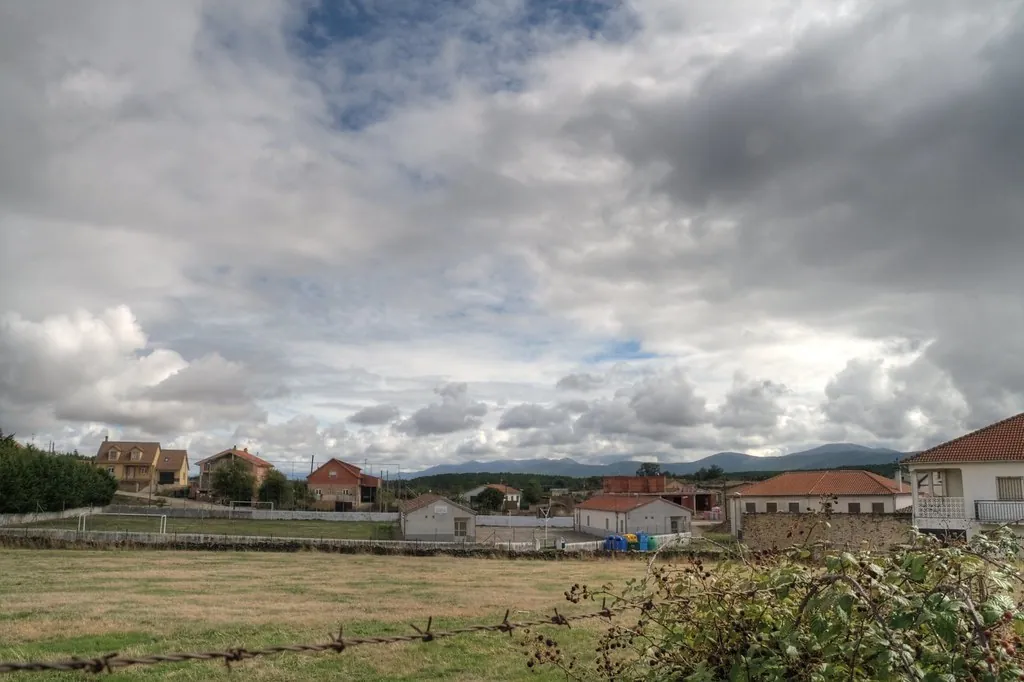
The village lies in the west of the province of Salamanca, within the comarca of Ciudad Rodrigo, at just over 800 metres above sea level. It stands among open dehesas, the distinctive pastureland of western Spain where scattered trees rise from wide grazing fields. The streets are straight, lined with granite houses built with thick walls and small windows. For generations, life here was tied to the land and to the movement of livestock, something still visible in the animal pens and in the tracks that lead out from the centre towards the fields.
At the heart of the village is the parish church of Santa María de la Asunción. It is a sober stone building with a bell tower that carries clearly when the air is still. On some mornings the door is open. Inside, the altar is simple, and the wooden elements show the marks of handcraft: pronounced grain, slight irregularities that catch the side light.
Paths Through Holm Oaks and Grassland
Around Dios le Guarde stretches the typical landscape of this part of Salamanca: holm oaks spaced well apart, open pasture and low stone walls dividing the land. In spring, small yellow and white wildflowers appear among the grass. In autumn, acorns cover the ground and Iberian pigs move slowly beneath the trees, feeding in the traditional way that defines this ecosystem.
The tracks that leave the village are not marked as official hiking routes. They are compacted dirt paths used by farmers, and with patience they lead to individual farms or to nearby villages such as La Bastida or El Collado. A walk of one or two hours is usually enough to grasp the character of the landscape: a livestock shed in the distance, a flock crossing at an unhurried pace, the steady sound of wind moving through the holm oaks.
In summer, it is best to avoid the middle of the day. Some stretches offer very little shade, and the sun falls directly onto the tracks.
Granite Houses and Inner Courtyards
The layout of the village centre has changed little in decades. Many homes still have interior courtyards where animal pens, chicken coops or small wine cellars carved into the rock can be seen. Some doors remain reinforced with large nails and dark wooden beams. On certain balconies, pots hang and are watered as the afternoon light begins to soften.
There are no museums and no organised visitor routes. What appears instead is the everyday life of a small rural community: tractors coming and going, washing hanging in the courtyards, neighbours greeting one another from the pavement. The experience of walking here is simple and direct, shaped by observation rather than attractions.
Birds Above the Dehesa
Standing quietly along the tracks that lead into the open countryside often brings movement into view overhead. White storks use rooftops and bell gables for nesting, their large silhouettes easy to pick out against the sky. Birds of prey are also common, circling slowly over the pastureland and turning on the air currents.
Spring and autumn are usually the most rewarding times for birdwatching. The fields are more active, and the heat has not yet reached the intensity of high summer. On clear days, raptors can be seen distinctly as they glide and adjust their wings in wide arcs.
Local Food Traditions
The cooking of the comarca centres on straightforward, substantial ingredients. Iberian pork plays a prominent role across the area. One dish that appears at local celebrations is hornazo, a baked pastry filled with cured meats, typical of parts of Salamanca and surrounding provinces. In many households, patatas meneás, a mashed potato dish seasoned in the local style, are still prepared, as are roast lamb and kid goat for family gatherings.
Within Dios le Guarde itself, options for eating out are very limited, and opening times may vary depending on the season. Those passing through are advised to bring something with them or to look towards nearby villages, where there is generally more activity.
When the Light Fades
Towards the end of the day, as the sun lowers over the dehesas, the granite façades take on a soft golden tone. The streets grow almost empty. From the outskirts, dogs can be heard barking on neighbouring farms. In winter, fog sometimes settles across the entire village, leaving only the tops of the trees visible above the mist.
Dios le Guarde is the sort of place where little happens in terms of spectacle. That is precisely its appeal. A slow walk without hurry allows the village to show itself through ordinary details: stone warmed by the sun, the smell of wood smoke in winter, the open fields gradually darkening as evening approaches.
There are no headline sights to tick off, no programme to follow. The interest lies in paying attention to what is already there, in the relationship between the built village and the surrounding pastureland. In a municipality of barely more than a hundred inhabitants, the scale is intimate and the landscape never far away.
For travellers exploring the west of Salamanca province or moving through the comarca of Ciudad Rodrigo, Dios le Guarde offers a pause defined by quiet continuity. The church bell, the straight granite streets, the holm oaks spaced across the fields, all form part of a rhythm that changes little from one season to the next.