Full Article
about El Sahugo
Rebollar village with its own speech (el palra); a setting of high ecological value.
Hide article Read full article
A Village of Stone and Silence
By mid-morning, when the sun begins to warm the granite façades, El Sahugo falls almost completely silent. Light filters softly along its narrow streets, picking out the rough texture of the walls, some marked with fine cracks traced slowly by time. In this corner of south-west Salamanca province, fewer than two hundred people live year-round, and the pace reflects it. A single car passes slowly, a dog barks in the distance, then little else disturbs the air.
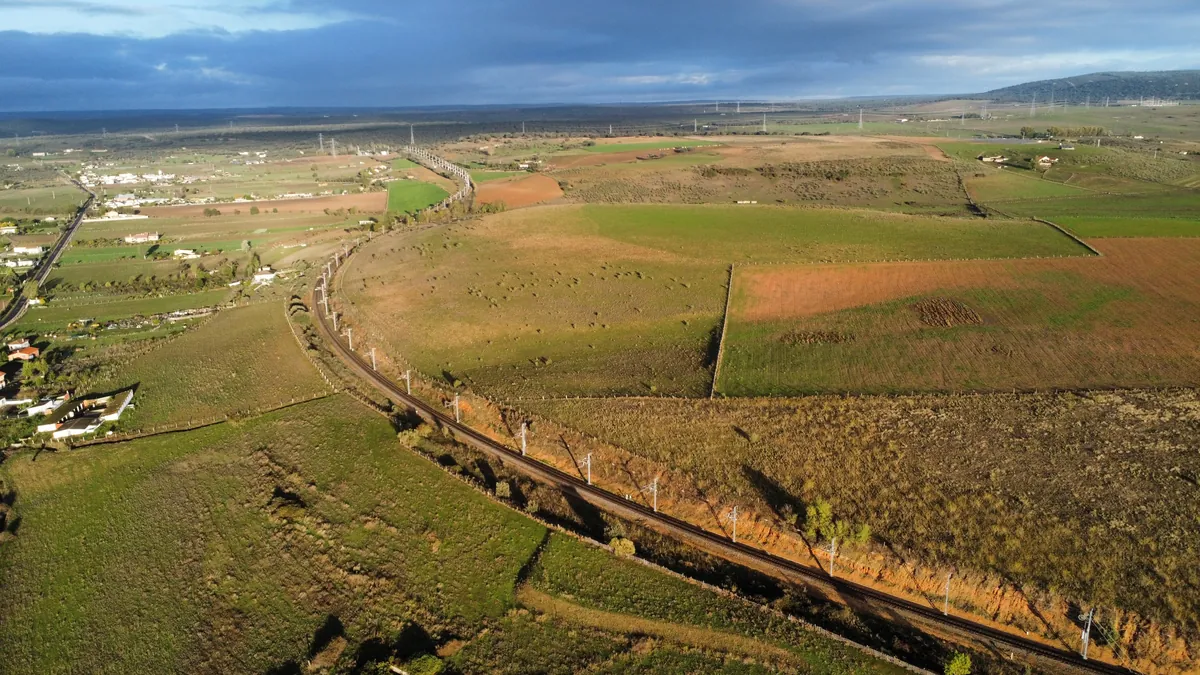
Tourism in El Sahugo is less about ticking off landmarks and more about understanding the landscape. The village sits just over 800 metres above sea level, in a stretch of gentle hills between the Sierra de Gata and the dehesas that signal the western edge of Salamanca. A dehesa is a traditional Spanish landscape of open pasture dotted with trees, shaped over centuries by grazing and farming. Around El Sahugo, scattered holm oaks stand apart from one another, open meadows roll outwards, and patches of oak woodland shift the colour of the countryside in autumn.
When there is a breeze, it carries the dry scent of grass and warm earth. The atmosphere is wide and open, shaped as much by wind and light as by buildings.
The village name is often linked to the saúco, or elder tree. A few still grow near streams and roadside ditches, especially in cooler pockets of land. In spring they flower in a creamy white that stands out against the darker green of the holm oaks.
Granite at the Centre
The parish church occupies the centre of El Sahugo, built from the same granite that appears in almost every house. Its tower is simple, without excessive decoration, and seems to have undergone several repairs over time. It is not always open, which is common in small villages, but it is worth walking around it slowly. On the surrounding façades, carefully carved lintels sit above doorways, small niches are set into the walls, and stones from older constructions have been reused in later buildings.
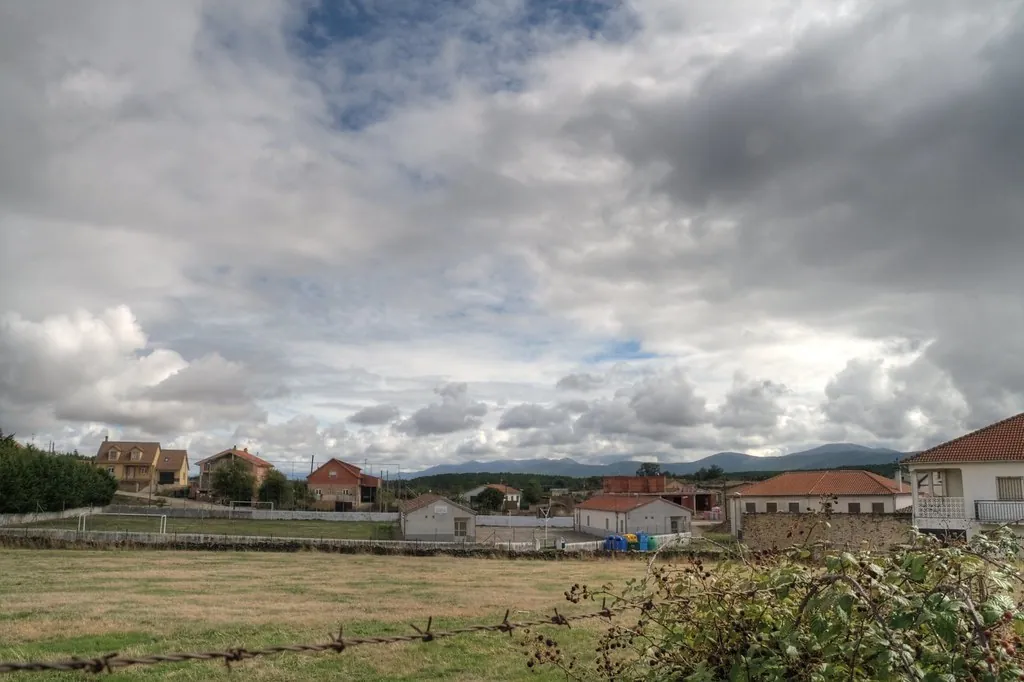
The housing retains a strong sense of coherence. Thick stone walls, darkened wooden gates and courtyards enclosed by low boundary walls define the streetscape. From time to time, hens wander into view or farm tools lean against a corner. In some corners there are still stone mangers carved directly from blocks, or small religious details embedded into the walls. These are easy to miss when walking quickly.
There are no grand monuments competing for attention. Instead, the interest lies in materials and proportions, in how granite has shaped both the appearance and the rhythm of the village. The same stone that forms the church tower supports barns, door frames and boundary walls. It gives El Sahugo a muted palette of greys and browns that shifts subtly with the light.
Tracks Through the Dehesa
Beyond the last houses, dirt tracks begin almost immediately. There are no major visitor facilities and few clearly marked routes, but agricultural paths can be explored on foot or by bike with a simple map or a digital track. The landscape is open: scattered holm oaks, cattle grazing at an unhurried pace, and the occasional pond whose size depends heavily on the year’s rainfall.
Spring alters the scene noticeably. Streams carry some water, and vegetation thickens in lower areas. By contrast, summer turns the land dry and ochre. It is sensible to head out early in the day during the hotter months, as the sun becomes intense from midday onwards and shade is limited along certain stretches.
The sky deserves attention here. White storks glide slowly overhead, red kites ride the thermals, and with some luck a bird of prey may cross the dehesa in the distance. There are no hides or prepared observation points. A pair of binoculars and patience are enough.
Walking these tracks gives a clearer sense of how El Sahugo fits into its surroundings. The village does not stand apart from the countryside but feels absorbed by it. Fields and pasture reach almost to the edge of the streets, and the transition from stone walls to open land is immediate.
Food and Getting Around
El Sahugo is small, and services are limited. Anyone planning to spend the day exploring the area would do well to bring water and something to eat, or to consider heading later to a larger town in the Ciudad Rodrigo district. In that wider area, traditional cooking remains closely tied to the countryside, with pork sausages, local cheeses and seasonal dishes linked to farming still very much present.
The roads that lead here are secondary routes, with gentle bends weaving between farms and dehesas. Signage is not always abundant, so it helps to check the route in advance and drive without haste. The approach itself is part of the experience, fields stretching out on either side and the horizon broken only by low hills and scattered trees.
August, a Subtle Change of Pace
For much of the year, El Sahugo keeps the quiet atmosphere typical of very small villages. In August, the mood shifts slightly. Families who live elsewhere return for a time, and on certain days the village livens up with religious celebrations and gatherings among neighbours. There are no large stages or lengthy programmes of events, just simple meetings where people see one another again after months apart.
Outside those summer weeks, El Sahugo remains what it has long been: a discreet village in western Salamanca, surrounded by dehesa. Its interest lies in small details and in unhurried walks along the tracks that leave the village in every direction. The granite, the open fields, the changing light and the wide sky form its main attractions.
For travellers used to places built around major sights, El Sahugo can feel understated. Yet that is precisely its character. It invites a slower rhythm, attention to textures and sounds, and an acceptance that what matters here is not spectacle but setting. In the quiet of mid-morning, with the sun warming the stone and the countryside stretching out beyond the last wall, the essence of the village becomes clear.