Full Article
about Espeja
Village on a hill overlooking the dehesa; grain-growing tradition
Hide article Read full article
A Village That Moves at Its Own Speed
There are places where you plan to stop for five minutes and end up staying much longer. That is the rhythm of Espeja, a small village in the comarca of Ciudad Rodrigo, in the province of Salamanca. It does not draw you in with headline monuments or a packed sightseeing list. Instead, it holds your attention quietly, through its stillness, its stone houses and the wide landscape that surrounds it.
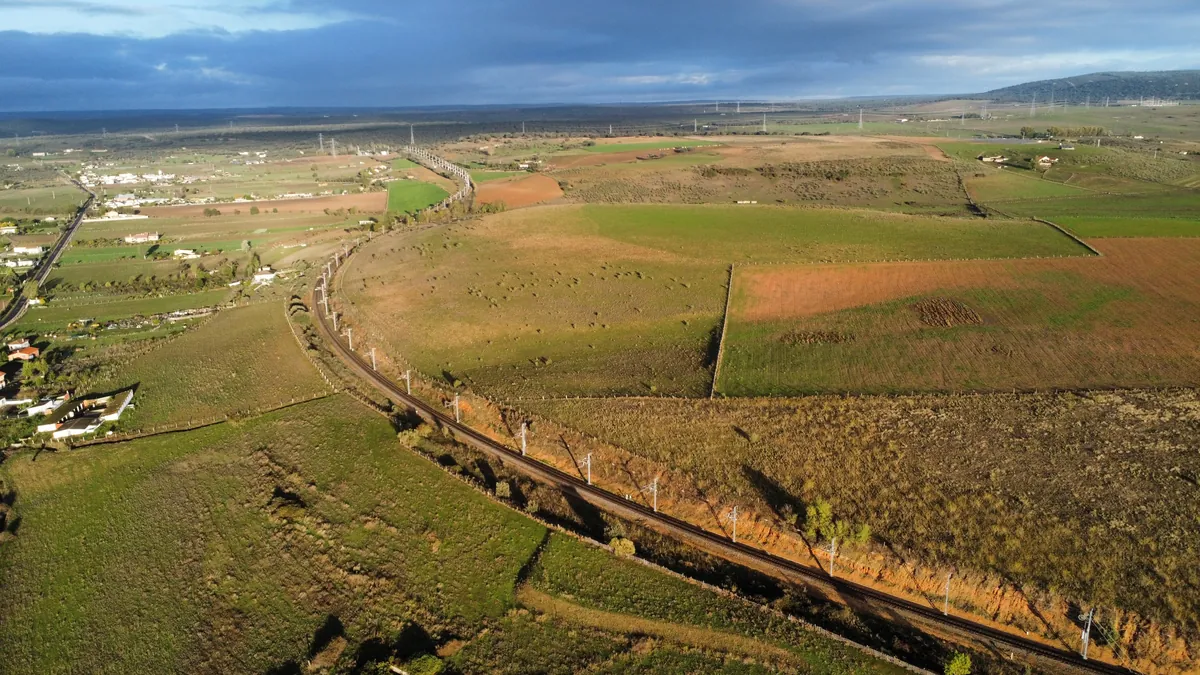
Tourism in Espeja is not about ticking off landmarks. It is about understanding how a small village in the Salamanca dehesa works. The dehesa is a traditional rural landscape of western Spain, made up of open pasture dotted with oak trees and used mainly for livestock. Around Espeja, that landscape shapes everything: the architecture, the economy and the daily pace of life.
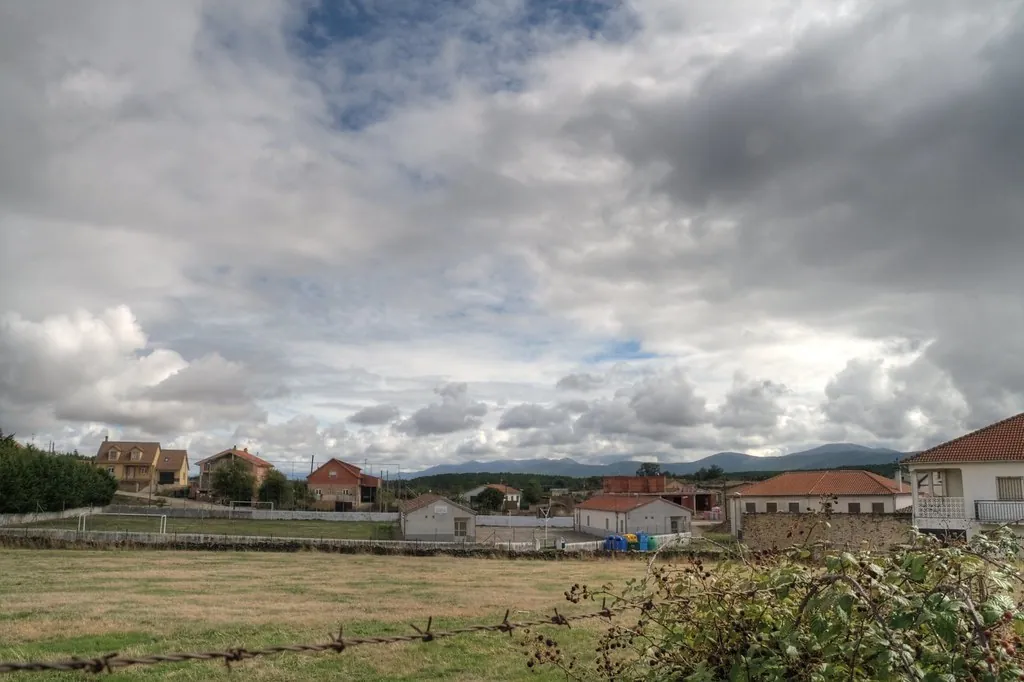
Days unfold slowly here. You might hear a tractor in the distance, or storks clattering on the rooftops, and little else. The houses reflect generations of agricultural living. Thick granite walls keep out the winter cold, wooden gates open into yards and small windows speak more of practicality than decoration. Nothing feels staged. It is simply how the village has always been.
San Andrés and the Shape of the Streets
At the centre of Espeja stands the parish church of San Andrés. Built in granite, like most significant buildings in the area, it rises modestly above the surrounding rooftops. It is not a cathedral and does not try to be. Its tower is visible from the tracks that lead into the village, serving as a reference point when returning from a walk in the surrounding countryside.
The layout of Espeja is straightforward. Calle Mayor and the road that runs through the village form its backbone. Houses line these streets in an orderly way, some with old iron window grilles and large entranceways. These broad doorways are reminders of a time when tools, firewood and even animals were kept inside or just beyond the threshold.
Look a little closer and small details begin to appear. Carved stone lintels above doorways, interior courtyards hidden from the street, old corrals attached to homes. None of it has been arranged for visitors. These are traces of daily life built up over several generations, still visible if you take the time to notice them.
There is no grand historic quarter separated from the rest of the village. The ordinary streets are the historic streets. Espeja’s appeal lies in this continuity, in how little the basic structure has changed.
The Dehesa Beyond the Last House
To understand Espeja, you have to step beyond the final row of houses. The real explanation for the village lies outside its urban centre. In every direction stretches the characteristic dehesa of western Salamanca: widely spaced holm oaks, open grassland and large estates devoted to cattle.
Walk along any of the dirt tracks leading out of the village and you are likely to see cows grazing. With a bit of luck, large birds may be circling overhead, taking advantage of the rising air currents. Storks are a common sight, both on village rooftops and in nearby trees.
There are few signposted routes. This is not a natural park laid out with information panels at regular intervals. These tracks are working paths used by farmers and livestock keepers. If heading out, it makes sense to carry a map on your phone or simply wander without straying too far.
The openness of the dehesa can feel deceptive. The terrain is generally gentle, yet distances stretch under a wide sky. The landscape may seem simple at first glance, but it reveals subtle changes in light and colour as the day progresses. The oaks cast shifting shadows, and the grasslands move with the wind.
Unplanned Walks and Granite Boulders
In Espeja, the most common plan is to have no plan. Leave the village, follow a track between holm oaks and eventually return along another. The ground is usually kind to walkers and suitable for mountain bikes, although some sections are scattered with loose stones that require a slower pace.
Every so often, large rounded granite rocks appear in the fields. These “bolos”, typical of many parts of Salamanca province, break up the visual uniformity of the landscape. They often become natural stopping points, whether for a photograph or simply to sit and rest for a while.
As evening falls, the sense of space deepens. At night the sky is noticeably darker than in any town or city. For those who enjoy looking at the stars, there is still plenty to see. With minimal artificial light, the constellations stand out more clearly than they do in urban areas.
Silence is one of Espeja’s defining features. It is not absolute, but it is persistent. Wind in the trees, distant animals, the occasional vehicle passing through. The absence of constant background noise becomes part of the experience.
Food Rooted in the Dehesa
The local food reflects the landscape. In this part of Salamanca, the dehesa is closely linked to the Iberian pig, which thrives in these oak-dotted pastures. As a result, pork plays a central role in the cuisine. Cured sausages, grilled meats and hearty stews are typical of family gatherings and village festivities.
In autumn, when the first rains arrive, mushrooms begin to appear in the surrounding countryside. Many local residents head out to collect them. Foraging is often regulated across much of the province, so it is treated with care and respect.
There is no modern gastronomic scene to speak of. The emphasis is firmly on traditional cooking, shaped by what the land provides and by recipes passed down within families. Meals are tied to the seasons and to the rhythms of agricultural life.
Festivities and the Return of Familiar Faces
During the summer patron saint festivities, Espeja shifts gear. People who live elsewhere for most of the year return, and for a few days the village becomes livelier. There are open-air dances, gatherings in the square and activities organised by residents themselves.
San Blas is also traditionally celebrated at the beginning of February. In many villages across Castilla, this date is associated with blessings and small popular celebrations, and Espeja follows that pattern.
These are not large-scale events with elaborate staging. They are village festivals in the most literal sense: people who have known one another for years, long tables set up for shared meals and conversations that begin with a familiar “Do you remember…?”
When the festivities end, the village returns to its usual tempo. The tractors are heard again in the distance. The storks remain on the rooftops. The streets fall quiet.
Espeja does not present itself as a destination for collecting sights. It is a place for walking slowly, sitting for a while and looking out across the fields. In doing so, it becomes easier to understand why those who were born here keep coming back, even if only for a few days each year.