Full Article
about Fuentes de Oñoro
Important border crossing with Portugal; historic site of Napoleonic battles and international trade
Ocultar artículo Leer artículo completo
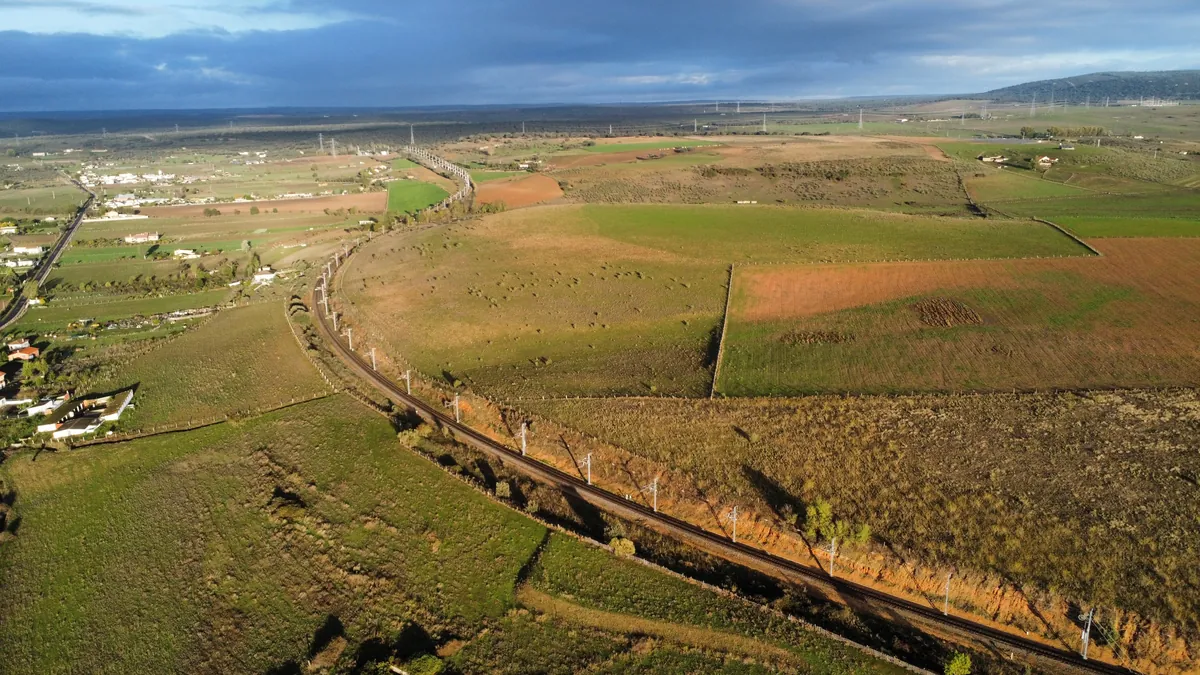
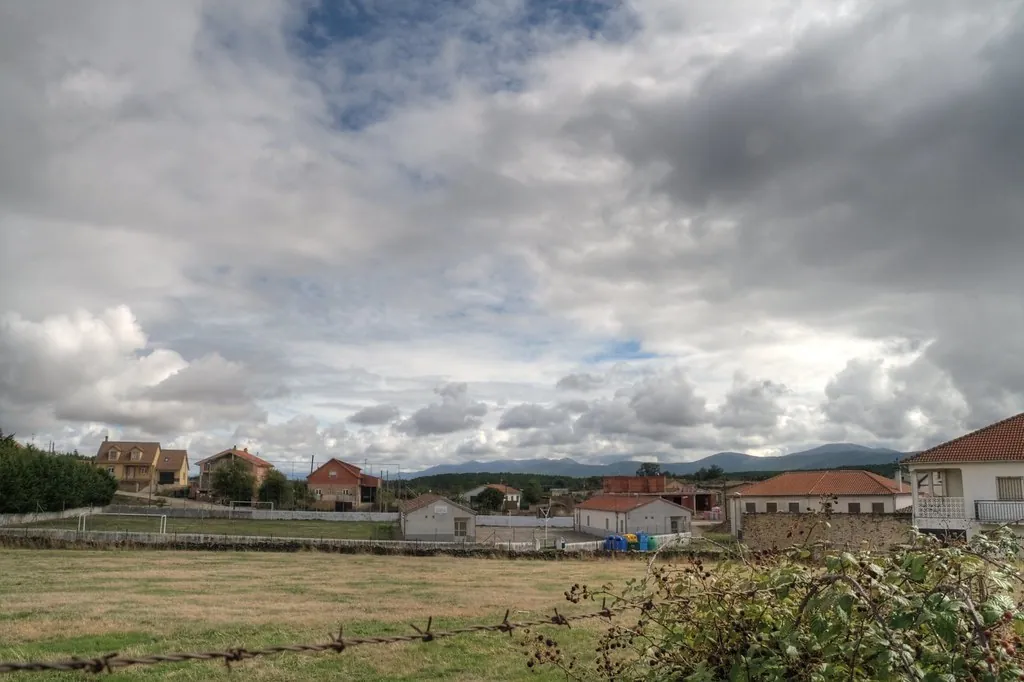
At 734 metres above sea level, Fuentes de Oñoro sits high enough for the air to feel thinner and the night sky closer. The village straddles a ridgeline above the Arroyo de las Dos Casas, a stream so small you could hop across it yet so significant it marks the frontier between Spain and Portugal. One minute you're on a Spanish pavement, the next you're staring at Portuguese road signs written in that distinctively open vowelled Portuguese. No border guards, no fanfare – just a modest stone bridge and the smell of woodsmoke drifting from both sides.
This is border country in the raw. Not the romanticised version of travel brochures, but the practical reality of a place where neighbours have always crossed to buy cheaper petrol, smuggle coffee, or simply find a different church for Sunday mass. The village's 1,000-odd inhabitants have seen it all: Napoleonic troops camping in their fields, smugglers hauling contraband through the dark, and latterly British tourists in search of Wellington's footprints.
Wellington's boots and Masséna's guns
The Battle of Fuentes de Oñoro in May 1811 was messy, confused and bloody – rather like most Peninsular War engagements. Wellington's Anglo-Portuguese army held the ridge against Marshal Masséna's French forces, though victory came at the cost of 1,500 allied casualties. Today the evidence is subtle: a plaque here, an information panel there, and the British cemetery where redcoats lie beneath weathered stones. There's no visitor centre, no audio-visual presentation, and certainly no gift shop selling novelty tricorns. Come armed with a downloaded battlefield guide or prepare for a rather bewildering walk through nondescript streets.
The parish church of Nuestra Señora de la Asunción squats at the village centre, its stone walls blackened by centuries of wind and woodsmoke. Inside, the air carries that particular musty scent of rural Spanish churches – incense mixed with candle wax and damp stone. The retablo mayor gleams with gilt paint that probably dates from the 18th century, though the building itself has been patched and repaired so many times that medieval stonework merges seamlessly with 20th-century concrete. It's worth ten minutes of anyone's time, particularly on a hot afternoon when the interior temperature drops a good five degrees.
Dehesas, cork and the art of doing very little
Beyond the last houses, the landscape opens into dehesa – that uniquely Iberian mix of pasture and woodland where black Iberian pigs root for acorns beneath holm and cork oaks. These aren't manicured parklands but working landscapes, shaped by centuries of grazing and charcoal burning. Footpaths exist, though they're more suggestions than actual routes. A morning's walk might take you past stone walls draped in lichen, through gates held together with baling twine, and into clearings where cows stare with the bovine suspicion common to cattle worldwide.
The local tourist office (open Tuesday to Friday, mornings only) can provide rudimentary maps, though frankly you're better off following the dirt track that leads past the cemetery and seeing where instinct takes you. Mobile signal disappears within 200 metres of the village edge, so download offline maps before setting out. The going is easy – gentle undulations rather than serious climbs – and you're unlikely to meet anyone save the occasional shepherd on a quad bike.
Crossing the line
The bridge to Portugal takes all of thirty seconds to cross, yet the differences are immediately apparent. Vilar Formoso on the Portuguese side feels somehow more orderly, its houses painted in brighter colours, its cafés serving coffee in cups rather than glasses. The Portuguese favour pastel facades where the Spanish prefer bare stone; their pavements are black and white mosaics where Spanish paths are plain concrete. These are small distinctions, but they add up to a sense of having travelled further than the 20 metres the geography suggests.
British visitors often make the crossing for petrol (cheaper in Portugal) or to tick another country off their list. The Portuguese side offers a larger supermarket, though frankly if you've come to rural Spain for retail therapy you've taken a wrong turn somewhere. More interesting is the Saturday morning market where Portuguese traders sell textiles and kitchenware to Spanish shoppers who've walked across the bridge carrying wheeled trolleys. The transaction happens in a hybrid language that's neither Spanish nor Portuguese but something uniquely border – mutually comprehensible, grammatically anarchic.
What to eat when the restaurants are open
Fuentes de Oñoro's culinary offerings reflect its frontier position. This is Extremaduran cooking filtered through Castilian sensibilities, heavy on pork and beans with the occasional Portuguese influence creeping in. The local hornazo – a pie stuffed with pork loin and hard-boiled eggs – travels well and tastes better than it sounds. Pincho moruno, those small pork skewers originally brought to Spain by North African troops, appear in every bar though here they're made with local pork and considerably milder than their Andalusian cousins.
Restaurante Galerías Gildo, on the main street, serves grilled meats to a standard that wouldn't disgrace a Madrid steakhouse, though at village prices. Their chips are proper chips too – thick cut, properly fried, the sort that remind you of British cafes before health campaigns took the joy out of frying. House red comes in unlabelled bottles and costs less than a London coffee; it's rough around the edges but entirely drinkable, rather like the village itself.
Be aware that culinary timing here runs on Spanish rural schedules. Lunch finishes at 4pm sharp; arrive at 4:15 and you'll find locked doors and darkened windows. Evening opening is equally erratic – some places close Tuesdays, others Thursdays, and none bother with websites or answering machines. If you're self-catering, stock up in Ciudad Rodrigo before you arrive. The village's two small groceries keep Spanish hours (closed siesta time, closed Sunday afternoons) and stock basics rather than anything approaching choice.
Practicalities for the unprepared
Getting here requires wheels. The ALSA coach from Madrid drops passengers at the motorway services 12 kilometres away, leaving you dependent on a taxi booked by phone (Spanish only) or hitchhiking luck. Car hire from Madrid airport takes two and a half hours via the A-50 and A-62, though the final stretch involves navigating minor roads where GPS signal plays hide-and-seek. In winter, morning fog can close the motorway; summer temperatures nudge 35°C by midday, making air conditioning less luxury than necessity.
Accommodation options are limited to a handful of guesthouses and rural cottages. None have reception desks in the conventional sense; expect to ring a mobile number and wait for someone to appear with keys. The upside is prices – expect to pay €60-80 for a double room, breakfast included, in places where the furniture might be antique or simply old. Book ahead for weekends and absolutely during fiesta week in mid-August when the population quadruples and every spare bed is pressed into service.
Fuentes de Oñoro won't change your life. It doesn't have the drama of Ronda's gorge or the architectural splendour of Santiago. What it offers instead is something increasingly rare – a working Spanish village where tourism hasn't yet become the main industry, where the bar conversation stops when strangers enter, where the border feels like a living thing rather than a historical footnote. Come for Wellington's battlefield, stay for the pork and eggs, leave before the restaurants close.