Full Article
about Gallegos de Argañán
Municipality with a stonemasonry museum and a tradition of stone work.
Hide article Read full article
Morning Light in the Plaza
At eight in the morning, the square in Gallegos de Argañán still holds the cool of the night. The light slips in low between granite façades and lingers on the corners of the houses. A door opens somewhere, a tractor engine starts slowly, and little else breaks the silence. The village has not yet found its rhythm.
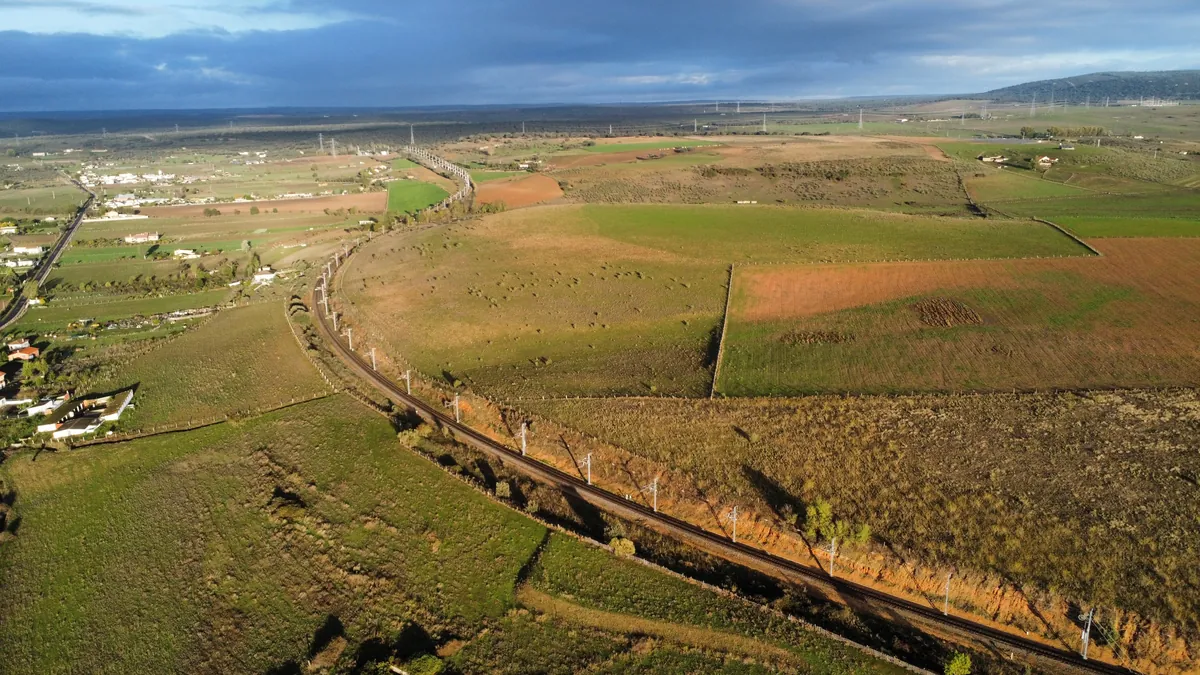
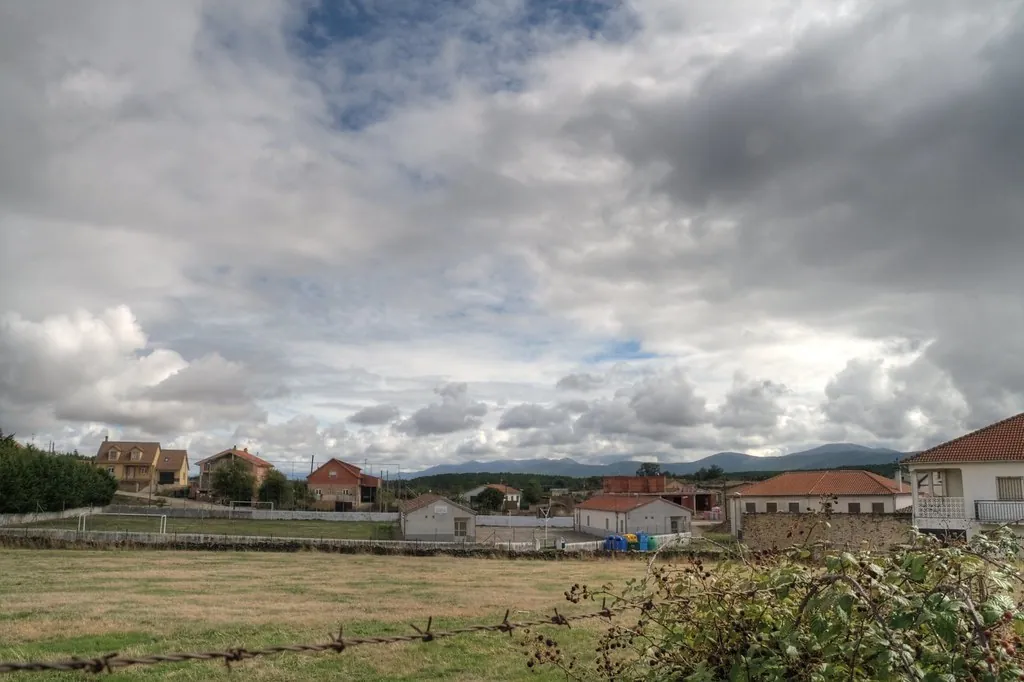
Gallegos de Argañán lies in the province of Salamanca, close to the Portuguese border, within the district of Ciudad Rodrigo. The dehesa stretches across almost the entire horizon: scattered holm oaks, sparse pasture and dirt tracks linking one farm to another. With just over two hundred residents, the village remains closely tied to this landscape. Stone houses, corrals and agricultural sheds are not decorative features. They are part of daily life.
The name “Argañán” is often linked to a thorny shrub that grows along paths and in dry ground. It can still be seen on the edges of some plots. It is a hardy plant, able to cope with long summers and little water, much like the land itself.
The Parish Church and Unhurried Streets
The parish church, dedicated to Nuestra Señora de la Asunción, rises above the rooftops as you enter the village. Its origins are old, probably medieval, although it has undergone changes over the centuries. The masonry walls and square tower are restrained in style, in keeping with many churches in this part of Salamanca.
If the door is open, it is worth stepping inside for a moment. The interior often carries that dense silence typical of rural churches, with the scent of old wood and wax lingering in the air.
Walking through the streets, large wooden gates come into view, once designed for carts and livestock. Many houses combine exposed stone with whitewashed sections, and it is common to see former haylofts or agricultural outbuildings incorporated into the main home. In some courtyards, harvests are still dried or tools stored. The boundary between domestic space and working farm is thin, reflecting a way of life that continues to revolve around the land.
There is no sense of rush here. The layout encourages wandering without a plan, turning corners to find another stretch of stone wall or a quiet yard behind a half-open gate.
The Dehesa on Every Side
The landscape around Gallegos de Argañán is the classic dehesa of south-west Salamanca. Holm oaks dominate, with some oak trees in certain areas, open grassland and plots marked by stone walls or wire fencing.
Head out along the rural tracks and it is easy to spot kites or vultures circling high overhead, particularly on clear days. Among the grasses, rabbits and partridges move quickly, vanishing as soon as they hear footsteps. The terrain feels wide and open, shaped over centuries by grazing and agriculture rather than intensive development.
The Gallegos stream runs through part of the municipality. It does not always carry much water, especially towards the end of summer. In spring, however, the surroundings turn greener and the sound of water can be heard moving between the stones. Seasonal change is noticeable here. After rain, the ground softens and the pasture thickens. By late summer, the colours fade and the earth hardens again.
Dirt Tracks and Quiet Roads
Exploring the area does not require signposted routes. Numerous agricultural tracks begin in the village itself and fade into the farmland. Respect for gates and boundaries is important, as much of the land is private and actively used.
A simple option is to head out early in the morning or towards sunset, when the heat eases and the countryside fills with sound: cicadas in summer, cowbells in the distance, a dog barking from a farm building. These details become more noticeable in a place where traffic and background noise are minimal.
There are also secondary roads with very little traffic linking Gallegos de Argañán to nearby villages. The terrain is fairly gentle, making it manageable by bicycle. Spring is usually the most pleasant time to move around. The pasture is high, the holm oaks are greener and the strongest heat has yet to arrive.
In summer the landscape changes completely. The cereal fields turn yellow and the sun is intense from mid-morning onwards, so walking is best kept to the first or last hours of the day. The contrast between seasons is part of what defines this corner of Castilla Leon, where the agricultural calendar continues to shape daily routines.
Between Ciudad Rodrigo and Portugal
Gallegos de Argañán is around fifteen kilometres from Ciudad Rodrigo. The drive is short, making it easy to combine rural quiet with a visit to a larger historic town. Ciudad Rodrigo offers defensive walls, old streets and a busier atmosphere than the surrounding villages.
The Portuguese border is also very close. In this part of Salamanca it is common for people to cross from one side to the other as a matter of course. The villages lie only a few kilometres apart and share many customs. The border feels more administrative than cultural, part of the geography but not a barrier to everyday life.
This proximity adds another layer to the setting. Roads do not simply lead to the next Spanish town, but towards another country that is part of the same rural fabric.
Festivals and the Rural Calendar
The main village festivities are usually held around 15 August, in honour of the Virgen de la Asunción. During these days the atmosphere shifts noticeably. Relatives return, open-air dances known as verbenas are organised and the streets see more movement than at any other time of year.
In January, the bonfires of San Antón are still observed. This tradition is closely linked to livestock farming. Piles of branches are burned and, traditionally, animals were blessed as part of the celebration. It is a reminder of how central herding has been to the local economy.
For the rest of the year, life moves at a steady pace. There are no major events or programmes designed to draw visitors. The rhythm follows the fields, the seasons and everyday tasks, which continue to mark the passage of time.
Gallegos de Argañán does not present itself as a destination of headline attractions. Its appeal lies in continuity: stone houses still in use, tracks that serve working farms, a church that anchors the skyline, and a landscape of dehesa that defines both the view and the way of life. For those travelling through the south-west of Salamanca, it offers a clear sense of how this borderland lives from one season to the next.