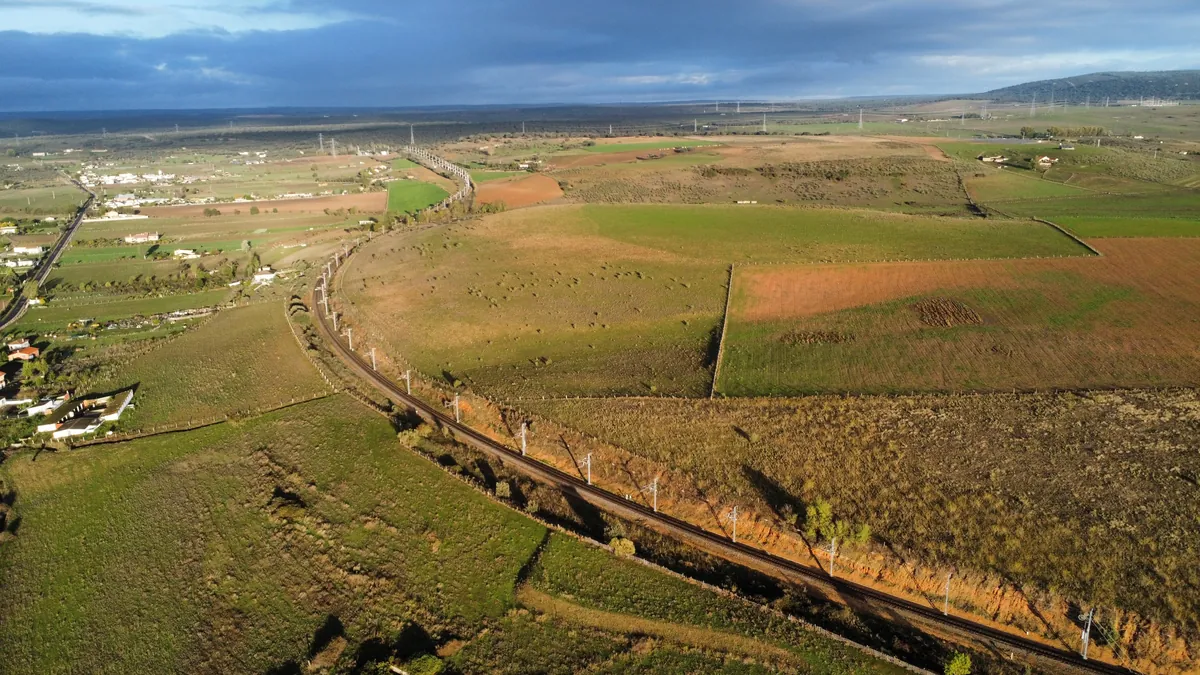
Vista aérea de Guadapero
Instituto Geográfico Nacional · CC-BY 4.0 scne.es
Castilla y León · Cradle of Kingdoms

Guadapero

The stone trough in Guadapero's only square still holds water, though nobody's drawn from it since the 1970s. At 725 metres above sea level, the tr...

86 inhabitants
725m Altitude

Why Visit

Parish church Rural life

Best Time to Visit

summer

Patron saint festivals agosto

Things to See & Do
in Guadapero

Heritage

  • Parish church
  • Crop fields

Activities

  • Rural life
  • Rest

Festivals
& & Traditions

Fecha agosto

Fiestas patronales

Las fiestas locales son el momento perfecto para vivir la autenticidad de Guadapero.

Full Article
about Guadapero

Quiet farming village in the Ciudad Rodrigo area

Ocultar artículo Leer artículo completo

The stone trough in Guadapero's only square still holds water, though nobody's drawn from it since the 1970s. At 725 metres above sea level, the trough stands as a reminder that this tiny salmantino hamlet once supported 300 souls rather than today's 86. Most visitors thunder past on the A-62, bound for Salamanca's golden sandstone, yet those who do peel off at Exit 79 discover something increasingly rare in Spain: a village that makes no effort to impress.

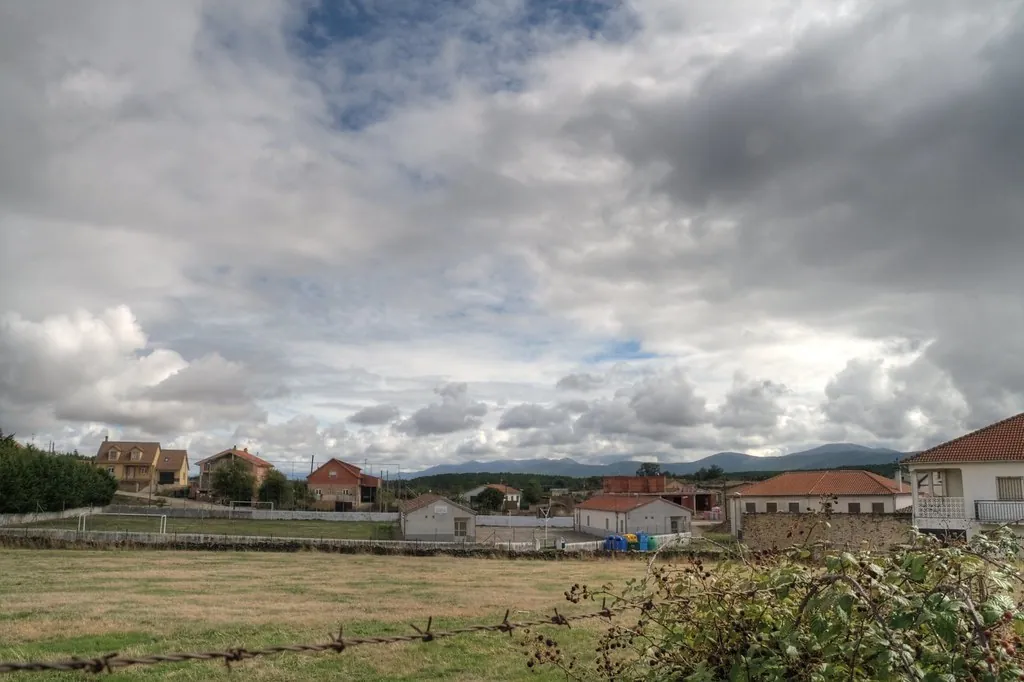
Guadapero doesn't do "attractions". What it offers instead is the unvarnished rhythm of Spain's depopulated interior, where grain fields roll to the Portuguese border and stone houses outnumber permanent residents by roughly three to one. Roughly half those homes stand shuttered, their owners returning only for August fiestas or the odd long weekend. The resulting hush is so complete that birdsong carries clearly from the cereal plains into the single bar, Yoanna Irish Pub—an establishment without a drop of Guinness, run by a Castilian family who liked the sign.

What passes for a centre

There isn't one, really. Houses cluster along a dog-leg lane that peters out at the church, itself locked more often than open. Architecture buffs will recognise the provincial formula instantly: granite blocks, timber doors with rounded arches, external staircases leading to haylofts now converted into holiday lets. The parish church of San Miguel dates largely from the 18th century, modest nave, no great art, yet its bell still marks the hours for anyone awake to hear. Step inside (if the caretaker has remembered the key) and you'll find a single-aisle interior smelling of candle wax and damp stone, the walls whitewashed a utilitarian cream rather than frescoed.

Walk fifty metres beyond the last house and you're among wheat and barley. The landscape is table-top flat, the horizon broken only by stone huts whose thatch has been replaced by corrugated iron. These "chozos" once sheltered shepherds during transhumance; today they serve as improvised bird hides for the handful of ornithologists who appreciate the meseta's understated biodiversity: great bustards in winter, black-shouldered kites year-round, the occasional Spanish imperial eagle drifting over from the Arribes reserve 40 minutes west.

A bar, a pool, and the middle of nowhere

Evenings revolve, by default, around Yoanna. The owner, Manolo, opens at eight, closes when the last customer leaves, and serves exactly three dishes: migas (fried breadcrumbs with scraps of chorizo), plato combinado (egg, chips, pork chop), and the local cheese plate. A glass of house wine costs €1.50, poured from a plastic litre bottle kept in the fridge. British visitors sometimes recoil at the informality—no written menu, card machine that works "cuando quiere"—yet the simplicity is precisely why Guadapero appears in a few Madrid guidebooks under "España vacía".

If you need more comfort, book La Milla Rural on the lane south of the church. The 19th-century grain store turned guesthouse has five rooms, thick stone walls, under-floor heating and, crucially, a small pool overlooking oat fields. Dinner is served at a single table; expect a mild chickpea stew, local lamb shoulder, and the light Arribes wine that rarely exceeds 12.5%. At €90 B&B it's hardly budget, yet the alternative is a 25-minute drive to Peñaranda for anything approaching "restaurant" service. Note: order supper before 6 pm or the kitchen stays shut.

Walking nowhere in particular

There are no signed trails, which delights some and alarms others. The GR-14 long-distance path skirts the village five kilometres south, but within Guadapero itself you simply follow farm tracks until you feel like turning back. A pleasant 7-kilometre loop heads east past the abandoned hamlet of Navalmoral, where storks nest on the church tower and barn doors hang from rusted hinges. Spring brings red poppies stitched through green wheat; autumn turns the stubble fields bronze. Take water, a GPS track on your phone, and don't count on phone signal—Movistar works sporadically, Vodafone not at all.

Cyclists find the rolling plateau ideal for steady kilometres without traffic. Road bikes cope fine on the smooth CL-512; gravel riders can weave the farm grid. Just remember that every litre of liquid consumed must be carried in—no fountains function outside the village.

When to come, and when to stay away

March–May and mid-September to early November offer 20 °C days, cool nights, and skies scrubbed clean by Atlantic fronts. Summer climbs past 35 °C; the heat is dry but shade is scarce. Winter brings crisp sun and -5 °C dawns, occasionally snow that melts within 48 hours. Access remains possible year-round, unlike mountain villages farther south, yet January can feel bleak when every second house is locked and the bar shuts early.

Fiestas change the tempo completely. Around 15 August (dates shift with the village calendar) returning emigrants triple the population. A brass band strikes up in Yoanna square, whole suckling pigs roast on makeshift spits, and teenagers who grew up in Valladolid or Madrid revert to the dialect of their grandparents. Visitors are welcome, beds impossible without prior booking. Equally, if silence is your objective, avoid this weekend at all costs.

The honesty paragraph

Guadapero will never compete with Cadaqués or Ronda. There is no artisan ice-cream, no boutique olive-oil shop, no sunset selfie spot. Mobile coverage wobbles, public transport is non-existent, and night-life ends when Manolo wipes the bar tables. What you receive instead is the sound of wind through wheat, starfields undimmed by street-lights, and a crash course in how empty much of interior Spain has become. Treat the hamlet as a pause between the cathedral cities—Salamanca 90 minutes east, Ciudad Rodrigo 25 minutes west—and the visit makes sense. Arrive expecting charming, and you'll drive away within the hour. Arrive expecting nothing, and the meseta might just whisper something worth hearing.

Drive back to the A-62, and Guadapero sinks behind the brow like a half-remembered dream. The trough, the locked church, the bar with the fake Irish name—they fade into cereal haze. Yet for anyone who has ever complained that Spain has become too polished, too eager to please, this refusal to perform is oddly refreshing. Just bring a book, a torch, and enough petrol to leave whenever the silence gets too loud.

Key Facts

Region
Castilla y León
District
Ciudad Rodrigo
Coast
No
Mountain
No
Season
summer

Official Data

Institutional records and open data (when available).

  • BONETE DEL CURA
    bic Arte Rupestre ~2.8 km

Planning Your Visit?

Discover more villages in the Ciudad Rodrigo.

View full region →

More villages in Ciudad Rodrigo

Traveler Reviews