Full Article
about Herguijuela de Ciudad Rodrigo
Small settlement with traditional slate-and-granite architecture
Hide article Read full article
A Small Village in the Ciudad Rodrigo Comarca
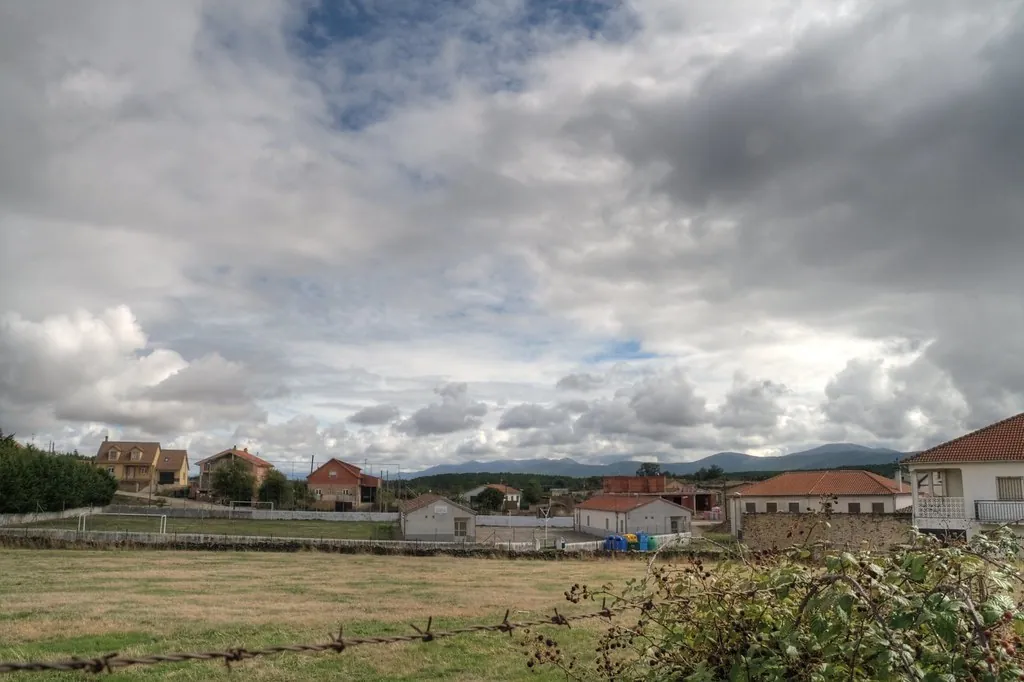
Herguijuela de Ciudad Rodrigo is a very small village in the province of Salamanca, within the comarca of Ciudad Rodrigo in Castilla Leon. Around 65 people live here. Most visitors stop briefly, have a look around and then continue their journey.
Parking is usually straightforward because there is hardly any traffic. The simplest approach is to leave the car at the entrance or along one of the wider streets and explore on foot. It does not take long to see the whole village. In summer there can be a little more movement, particularly in the late morning, but nothing like the busier destinations elsewhere in the province.
This is not a place packed with sights or attractions. It works better as a short pause on a wider route through the countryside around Ciudad Rodrigo, especially if the plan is to follow smaller roads across the Salamanca dehesa.
The Village Centre
The heart of Herguijuela de Ciudad Rodrigo is its main square and the parish church of Nuestra Señora de la Asunción. The church is the most prominent building in the village. Its structure shows additions from different periods, something common in small rural churches that have been repaired and altered over time as needed.
There are no grand monuments or large historic buildings beyond this. The streets are short and simple. In about half an hour, the essentials have been covered.
The houses follow the traditional style of the area. Stone and adobe are the main materials, and many homes have corrals attached directly to the living quarters. In several cases these patios still serve agricultural or livestock purposes. Here, the countryside has never been separate from the village. Daily life and farming have long been intertwined, and that relationship is still visible in the layout of the streets and properties.
Walking around is less about ticking off sights and more about observing how a small rural settlement functions. The scale is modest, and the rhythm is slow.
The Dehesa Landscape Around It
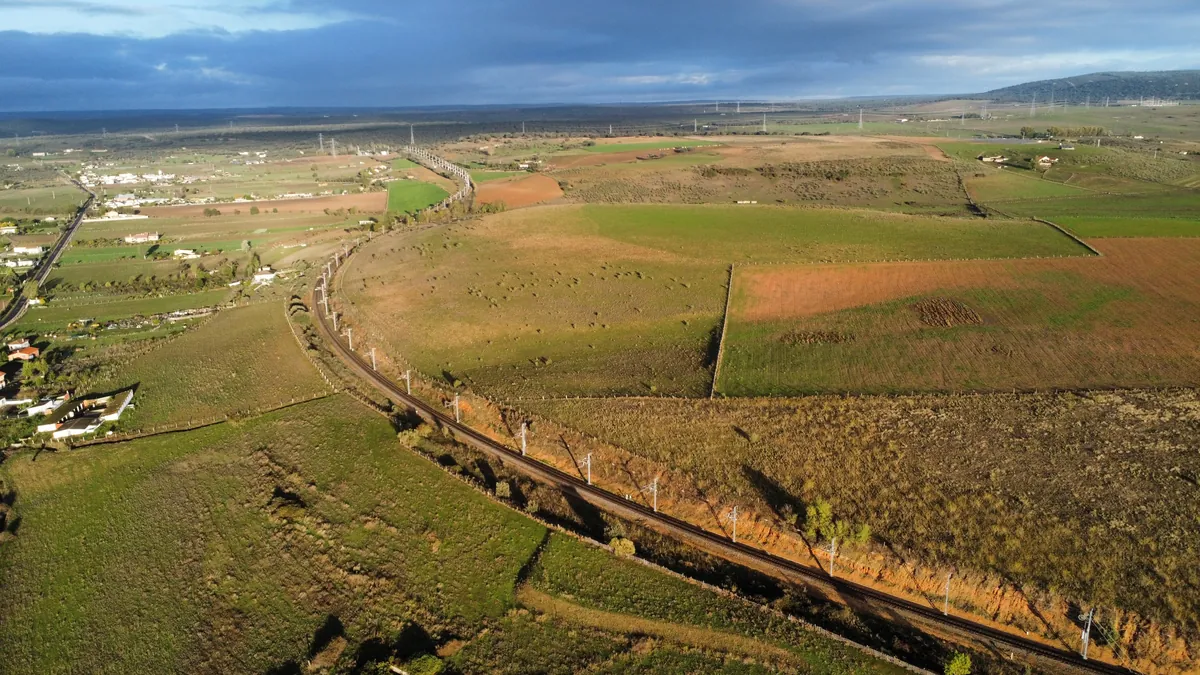
The most interesting aspect of Herguijuela de Ciudad Rodrigo lies beyond its built-up area. The surrounding municipal land is dehesa, a characteristic landscape of western Spain made up of scattered holm oaks, open pasture and large estates used for grazing livestock. It is common to see cattle, and depending on the area, Iberian pigs raised outdoors in extensive systems.
Several rural tracks lead out from the village into this countryside. They are simple farm paths with limited signage, yet they are easy enough to follow. These routes are suitable for a gentle walk or a bike ride without significant gradients. The terrain is mostly open and rolling rather than steep.
For those interested in birdlife, spring and autumn tend to bring more activity. Birds of prey and other species associated with the dehesa can often be seen. The area is not set up as a formal birdwatching destination, but the landscape itself creates good conditions for observing wildlife. Even without specialist equipment, it is possible to notice movement overhead or among the trees.
The appeal here is understated. There are no visitor centres or marked nature trails described, only open land and working farms. The value of the setting comes from its continuity and its everyday character rather than from organised tourism infrastructure.
A Short Stop Near Ciudad Rodrigo
Herguijuela de Ciudad Rodrigo is located about 20 kilometres from Ciudad Rodrigo. Many people pass through when exploring other villages in the comarca or when choosing secondary roads to travel across the Salamanca dehesa.
As a base for sightseeing, Ciudad Rodrigo offers far more. Its walls and historic gates are well known, and there is noticeably more life in the streets. By comparison, Herguijuela is quiet and compact.
That contrast can be part of the appeal. After visiting a larger historic town, a brief detour to a place with fewer distractions provides a different perspective on the region. The pace changes, and the focus shifts from monuments to landscape.
Still, expectations need to be realistic. This is not a destination filled with activities or heritage sites. It functions better as a complement to nearby towns rather than as a standalone highlight.
When to Go
Spring and autumn are generally the most pleasant seasons for walking in the area. Temperatures tend to be more comfortable for spending time outdoors. In summer, the heat is noticeable around midday, although evenings cool down somewhat. Winter can bring attractive views across the fields, yet the cold is felt here.
The village festivities take place in summer, when residents who live elsewhere return. These are small-scale celebrations, more for the local community than for visitors. They reflect the rhythm of a village where many people maintain ties even if they no longer live there year round.
A Straightforward Visit
Herguijuela de Ciudad Rodrigo rewards a clear idea of what to expect. It is a very small village. The visit consists of a short walk through the streets, a look at the church of Nuestra Señora de la Asunción, and some time appreciating the surrounding dehesa landscape.
For more atmosphere or a broader range of heritage, the road leads back towards Ciudad Rodrigo. For a quiet stretch of countryside and a glimpse of rural life in the Salamanca province, this small settlement provides exactly that, without pretence or complication.