Full Article
about La Alberguería de Argañán
Quiet border village devoted to livestock; historic crossing into Portugal
Ocultar artículo Leer artículo completo
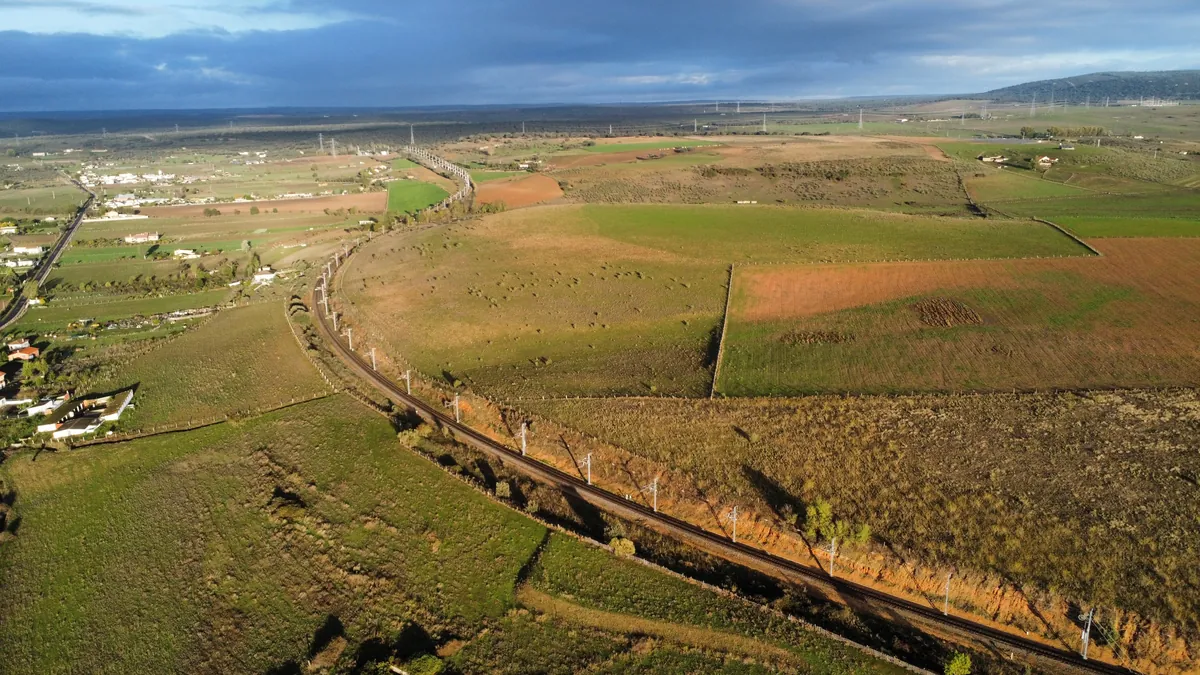
The church bell strikes noon, yet nobody appears. A tractor idles outside the only bar, its driver inside sipping coffee that costs eighty cents. From the stone bench opposite, you can see clear across to Portugal—just 3 km away—where the same dehesa landscape of holm oaks and granite outcrops continues uninterrupted. This is La Alberguería de Argañán, population 105, altitude 736 m, and roughly two-and-a-half hours west of Salamanca city. Most travellers rush past on the A-62, bound for Coimbra or the Algarve, which explains why the village still feels like the 1950s accidentally left the lights on.
Granite, Oak and Winter Wind
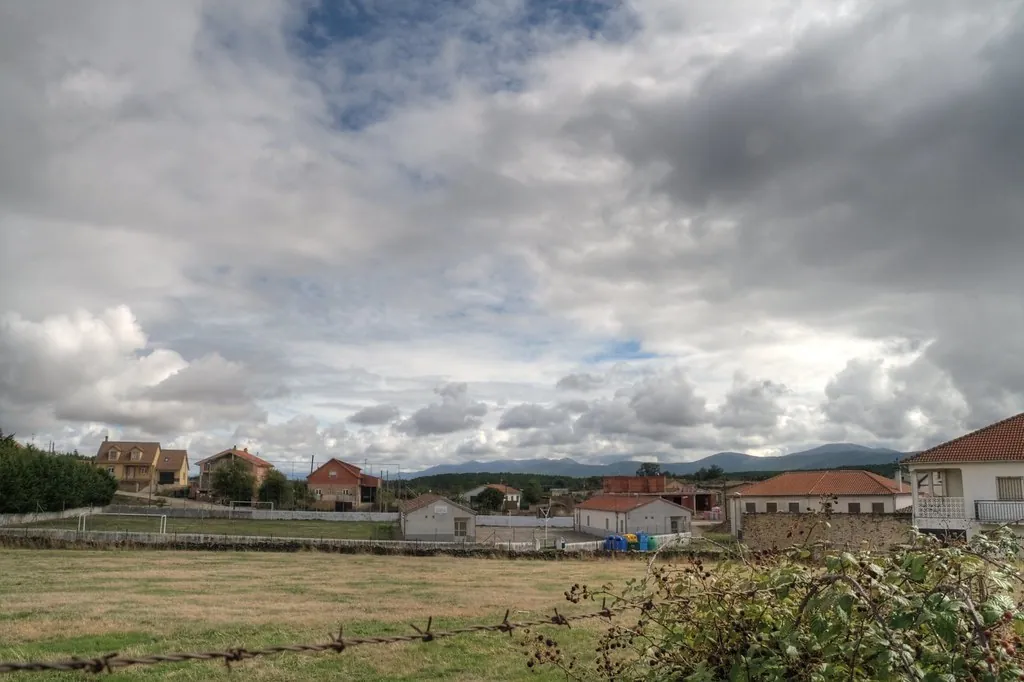
Everything here is built from what lies underfoot: coarse grey granite that turns almost silver in low sun. Houses sit low to the ground, their walls two-feet thick, chimneys oversized, roofs weighted with reddish slabs. The effect is more fortress than cottage—architecture designed to outlast the wolves that once raided these border farms. Walk the single main street and you’ll notice doors painted the same oxidised green, numbers stencilled in a 1940s typeface. No souvenir shops, no estate-agent plaques, just the occasional hand-written note: “Se vende leña, preguntar en la panadería”—firewood for sale, inquire at the bakery that opens twice a week.
Outside July and August the dominant sound is wind combing through oak leaves. Temperatures can swing 20 °C in twenty-four hours; nights stay cool even in June. Bring a fleece, especially if you plan to follow the unsigned farm tracks that radiate south toward the River Águeda. The tracks are level—old cattle-droving routes—but after rain the granite gravel becomes ball-bearing slippery. Proper footwear saves twisted ankles and British expletives.
The Border’s Living Museum
La Alberguería’s name harks back to its medieval role as an alberguería, a sanctioned rest stop for trans-border shepherds and mule trains. The modern village honours that legacy in the most honest way possible: by continuing to offer shelter, no questions asked. The only hostal, La Alberguería (six rooms, €45–€55, breakfast €4), occupies a former grain store opposite the church. Bedrooms still have original beams wide enough to balance a mug of tea on—handy because there’s no kettle. Heating comes from a pellet stove in the corridor; if you’re staying November–March, ask for extra blankets when you check in, not at midnight.
Meals follow the same pragmatic philosophy. The bar’s handwritten menu offers migas (fried breadcrumbs with pancetta) for €7, or a full plato de cordero under €12. Vegetarians get eggs, salad and the same bread everyone else eats—no avocado toast within 80 km. Beer arrives in 33 cl bottles kept in a chest freezer; Estrella de Galicia is the usual choice, price €1.50. Credit cards are tolerated, cash preferred. The nearest ATM is 18 km away in Ciudad Rodrigo; stock up before you arrive.
Walking Without Way-Marks
Serious hiking maps stop at the county line, yet the countryside is criss-crossed by usable paths. A recommended morning loop heads south past the cemetery, drops to the stone bridge over the Arroyo de la Guarena, then climbs gently through dehesa for 6 km to the abandoned hamlet of Villar de Argañán. You’ll pass more cows than people; keep dogs on leads—fighting livestock is a quick way to ruin a holiday and a farmer’s income. Spring brings carpets of white Narcissus triandrus; October lights the oaks copper. Allow three hours, carry water, and download an offline map—mobile signal flickers between Spanish and Portuguese masts.
Birders do better. The mixed farming landscape attracts both Iberian and European species: black-shouldered kites hover over fallow fields, while hoopoes pick insects from cow pats. A pair of binoculars and patience normally yields twenty species before lunch. If you hear what sounds like a radio-controlled plane, look up—it’s probably a displaying booted eagle.
When the Village Wakes Up
Fiestas here aren’t choreographed for visitors; they simply happen because families return. The main celebration honours the Virgen de la Candelaria around 15 August. A brass band arrives from Ciudad Rodrigo, the single street is closed to tractors, and dancing continues until the generator powering the fairy lights runs out of diesel. Expect free chorizo sandwiches at 2 a.m.; don’t expect accommodation unless you booked six months ahead. The second pulse of life comes during the first weekend of October for the Feria de San Froilán, when neighbouring villages compete at tombó—a form of lawn bowls played on a dirt strip outside the bar. Stakes are modest: the losers buy the winners a round. Visitors are welcome to join; just remember the bowls are weighted for right-handers.
Winter is the opposite. Daytime highs struggle above 6 °C, Atlantic storms drag slate-coloured clouds across the plateau, and the hostal often closes January–February. Chains or winter tyres are advisable if snow is forecast; the final 12 km from the N-620 are winding and rarely gritted. On the plus side you get the granite glowing pink at sunrise, and the satisfying feeling that the place belongs to you and the shepherd whose dogs echo through the valley.
Getting There, Getting Out
No rail line approaches closer than Salamanca. From the UK, the simplest route is: fly to Madrid, train to Salamanca (2 h 15 min, €24), then hire a car. The drive west on the A-62 is motorway almost to the Portuguese frontier; exit at Lumbrales/Ciudad Rodrigo oeste and follow the SA-315 for 25 minutes. Petrol stations are scarce after Villar de Ciervo—fill up. Buses exist (Salamanca–Ciudad Rodrigo–La Alberguería, Monday & Friday only) but they leave you 2 km short if the driver is running late. A taxi from Ciudad Rodrigo costs about €35; pre-book because ranks are often empty.
Worth the Detour?
La Alberguería de Argañán will never feature on a “Top Ten” list, and locals prefer it that way. Come if you want to see how Spain’s interior functions when tourism isn’t the primary industry, if you’re content with self-guided walks, simple food and conversations conducted in slow Castilian punctuated by hand gestures. Don’t come expecting boutique hotels, night-life or souvenir tea-towels. The village offers something rarer: the quiet click of a gate latch echoing across two countries, the smell of oak smoke on still air, the realisation that 736 m is high enough to make the stars noticeably brighter. Stay a night, maybe two, then drive on before the silence becomes unnerving rather than restorative.