Full Article
about La Atalaya
Small rural hamlet on the mountainside; known for its quiet and oak-ringed setting.
Hide article Read full article
Between Castilla and Portugal
In the province of Salamanca, close to the Portuguese border, La Atalaya occupies a point where the lands of the comarca of Ciudad Rodrigo merge with the dehesa salmantina. Fewer than a hundred people live here, in a village set at around 800 metres above sea level. Its scale is modest, yet its position has shaped its history.
The name itself refers to a watchtower, a reminder of a time when this was contested ground. The frontier between Castilla and Portugal shifted over the centuries, and settlements along it carried strategic importance. La Atalaya’s origins are tied to that fluctuating border, where kingdoms and cultures met and overlapped. Today there are no fortifications dominating the skyline, but the memory of vigilance and defence remains embedded in the place name and in local history.
What stands out now is not grandeur but continuity. Life here has long been defined by agriculture and livestock, and the pace of change has been slow. The village still reflects that rural foundation.
Granite, Cobblestones and a Parish Church
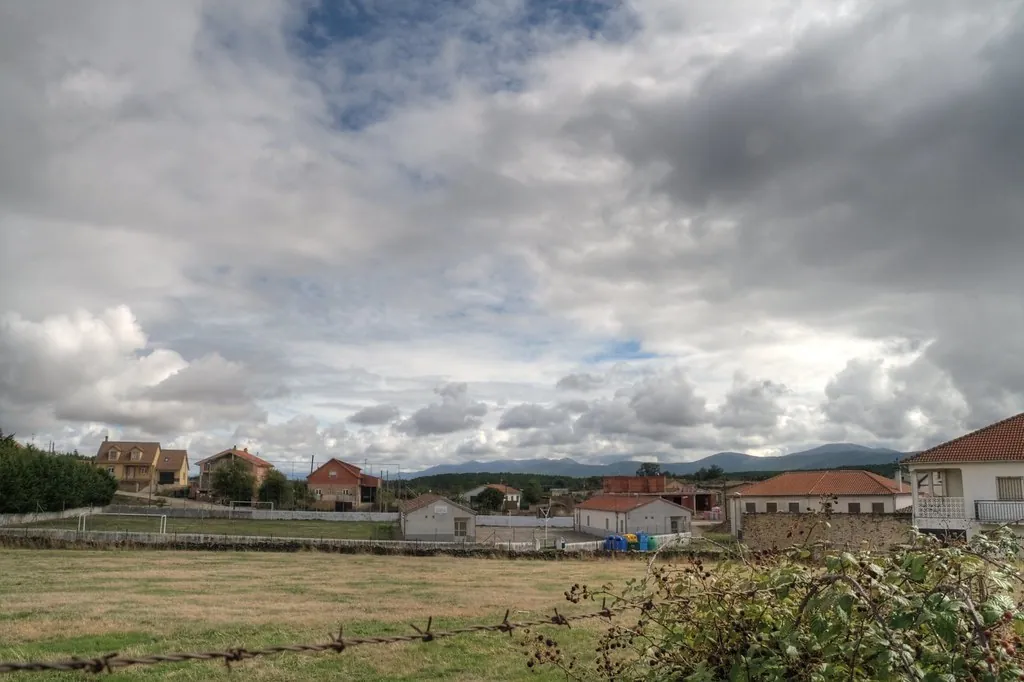
Time in La Atalaya is not measured in major monuments. It is visible instead in cobbled streets and granite buildings that retain their original structure. The materials speak of the surrounding landscape, where stone has always been close at hand.
The parish church, probably dating from the 15th century, has undergone several alterations. Even so, it preserves elements that reveal its medieval origins. Its narrow nave and simple bell tower reflect the practical character of rural religious architecture. For centuries this building formed the centre of community life, hosting worship and marking key moments in the calendar.
Around it, the village layout remains straightforward. Granite façades with old wooden doors line the streets. Tall chimneys rise above some houses, features of a popular architecture that has endured. Nearby, traces of threshing floors and animal pens can still be seen, some of them continuing in use. These are not museum pieces but part of a working environment shaped by generations who cultivated the land and raised sheep and cattle.
The Dehesa Salmantina
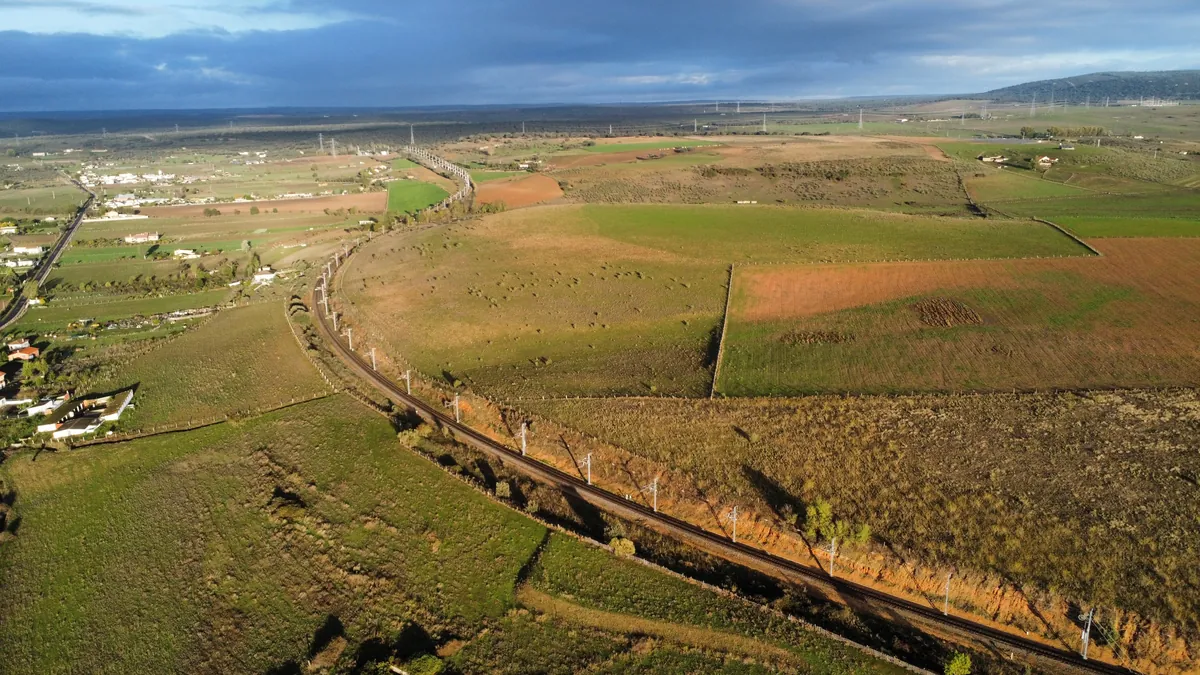
To understand La Atalaya, it is essential to look beyond the houses to the landscape that surrounds them. The dehesa salmantina is a distinctive ecosystem of open pasture dotted with holm oaks and scattered oaks. In spring it turns green and fills with wildflowers, softening the tones of earth and stone.
This environment supports a notable variety of birdlife. Birds of prey such as kites and griffon vultures circle overhead, taking advantage of open skies and thermals. At certain times of year, the Spanish imperial eagle can also be observed. Spring and autumn bring migratory species passing through, making the area of interest to birdwatchers.
Observation requires patience and binoculars. Many birds remain quiet among the trees, and sightings are never guaranteed. That uncertainty is part of the experience. The landscape is not curated or signposted; it is lived in and worked.
Rural tracks lead out from the village towards nearby hamlets. Most follow old livestock routes established by those who farmed and herded here long before modern roads. They can be walked without detailed maps, forming a loose network across fields and grazing land. Along the way, wooden gates, stone walls and working corrals reinforce the sense of continuity between past and present.
Rural Flavours and Open Skies
The surrounding area is known for beef from native breeds such as the morucha, well adapted to the conditions of the dehesa. Iberian hams and cured sausages are also produced in nearby villages. There are no restaurants in La Atalaya itself. For those wishing to taste these products, nearby towns, especially Ciudad Rodrigo, offer places where they can be sampled.
Photography finds solid ground here. Sunsets over the dehesa shift gradually from gold to muted purple. Granite façades catch the last light of the day, and everyday agricultural scenes provide subjects rooted in routine rather than spectacle. Corrals, grazing cattle and the geometry of stone and wood combine in ways that reflect a way of life still present.
After dark, the absence of urban glare transforms the sky. On clear nights, stars appear in a density that large cities rarely allow. The setting suits anyone seeking distance from artificial light and the constant brightness of built-up areas.
Traditions in a Small Community
Festivities in La Atalaya match its discreet character. In August, the village usually celebrates its patron saint festivities in honour of Nuestra Señora del Rosario. These include short processions and communal meals held in the main square. The scale is intimate, shaped by the small number of residents and returning families.
Semana Santa, or Holy Week, is observed with less intensity than in larger towns. Even so, it retains its religious meaning through simple processions and liturgical acts that bring together some of the neighbours. The emphasis is on participation rather than display.
These occasions reinforce the social ties of a place where daily life is closely shared. With such a small population, community events depend on collective effort and continuity.
Reaching La Atalaya
From Salamanca, La Atalaya lies around 85 kilometres away. The route follows the N-620 towards Ciudad Rodrigo before continuing along regional roads. The drive passes through rural zones where changes in agricultural and livestock landscapes are still visible, from open fields to pastureland typical of the dehesa.
Planning ahead allows time to appreciate what defines this corner of Castilla Leon: quiet, open country and a village that has retained its essential character. La Atalaya does not present itself through landmarks or attractions in the conventional sense. Its appeal lies in its setting near the border, its granite streets and its ongoing relationship with the land that surrounds it.