Full Article
about La Encina
Municipality known for its dense dehesa landscape and centuries-old encinas.
Hide article Read full article
An Unhurried Corner of Salamanca
By mid-afternoon, the wind often drifts down clean from the fields and lifts a fine layer of dust along the streets of La Encina. Dry leaves scrape a few metres across the ground before settling again against stone walls. Darkened wooden gates and rounded corners worn smooth by years of passing hands suggest a pace of life that has barely shifted.
Tourism in La Encina has nothing to do with signposts or curated routes. What strikes first is the quiet, broken now and then by a bird or the low sound of a car moving slowly through the village.
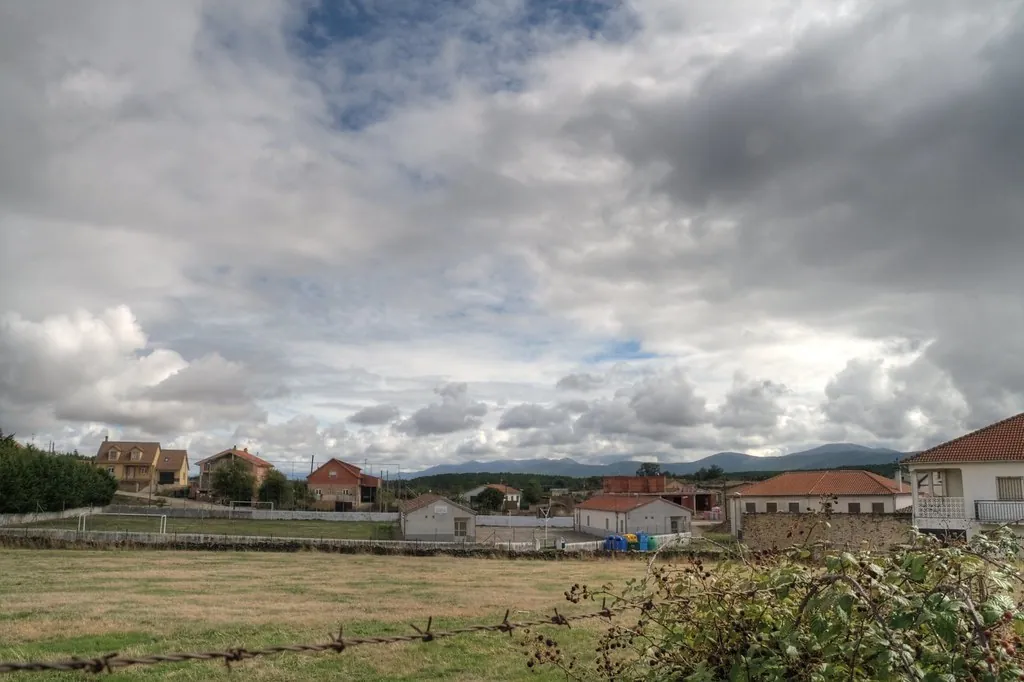
La Encina lies in the comarca of Ciudad Rodrigo, in the south-west of the province of Salamanca, close to the Portuguese border. A comarca is a traditional regional district, and here it feels distinctly rural. The village itself is small, little more than a handful of streets built with the same materials used for generations: stone, adobe and wood. Some roads are still earth, others retain stretches of uneven cobbles where tyres make a different sound as they pass.
Between one house and the next are details that are easy to miss if walking too quickly: a fountain with worn tiles, a pen where goats can still be heard at dusk, a half-open door letting out the smell of firewood when the air turns cool.
Iglesia de San Juan
The parish church, dedicated to San Juan, rises slightly above the rooftops. It is neither large nor heavily decorated. Its simple bell tower can be seen from almost anywhere in the village.
For most of the time it remains closed. It usually opens on Sundays or during a local celebration. Inside, the same logic as outside continues: thick walls, sparse decoration and subdued light filtering through high windows. There is no sense of spectacle, only a continuation of the village’s restrained character.
Walking Without a Plan
In a place of this size there is not much to “see” in the conventional sense. What La Encina offers instead is the chance to notice traces of long use: walls marked by channels carved out by rainwater, animal enclosures built from irregular stone, old troughs where water was collected for years.
Early in the morning the village is especially still. By mid-afternoon there is a gentle return of movement. Someone steps out for a walk, a car arrives and parks near a house, two neighbours exchange a brief conversation in the middle of the street. Nothing feels staged or designed for visitors.
The scale encourages wandering without direction. A short walk covers most of the streets, yet small variations in surface and light keep it from feeling repetitive. Earth underfoot changes to cobbles, then back again. Sunlight falls differently on stone walls as the day moves on.
The Dehesas Beyond the Houses
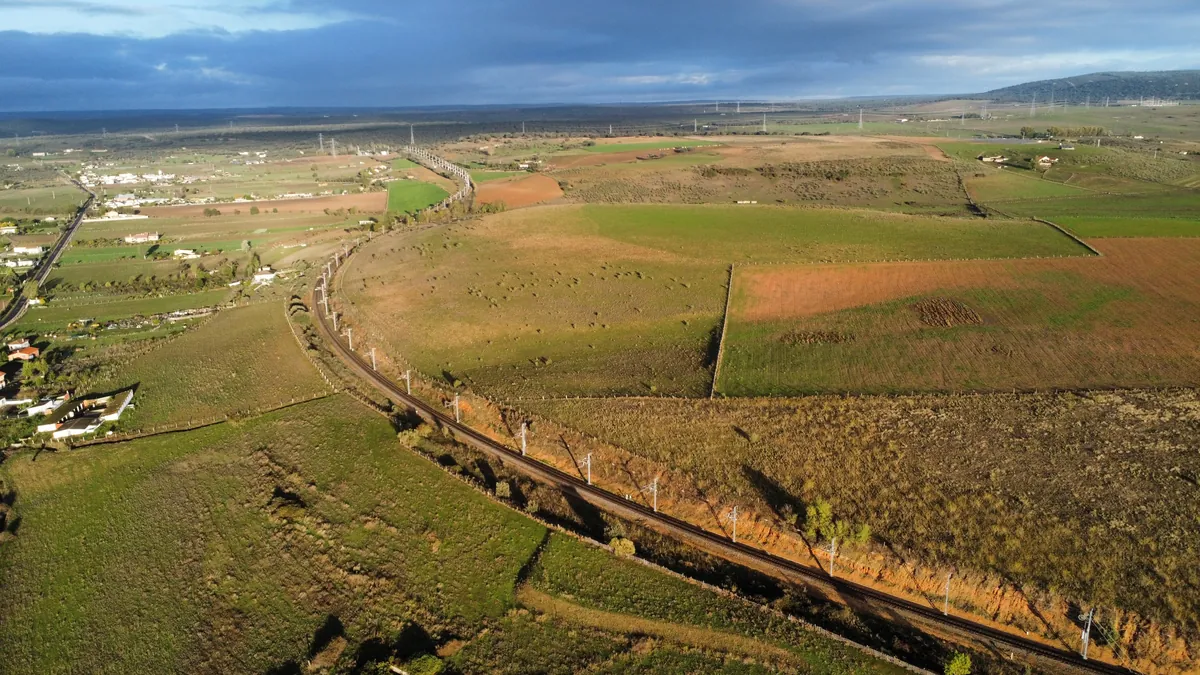
Just beyond the last houses, the dehesas begin. A dehesa is a traditional landscape of open pasture dotted with encinas, the evergreen holm oaks that give the village its name. The trees are low and broad, casting wide shade. When the ground is dry it crunches underfoot.
The landscape shifts noticeably with the seasons. In spring the grass turns a bright green. In summer, straw-coloured tones dominate the pasture. The sense of space remains constant, with open ground stretching between the trees.
The tracks connecting La Encina with other villages are rural paths rather than marked walking routes. They are not designed as signposted trails. Even so, they can be followed on foot or by driving slowly, taking care when crossing livestock land.
For those who enjoy watching birds or simply walking in silence, it is worth pausing. Birds of prey can sometimes be seen gliding over the clearings. Partridges move through low scrub. Hares are also a common sight at dusk, appearing suddenly and disappearing just as quickly among the grass and brush.
Planning a Stay
La Encina is a very small village and services are limited. It makes sense to arrive prepared with what is needed or to rely on nearby towns in the comarca of Ciudad Rodrigo, where there are more options for eating or shopping.
In summer the heat becomes intense from midday onwards. For walks along the surrounding tracks, the more comfortable times are usually early morning or later in the day when the sun begins to drop. The rhythm of the place naturally encourages adapting to these hours.
There is little infrastructure aimed at visitors. The experience depends largely on adjusting expectations: fewer facilities, more quiet. For some, that is precisely the attraction.
Nightfall and the Open Sky
When night comes, darkness settles fully. There is very little artificial lighting, and the sky appears clear, particularly on cloudless evenings. With an extra layer of clothing and somewhere to sit, a low wall or the edge of a path, constellations become visible that are often lost in towns and cities.
The soundscape reduces to almost nothing: perhaps an owl, the wind moving through the branches of the encinas, and little else. The absence of background noise makes even small sounds stand out.
Local Festivities and Cross-Border Ties
The patron saint festivities are usually held in summer, when relatives who live elsewhere return and the village becomes livelier than usual. These are not large-scale events. They are gatherings where people meet, talk in the street and stretch the evening into the night.
From La Encina it is also common to make short trips into Portugal. The border is close, and many villages on the other side share a similar landscape and way of life, with the same open dehesas and quiet roads winding between encinas. The transition from one country to the other feels gradual rather than abrupt, shaped more by the land than by any visible line.
La Encina does not compete for attention. Its appeal lies in continuity: stone, wood, dust, shade and sky. Time moves steadily here, measured in wind across the fields, in the call of a bird, in the fading of light over the dehesa. For travellers willing to slow down, that is the experience it offers.