Full Article
about Martiago
Border town with Cáceres, surrounded by oak groves; area of mushroom and game interest.
Ocultar artículo Leer artículo completo
At 800 Metres, Everything Moves Differently
The morning mist clings to Martiago longer than it should. At 800 metres above sea level, this stone village in Salamanca province gets the last laugh on weather forecasts from Madrid. When the capital swelters at 35°C, Martiago might hover at a civilised 28°C. When Madrid reports clear skies, Martiago's inhabitants know to keep a jacket handy. The altitude doesn't just moderate temperatures—it reshapes time itself. Tractors appear before breakfast and disappear after lunch. The church bell marks hours that seem negotiable rather than fixed.
Two hundred and fifty people live here, though that number doubles during fiestas and halves during winter months. They've learned to read the Sierra de Gata's moods like a familiar book. When clouds gather around the highest peaks to the west, rain usually follows within hours. When the wind carries the scent of eucalyptus from Portugal—just twenty-five kilometres away—stormy weather approaches from the Atlantic.
Stone, Adobe and the Art of Not Trying Too Hard
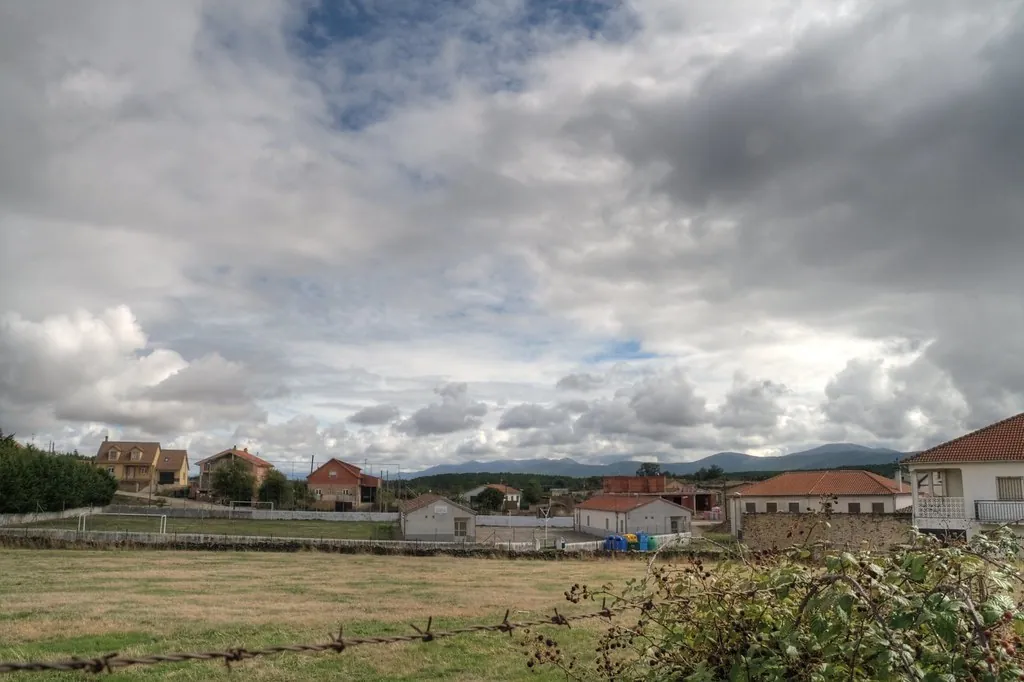
Martiago's architecture refuses to perform for visitors. Granite houses with adobe additions lean comfortably against each other, their wooden doors painted colours that made sense to someone forty years ago and haven't been changed since. These aren't the manicured facades of tourist-heavy pueblos. Here, functionality still trumps aesthetics. A massive wooden gate isn't photogenic—it's practical, wide enough for a tractor pulling a hay trailer. Corrals sit directly beside houses because walking fifty metres to feed animals wastes time better spent elsewhere.
The parish church dominates the small plaza with the confidence of something that knows it doesn't need to impress. Built from the same granite as everything else, its simplicity reflects rural priorities. Inside, the cool darkness offers relief from summer heat and shelter from winter winds. More importantly, it serves as the village's social engine. Morning mass doubles as a daily news service. Who's returned from the city. Whose grandchildren are visiting. Which farmer's selling land to which neighbour.
Walking the narrow lanes reveals abandoned wine cellars carved into bedrock. Until the 1970s, these bodegas produced rough red wine for local consumption. Now they store potatoes, tools, or nothing at all. Their empty stone troughs and blackened ceilings tell a familiar Spanish story of agricultural decline and rural depopulation. Yet Martiago never emptied completely. Something—stubbornness perhaps, or the stubborn quality of the land itself—kept enough people here to maintain essential services.
Walking Country Where Spain Meets Portugal
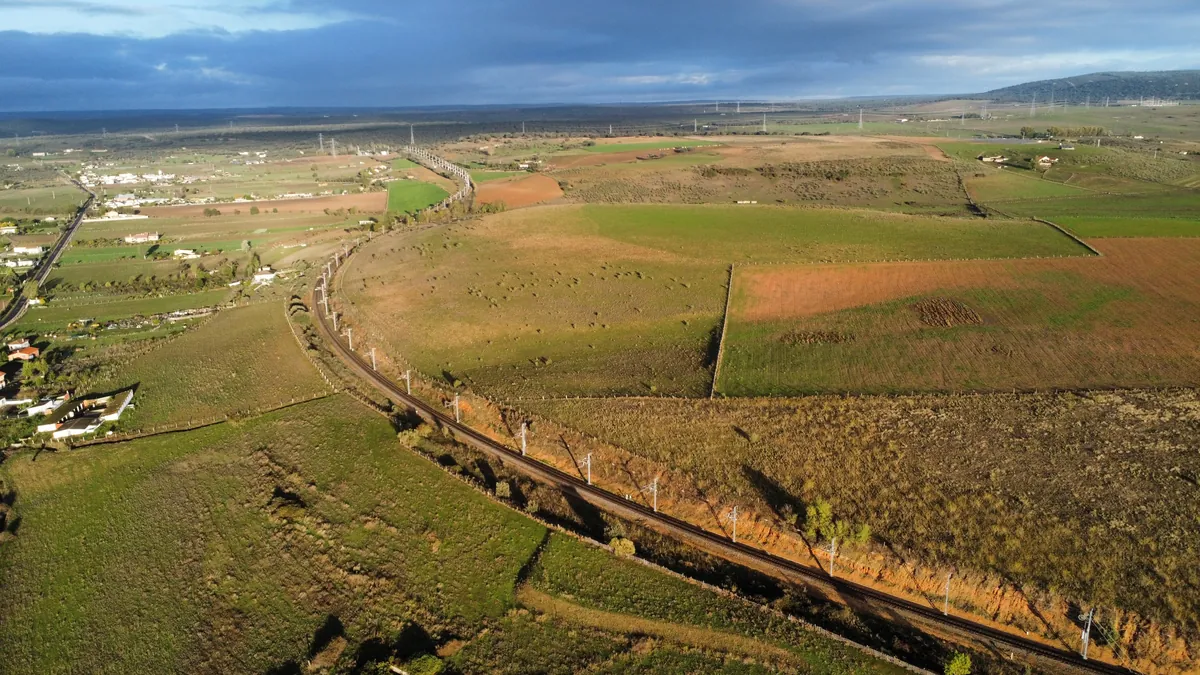
The landscape surrounding Martiago defines the border between Castilla y León's agricultural heartland and the wilder Sierra de Gata. Ancient holm oaks and cork oaks create a dehesa ecosystem that looks natural but represents centuries of human management. Cattle graze between trees. Sheep move across fields in managed rotations. This isn't wilderness—it's a working landscape that happens to support remarkable biodiversity.
Storks nest on telephone poles. Red kites circle overhead. The lucky walker might spot an imperial eagle, though locals joke you'd have better odds winning El Gordo. Evening walks along farm tracks offer views west toward Portugal's Serra da Estrela, snow-capped in winter and hazy purple in summer heat. The Río Águeda marks the actual border, but culturally the boundary proves more fluid. Portuguese influences appear in cooking methods, place names, even the rhythm of local speech.
Serious hikers use Martiago as a base rather than a destination. The Sierra de Gata proper begins fifteen kilometres west, offering proper mountain trails and peaks exceeding 1,500 metres. Closer to home, gentle farm tracks provide easy walking without dramatic elevation changes. Cyclists appreciate the quiet roads and gradual gradients. Mountain bikers find the granite tracks challenging when dry, treacherous when wet. Spring and autumn offer ideal conditions. Summer walking requires early starts and ample water. Winter brings the possibility of snow, transforming the landscape but making mountain access unpredictable.
Food That Doesn't Need to Shout
Local cuisine reflects agricultural realities rather than tourist expectations. Hornazo—a meat-stuffed pastry—originated as portable food for field workers. Farinato, a local sausage made with bread crumbs and spices, tastes better than it sounds. Patatas meneás, potatoes fried with paprika and served with chorizo, provides carbohydrate-heavy fuel for physical labour. These dishes evolved to satisfy hunger quickly and cheaply, not to impress visitors.
Autumn brings wild mushrooms, particularly níscalos, though success varies dramatically with rainfall. Local families guard productive mushroom sites with the same secrecy British gardeners reserve for prize-winning leek patches. Restaurant options remain limited within the village itself. Most visitors combine exploration with meals in Ciudad Rodrigo, twenty-five kilometres distant, or purchase local products for self-catering. The Saturday market in Ciudad Rodrigo offers the best selection of regional specialities.
Wine production has shifted from village cellars to larger cooperatives, but quality improved accordingly. Local whites from the Rueda region and reds from Toro accompany regional dishes perfectly. The Portuguese border proximity means vinho verde appears frequently, its slight sparkle providing welcome refreshment during summer heat.
Getting Here, Staying Put, Knowing When to Leave
Salamanca's airport closed to commercial traffic years ago, so international visitors face a choice. Madrid Barajas offers the widest flight selection, followed by a two-hour drive northwest on generally excellent motorways. Porto provides an alternative—closer as the crow flies, though mountain roads slow progress. Car hire proves essential. Public transport reaches Ciudad Rodrigo but continues to Martiago only twice daily, timing that seems designed to frustrate rather than accommodate visitors.
Accommodation options within Martiago remain limited to a handful of rural houses converted for tourism. These provide authentic village experiences, including church bells at 8am and dogs that bark at shadows. More facilities exist in Ciudad Rodrigo, ranging from functional business hotels to converted palaces. The thirty-minute drive between locations passes quickly, though after a heavy village dinner on dark mountain roads, it feels considerably longer.
The village makes few concessions to tourism, which constitutes both its primary charm and main limitation. No souvenir shops. No interpretive centres. No English menus. What you get instead remains increasingly rare—an authentic agricultural community that happens to tolerate visitors rather than depending on them. Come for the walking, stay for the reality check, leave before the limitations outweigh the attractions. Martiago works best as part of a broader exploration of Spain's forgotten interior, a reminder that not every village needs to become a destination. Some places remain content simply being themselves.