Full Article
about Pastores
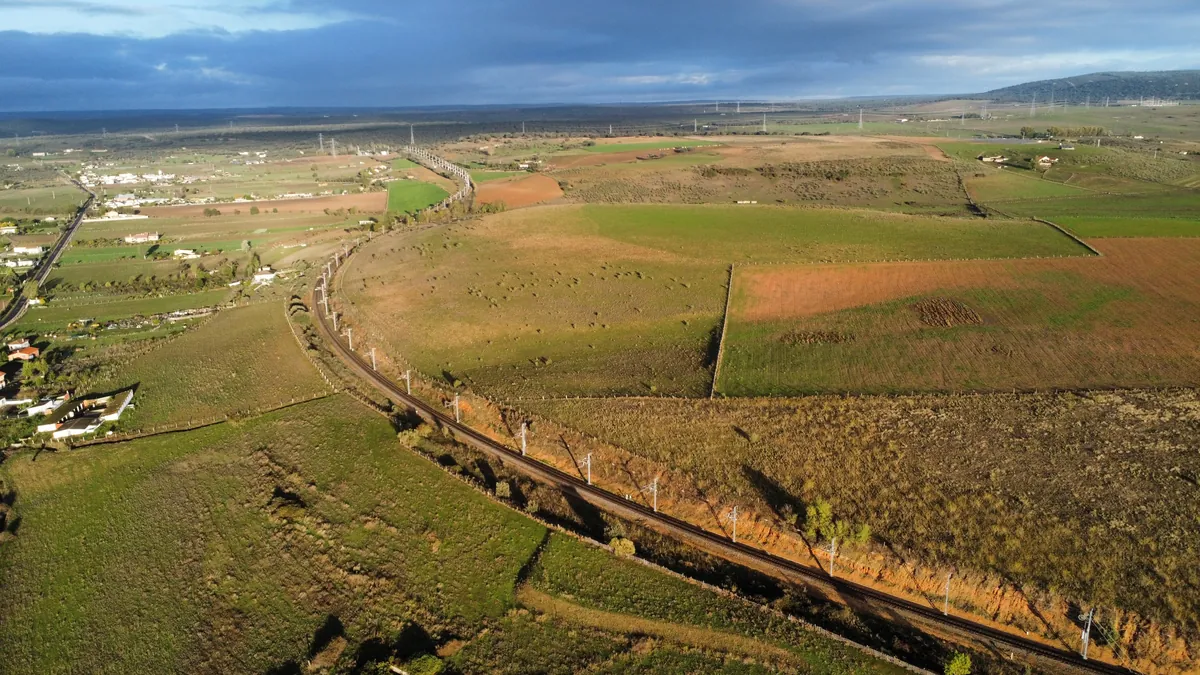
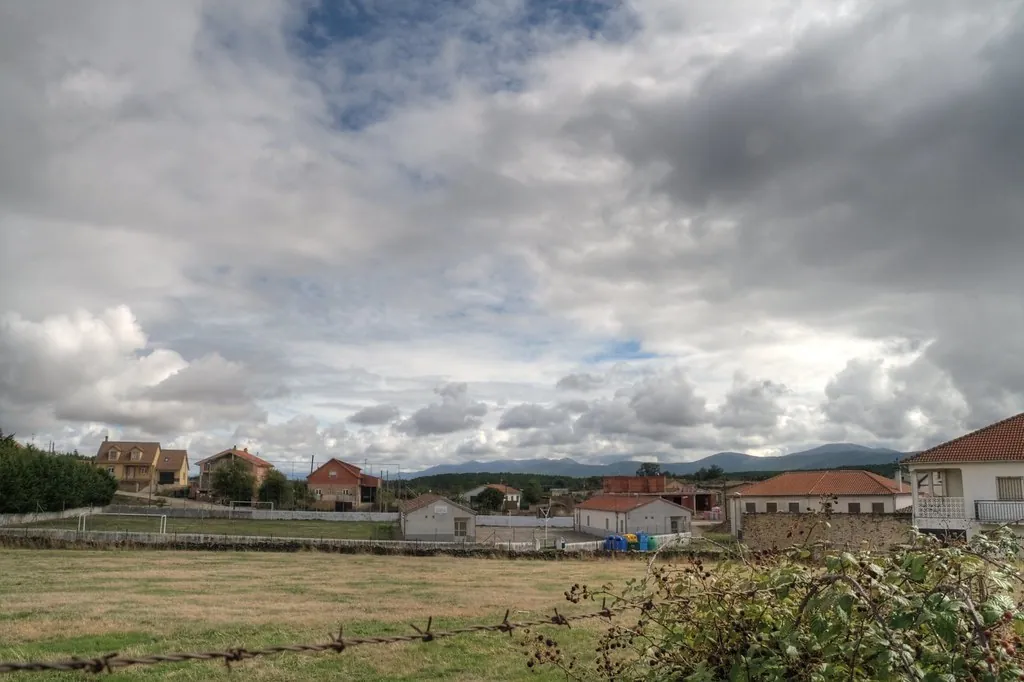
Small farming village south of Ciudad Rodrigo; typical Salamanca pasture landscape
Ocultar artículo Leer artículo completo
The granite walls of Pastores absorb sound like a sponge. Stand in the single cobbled lane at midday and you'll hear nothing but your own breathing and, perhaps, the distant clank of a cow bell from somewhere beyond the stone houses. This is rural Spain stripped bare—no gift shops, no interpretive centres, just fifty-odd residents and the weight of centuries pressing down on thick-walled cottages that have weathered Atlantic storms rolling across the Castilian plateau.
At 766 metres above sea level, Pastores sits high enough that the air carries a sharp edge even in May. Morning mist pools in the surrounding dehesas—those scattered oak pastures that produce Spain's finest jamón—while afternoon thermals lift raptors above the village church tower. The altitude matters here. Winter brings proper snow, sometimes cutting the village off for days along its winding access road. Summer, by contrast, delivers cooler nights than the surrounding lowlands, making it habitable when Salamanca city swelters 90 kilometres to the east.
Stone, Stock and Silence
Every building speaks of livestock. The traditional houses—two-storey affairs of granite and rough mortar—incorporate ground-floor byres where families once sheltered animals beneath their bedrooms. Wooden gates wide enough for a mule still open onto cramped courtyards where haylofts overhang. Many retain their original ironwork: heavy hinges forged in Ciudad Rodrigo's foundries, blacksmith's marks visible like fingerprints on the metal. It's agricultural architecture evolved for necessity, not aesthetics, yet the overall effect possesses the honesty that comes from function dictating form.
The 16th-century church of Nuestra Señora de la Asunción dominates the single plaza, its squat tower more fortress than belfry. Inside, the air smells of wax and damp stone. The altarpiece—gilded wood showing signs of woodworm—reflects candlelight onto whitewashed walls where moisture has created maps of ochre and grey. Sunday mass at 11:30 attracts a congregation that might reach double figures if relatives are visiting from Madrid. The priest drives in from Ciudad Rodrigo; if the road's icy, there simply isn't a service.
Walking the Boundaries
Pastores functions as an excellent base for dissecting the Sierra de Francia's southern approaches, though you'll need proper ordnance survey-level mapping. The GR-14 long-distance path passes within 8 kilometres at El Payo, connecting westwards towards the Portuguese border at Fuentes de Oñoro. More immediately rewarding is the 12-kilometre circuit south to Villar de la Yegua across rolling dehesa. The route follows ancient droving tracks—canadas—where granite waymarkers carved with crosses indicate medieval pilgrimage routes to Santiago. Spring brings wild asparagus sprouting beside the paths; locals sell bags for €3 at unofficial roadside stalls.
Cyclists face a different challenge. The CV-101 approach road climbs 200 metres in 4 kilometres with gradients touching 12%. Once conquered, the reward is 30 kilometres of near-empty roads through stone villages where storks nest on telegraph poles. Mountain bikers can exploit the network of forestry tracks west towards the River Águeda, though gates require lifting bikes over and cattle grids demand confidence. Download tracks beforehand—mobile coverage vanishes in valleys where Holm oaks close overhead like cathedral vaults.
What Passes for Entertainment
Let's be clear: Pastores offers zero nightlife. The last bar closed during the 2008 financial crisis and never reopened. Evening entertainment means watching the sky turn salmon-pink over oak silhouettes while drinking wine purchased earlier in Ciudad Rodrigo. The 25-kilometre drive to this fortified border town—worth it for the 14th-century cathedral alone—takes 35 minutes via roads where wild boar crossings outnumber traffic. Stock up at the Saturday market: Manchego cheese at €18 per kilo, morcilla blood sausage for €4, and bottles of local Rueda whites that cost half London prices.
Food options within Pastores itself are limited to what you cook. The village bakery vanished decades ago; bread arrives via van three times weekly—Tuesday, Thursday, Saturday—announced by horn beeping at 10:30 sharp. Miss it and you'll eat crackers. The nearest restaurant, Asador El Rincón de Galiana in nearby Gallegos de Solmirón, serves exceptional cochinillo (suckling pig) but requires booking. Their €25 menú del día includes wine and coffee; the €40 weekend feast features roast baby goat that falls from the bone.
Seasons of Isolation
Winter transforms Pastores into a Brigadoon of snow and silence. January temperatures drop to -8°C; granite walls develop frost patterns resembling abstract paintings. The CV-101 becomes treacherous—locals fit chains November through March. Yet this is when the village reveals its harshest beauty. Smoke rises straight upward from chimneys, cattle huddle against stone barns, and the Milky Way arcs across skies unpolluted by any light source beyond a few sodium lamps.
April brings abrupt change. Temperatures leap to 22°C, meadows erupt with poppies, and shepherd's pursit turns the dehesa yellow. This is arguably perfect timing: wildflowers, migrating birds, and villagers emerging from winter hibernation with stories to tell. May can deliver surprise frosts that devastate local cherry crops; farmers watch weather apps with the intensity of City traders tracking markets.
Autumn arrives suddenly in mid-October. Oak leaves shift from green to copper seemingly overnight, and the morning air carries the sharp scent of woodsmoke and fermenting acorns. This is mushroom season—boletus edulis if you're fortunate, though you'll compete with Portuguese buyers who pay €30 per kilo at farm gates. The village's few remaining pensioners forage at dawn, returning with wicker baskets and guarded expressions.
The Reality Check
Pastores won't suit everyone. The silence can feel oppressive after dark; there's no mobile signal in parts of the village; and the nearest petrol station lies 18 kilometres away in Saelices el Chico. Rental accommodation consists of two self-catering cottages—Casa Rural El Granero and La Casa del Medico—both restored to high standards but charging €80-120 nightly with three-night minimum stays. Book through Ciudad Rodrigo's tourist office; Pastores itself has no website, no tourist infrastructure, no interest in changing.
What it offers instead is authenticity without performance. When the church bell tolls seven times at dawn, it's calling actual farmers to fields, not tourists to breakfast. The woman sweeping her threshold at 8am has lived in that house for 73 years and will die there. The young man loading sheep into a trailer represents the village's future—he's returned from Salamanca university to run his grandfather's flock because, as he puts it, "the city makes noise."
Visit Pastores for what it lacks rather than what it provides. No tour buses. No souvenir stalls. No staged folk dancing. Just granite, gravity, and the slow rhythms of land that has sustained people since Moorish times. Bring walking boots, a Spanish phrasebook, and enough supplies for self-sufficiency. Leave before you need coffee shops and conversation—this village rewards those comfortable with their own thoughts, walking boots laced against the high-plateau wind that has shaped both landscape and lives across a thousand years of stubborn survival.