Full Article
about Pedro Toro
Almost deserted hamlet with the charm of abandonment and nature
Hide article Read full article
Looking at the map, Pedro Toro appears to be a small village. On arrival, it becomes clear that it is something else entirely. “Tourism in Pedro Toro” almost sounds exaggerated when you realise that around six people live here and that the houses are scattered rather than gathered around a central square.
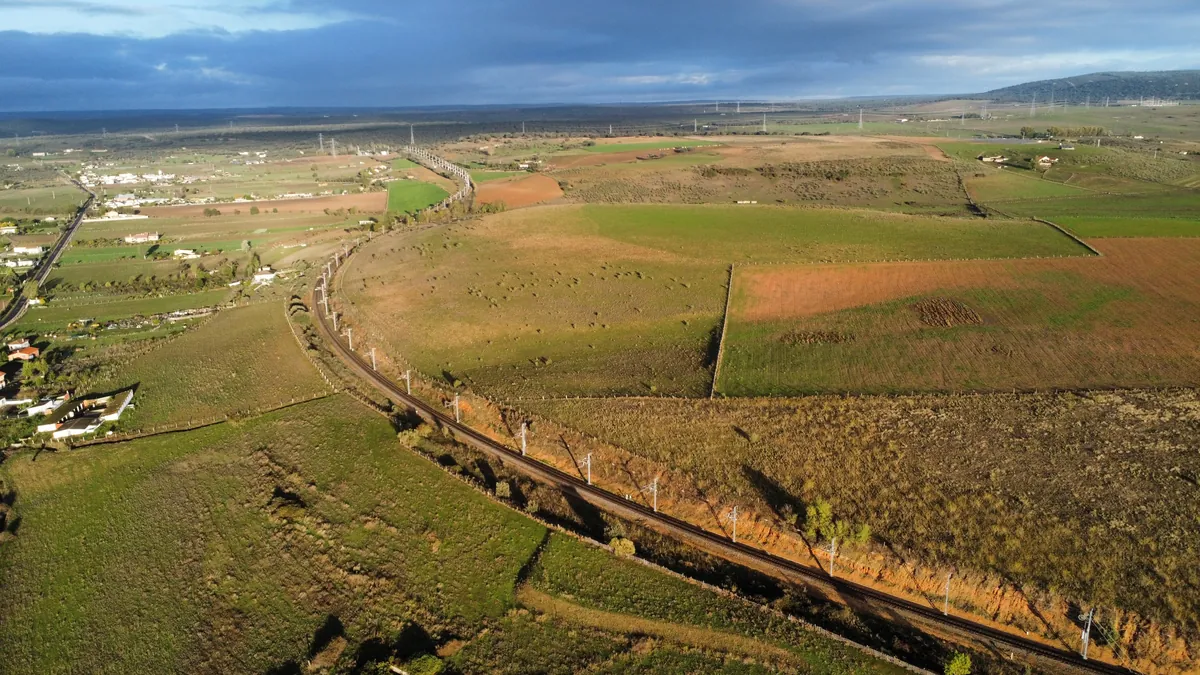
Pedro Toro lies in the west of Salamanca province, in the comarca of Ciudad Rodrigo, close to the Portuguese border, known locally as la raya. The landscape dominates more than the settlement itself. This is open dehesa, the traditional grazing land of western Spain, with old holm oaks, wide meadows and cattle and Iberian pigs feeding in the fields. It is one of those places where silence is not a metaphor. Stop the car, switch off the engine, and the quiet is tangible.
Reaching Pedro Toro
Getting here has a story of its own. From the road that connects with Ciudad Rodrigo, a dirt track branches off and slips between the holm oaks. It is not an extreme adventure, but neither is it the sort of clearly signposted turn-off found on popular routes.
The track encourages a slow approach. There are potholes to avoid and a lingering sense that you may be entering private land. Then the first houses appear and that is how you know you have arrived. There is no striking sign, no defined gateway announcing the village. It simply begins.
This lack of ceremony sets the tone. Pedro Toro does not present itself as a destination. It exists within the landscape, almost blending into it.
What the Place Is Really Like
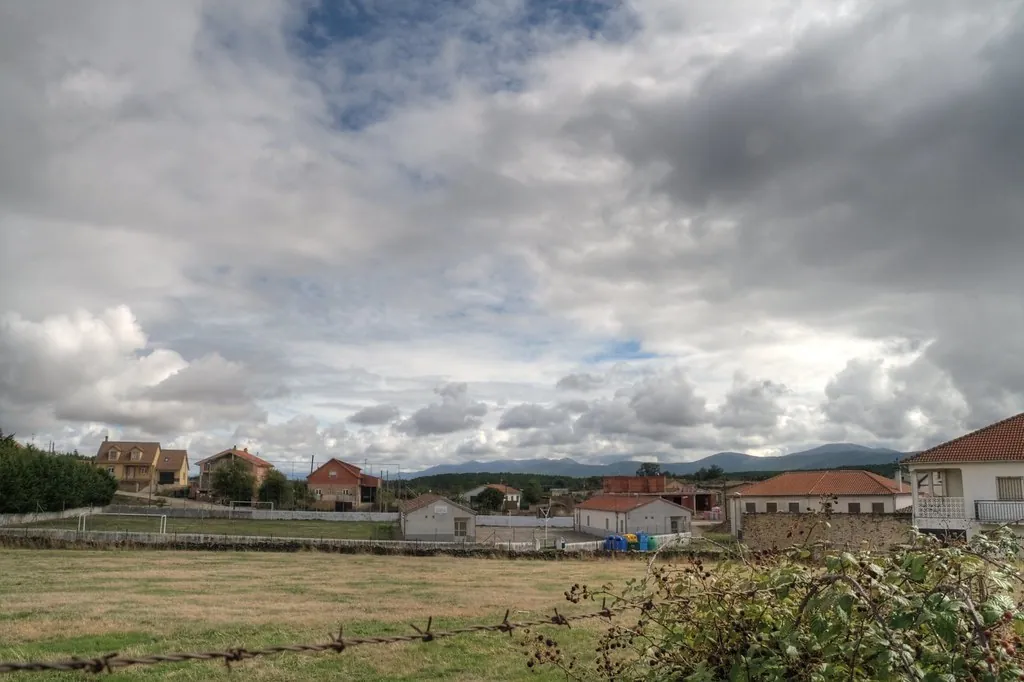
Anyone expecting a historic centre with a square and neatly aligned streets will not find that here. Pedro Toro functions more as a small cluster of rural dwellings than as a compact village.
The houses are usually built of stone or a mix of stone and adobe, topped with ageing clay tiles. Some appear to be lived in throughout the year. Others seem to open only during certain seasons. Around them are corrals, small agricultural buildings and open ground. Everything feels practical and tied to the rhythms of livestock and land management.
There is a small church dedicated to San Pedro. The building looks old, likely several centuries in age, although it is not always open. It is simple and in keeping with the scale of the settlement. There is nothing monumental about it, yet it sits naturally within its surroundings.
There are no obvious focal points, no grand civic buildings. The emphasis is on utility and continuity. The impression is of a place that has changed little because it has had no reason to.
Walking Through the Dehesa
What truly makes sense here is to spend some time walking through the dehesa. There are no marked trails and no information panels explaining what you are seeing. These are working tracks, used for decades or more, linking plots of land and grazing areas.
At intervals, enormous holm oaks come into view, the kind that seem to have witnessed generations of livestock passing beneath their branches. Above, birds of prey are often visible circling in the sky. With luck, a vulture or a harrier may glide overhead. On the ground, signs of life appear in subtler ways: hoofprints pressed into mud after rain, traces of wild boar among disturbed grass.
For those who enjoy observing the countryside slowly and closely, it is easy to linger. The interest lies in small details and gradual changes in light and colour. Those searching for prepared viewpoints or clearly signposted routes will not find them here.
The dehesa itself is worth a brief explanation for visitors unfamiliar with it. It is a traditional agroforestry system typical of western Spain, combining pasture, scattered trees and livestock farming. In areas like this part of Salamanca, it shapes both the economy and the visual identity of the land. In Pedro Toro, it is the main character.
After Your Stop
Pedro Toro can be explored quickly. That, in many ways, is part of its logic. There are no shops, no bars and no services aimed at visitors. The absence of facilities is not an oversight but a reflection of the place’s scale and function.
For that reason, many people combine a stop here with a visit to Ciudad Rodrigo or to another nearby village in the area. In those places there is more activity and somewhere to sit down for a meal connected to the livestock culture of the dehesa.
Pedro Toro works best as a small diversion along the way. You turn off the road, walk for a while, absorb how the landscape breathes, and then continue your journey.
When to Visit
The dehesa changes noticeably with the seasons. In spring the fields are greener and walking is more pleasant. Autumn brings the golden tones typical of western Salamanca, when the light softens and the grass dries back.
Summer can be intense. The sun bears down and there is little continuous shade. In winter, mornings may begin with frost, leaving everything hushed and still.
Pedro Toro is not a destination designed to fill an entire day. It is better understood as a pause. A very small place where it becomes easier to remember how many corners of the Salamanca countryside once were, and in some cases still are, when nobody has tried to turn them into an attraction.