Full Article
about Puerto Seguro
Town known for its Roman bridge over the Águeda and its dry-stone architecture.
Ocultar artículo Leer artículo completo
The church bell strikes noon, and the only other sound is a tractor coughing to life somewhere beyond the stone houses. In Puerto Seguro, population fifty, this counts as rush hour. The village squats at 635 metres above sea level on the western fringe of Salamanca province, close enough to Portugal that mobile phones occasionally flicker onto Portuguese networks. Mobile phones, mind you, that actually get signal—this isn't one of those stories about places time forgot. Puerto Seguro hasn't forgotten time; it simply refuses to be ruled by it.
The Architecture of Absence
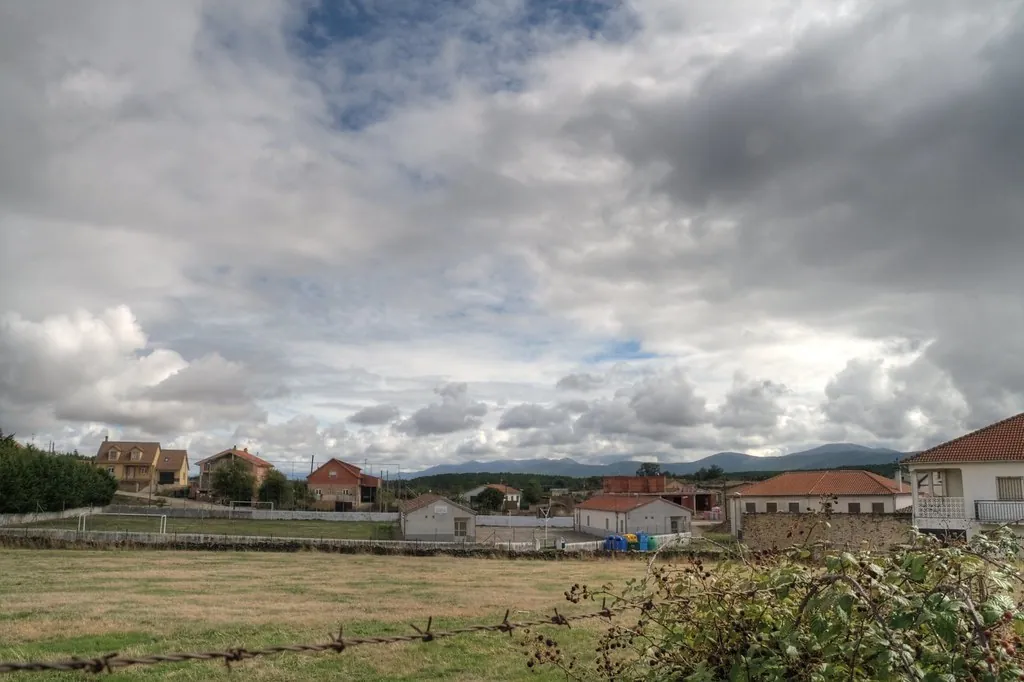
There's no municipal tourist office, no gift shop flogging fridge magnets, not even a bar serving lukewarm caña. What exists instead is a textbook example of rural Castilian building: thick stone walls rendered in lime wash the colour of old bones, Arabic tiles weathered to terracotta velvet, and wooden doors that have been closing against winter winds since someone's great-great-grandfather walked to Lisbon with wool on mules. The houses huddle around a parish church whose tower serves as both spiritual beacon and geographical reference point for anyone navigating the surrounding dehesa.
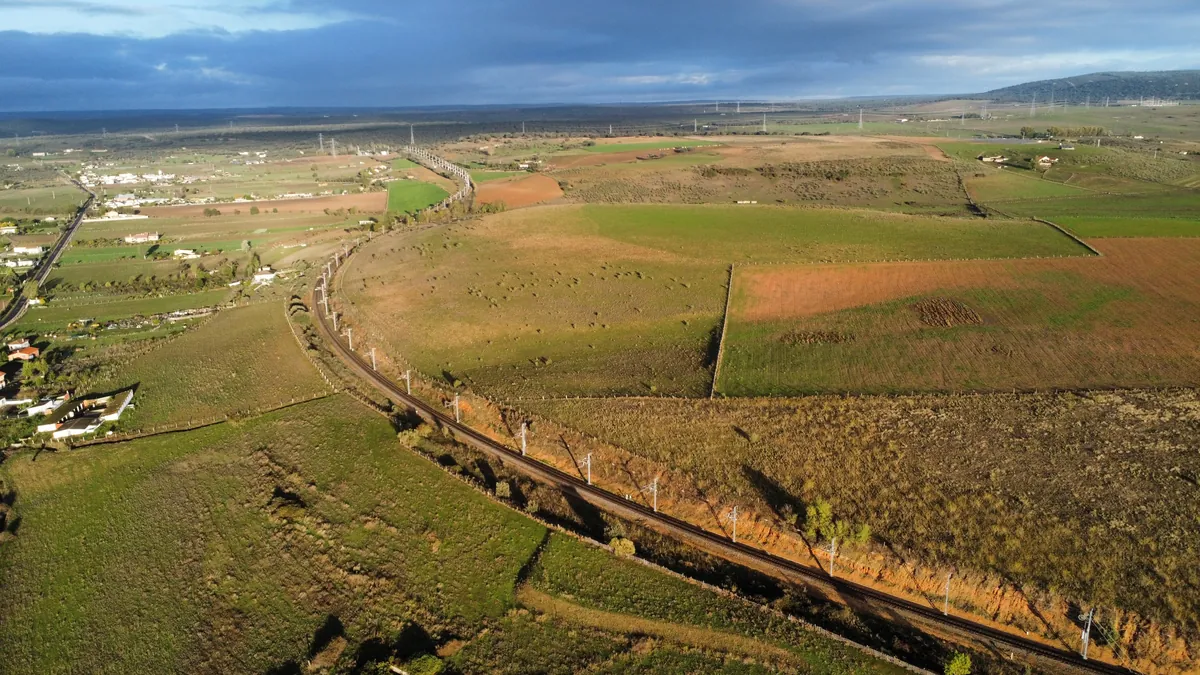
This landscape of open oak woodland and cropped pasture stretches uninterrupted to every horizon. It's managed for Iberian pigs and fighting bulls rather than Instagram moments. The oaks—quercus ilex if you're botanically minded—grow far enough apart that grass thrives beneath them, creating a parkland effect that took eight centuries of grazing pressure to perfect. Between the trees, red earth shows through like sunburnt scalp, and the whole ensemble smells of warm resin and sheep.
Walking tracks exist, though calling them "tracks" flatters what are really farm access routes. They lead nowhere dramatic: one trundles 4km to the neighbouring hamlet of Villaflor, another peters out at a stone trough where cattle drink. Distances feel longer than they are because the land rolls gently, hiding what's ahead. Proper footwear matters; so does bringing water. There are no signed fountains, no wooden waymarkers, no reassuring yellow arrows. Just you, the crunch of boots on schist, and the occasional distant view of Ciudad Rodrigo's cathedral spire thirty kilometres away.
Working Village, Not Working Museum
Puerto Seguro's economy still depends on extensive livestock farming. Morning routines involve checking water troughs for algae, moving electric fences, and loading pigs for abattoir runs to Salamanca. Visitors arriving expecting artisan cheese tastings or organic bread workshops will be disappointed. What you can do—if you ask politely and speak decent Spanish—is buy a half-kilo of morcilla from someone's cousin when pigs are slaughtered in December. It comes wrapped in white paper, costs €8, and tastes of blood, oregano, and woodsmoke.
The village's name translates roughly as "safe harbour", a legacy of its function as overnight stop on medieval droving routes between Castile and Portugal. Merchants slept here behind stone walls rather than risk bandits on the open plain. Today the only things getting driven are 300 head of merino sheep to summer pastures higher up. The old communal washhouse still stands, though nobody's scrubbed sheets there since 1987. Its stone basin now collects rainwater and oak leaves, a miniature ecosystem complete with tadpoles in spring.
For supplies, locals drive to El Bodón (12 minutes) for basics, or Ciudad Rodrigo for everything else. The latter's Thursday market sells vegetables grown within sight of town, cheese from Zamora made with raw sheep's milk, and chorizo that actually deserves the name rather than the fluorescent orange discs passed off as such in British supermarkets. Fill a cool bag; Puerto Seguro won't feed you.
When to Bother, When to Stay Away
Spring delivers the best compromise between decent weather and bearable solitude. Temperatures hover around 18°C in April, wildflowers speckle the dehesa, and migratory storks pass overhead on thermals. October works too, when acorns rain down and pig herds fatten for slaughter. Summer is ferociously hot—35°C days aren't unusual—and the village empties as families retreat to stone houses in nearby river valleys. August fiestas bring temporary population inflation to perhaps 200, mostly descendants who've migrated to Madrid or Barcelona returning for long weekends of communal paella and arguments about football. Accommodation within Puerto Seguro itself doesn't exist; nearest beds are in Ciudad Rodrigo, where Hotel Conde Rodrigo II charges €65 for rooms overlooking the Plaza Mayor.
Winter access can be tricky. The regional road serving Puerto Seguro isn't high on snow-plough priority lists, and the final 8km climb from El Bodón features sections that stay icy well into February. Chains sometimes necessary, definitely advisable. On the plus side, cold air sharpens the landscape to crystal clarity; you can see Portugal on good days.
The Honest Verdict
Puerto Seguro offers nothing approaching conventional tourism. No monuments to tick off, no adrenaline activities, no boutique boltholes. What it does provide is a functioning slice of rural Spain that hasn't been polished for foreign consumption. Come here to walk until phone signal dies, to watch vultures spiral on thermals, to remember what quiet actually sounds like. Don't come expecting entertainment, or even lunch. Bring boots, water, Spanish vocabulary, and the sort of curiosity that finds stone troughs and pig breeds interesting. Manage that, and the village repays with something increasingly rare: a place whose rhythm depends on seasons and livestock rather than opening hours and coach schedules. Just remember to fill the tank before you leave Ciudad Rodrigo—Puerto Seguro's only petrol pump rusted into decorative sculpture sometime during the last millennium.