Robleda - Flickr
Castilla y León · Cradle of Kingdoms

Robleda

The church bell strikes noon, yet only three people appear in the narrow lane below. Two are cows. At 831 metres above sea level, Robleda's silence...

453 inhabitants · INE 2025
831m Altitude

Why Visit

Mountain Church of the Assumption Oak-wood trails

Best Time to Visit

summer

Summer festivals (August) agosto

Things to See & Do
in Robleda

Heritage

  • Church of the Assumption
  • Rebollar Museum (planned)

Activities

  • Oak-wood trails
  • Ethnography

Festivals
& & Traditions

Fecha agosto

Fiestas de verano (agosto)

Las fiestas locales son el momento perfecto para vivir la autenticidad de Robleda.

Full Article
about Robleda

Cultural capital of El Rebollar, where the local dialect is still spoken; vast forests of rebollo oak.

Ocultar artículo Leer artículo completo

The church bell strikes noon, yet only three people appear in the narrow lane below. Two are cows. At 831 metres above sea level, Robleda's silence carries differently—thinner, sharper, broken only by the wind moving through holm oaks that give the village its name. This is not the Spain of coastal brochures or city-break itineraries. This is Castilla y León's western edge, where Portugal sits 25 kilometres west and Madrid feels several countries away rather than 250 kilometres southeast.

The Arithmetic of Emptiness

Four hundred and fifty-three registered inhabitants. Roughly twice as many Pyrenean oaks. A single bar that opens when the owner feels like it. These numbers matter because they explain the texture of daily life here: the way conversations stretch when nobody's checking their watch, how the bakery's Tuesday closure becomes the week's talking point, why the village's only cash machine vanished years ago when maintenance costs outweighed demand.

The altitude changes everything. Summer mornings start cool even in August, when the Meseta's interior bakes at 35°C. Winter arrives early and stays late—snow isn't rare from November through March, and the road from Ciudad Rodrigo becomes entertaining rather than merely functional. Spring brings sudden green to the dehesas, those scattered oak pastures that look accidental but represent centuries of careful land management. Autumn delivers the region's real spectacle: the Pyrenean oaks turning copper and bronze across hillsides that roll toward Portugal like frozen waves.

Granite, Woodsmoke and Other Honest Materials

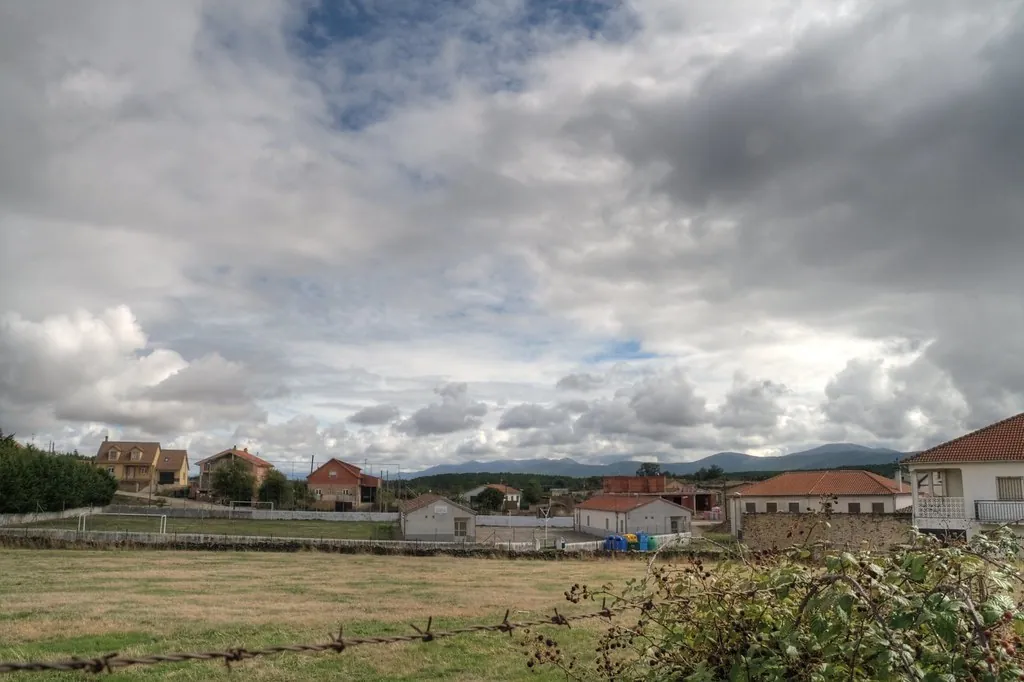
There's no medieval core to tick off, no castle ruins for dramatic photos. Robleda's architecture reflects harder realities: granite cottages built from whatever the land provided, their walls thick enough to survive both summer heat and winter Atlantic storms. The parish church of San Pedro stands plain-faced against the square, its bell tower more practical landmark than spiritual statement. Wooden balconies sag under terracotta pots of geraniums—those splashes of red against grey stone marking houses still occupied year-round rather than locked up until August's fiesta.

Walk the lanes slowly. Not for postcard moments but for details that reveal how mountain villages function: the communal washhouse where cold water runs year-round, bread ovens built into house walls, granite posts worn smooth by generations of tethered donkeys. Modern additions arrive piecemeal—satellite dishes sprouting like metallic fungi, the occasional electric car charging from sockets jury-rigged across medieval doorways. Nobody's preserving Robleda for tourists. The village simply continues, adapting at its own pace.

Walking Through Layers of Use

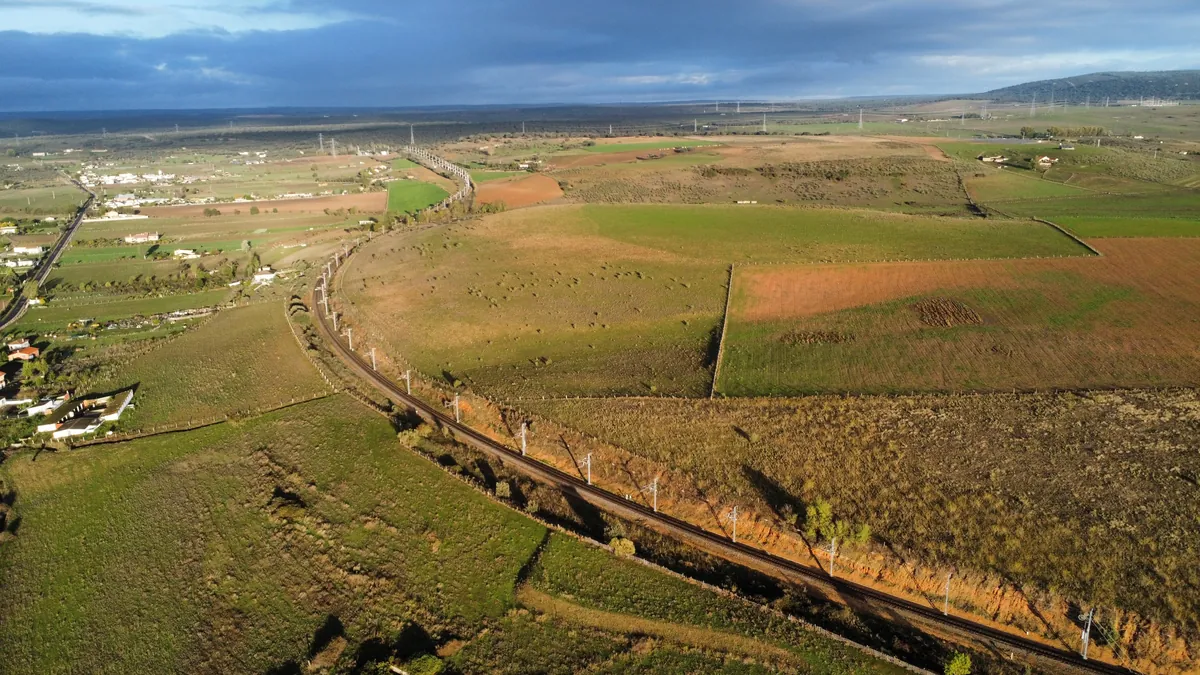
The real map extends beyond stone walls. Ancient drove roads—cañadas—cut across the dehesas, their routes defined by where cattle once walked to summer pastures. These paths make perfect walking: firm underfoot, gently graded, leading through landscapes that shift from open pasture to dense oak forest within metres. Start early and you'll share them only with Iberian pigs finishing their acorn breakfast, or perhaps a farmer on his way to check distant water troughs.

Elevation gain comes gradually. Follow the track southwest toward Puerto de Honduras and you'll climb 200 metres over three kilometres, gaining views across Sierra de Gata's folded ridges. The Portuguese border lies invisible somewhere along those horizons; historically porous, practically irrelevant to daily life. Binoculars help—griffon vultures ride thermals overhead, while booted eagles hunt the forest edges. Spring brings wildflowers that would make a Cotswold gardener weep: orchids in abandoned olive terraces, wild peonies flowering where no gardener planted them.

What Actually Tastes Like Here

Forget tapas trails and Michelin aspirations. Robleda's food arrives heavy, designed for people who've walked eight kilometres before breakfast. Hornazo—a pork pie enriched with hard-boiled eggs—appears at every occasion worth marking. Garlic soup thickened with bread serves as breakfast, lunch and cure for last night's wine. The local pig variety, black-hoofed and oak-fattened, produces jamón that costs serious money in London but appears here sliced thickly between crusty bread, eaten standing up while discussing rainfall patterns.

The bar, when open, serves coffee that could revive the recently deceased. Wine comes in unlabelled bottles from co-operatives down the road—rough, honest, cheap. Vegetarians struggle; even the potatoes arrive flavoured with chorizo. But the ingredients make sense when you've felt the wind that blows across these high plains: nothing subtle survives here, flavours need to match the landscape's intensity.

Timing Your Visit (or Why August Might Disappoint)

Summer weekends bring change, though not transformation. Families return from Madrid or Salamanca, filling houses silent since Christmas. The bar stays open regular hours. Children reclaim lanes for football games. Yet this isn't performance for visitors—it's Robleda's annual resuscitation, when emigrants return to check ageing parents, attend Mass in the church where they were baptised, argue about agricultural subsidies in the same bar their grandparents frequented.

Winter delivers brutal honesty. When Atlantic storms meet the Meseta's continental cold, Robleda becomes somewhere only the committed visit. Heating costs triple the municipal budget. Elderly residents don't leave houses for days. But the light achieves extraordinary clarity—sharp shadows across stone, oak trees etched black against snow that lingers in north-facing hollows. Photography becomes almost too easy; every angle looks like a tourism board campaign until you remember the temperature.

Spring and autumn provide the sweet spot: mild days, cold nights, landscapes either waking up or winding down. May brings orchid blooms and bird migration. October serves perfect walking weather plus the drama of turning oaks. Both seasons empty the village further—fieldwork demands everyone's presence elsewhere, following cattle to higher pastures or gathering acorns for winter pig feed.

The Practicalities Nobody Mentions

Robleda has no hotel, no guesthouse, no Airbnb—yet. Accommodation means staying in Ciudad Rodrigo, 22 kilometres east along the EX-390. That road climbs 400 metres through pine plantations where wild boar emerge at dusk; driving it after dark requires concentration and good brakes. Public transport arrives twice daily from Salamanca, three times if you count the school bus that might stop if you wave enthusiastically enough.

Cash remains king. Cards work nowhere. The nearest ATM stands outside a petrol station twelve kilometres away, frequently empty weekends. Mobile coverage flickers—Vodafone works better than O2, but neither guarantees upload speeds sufficient for Instagram bragging. This isn't remoteness manufactured for digital detox retreats. It's simply how things work when 453 people share a postcode.

Come prepared or don't come at all. Walking boots essential year-round—paths turn muddy surprisingly quickly. Water bottle vital; public fountains exist but you might walk an hour between them. Spanish helps enormously; English appears nowhere, though the elderly woman selling eggs from her doorway will communicate through gestures and patience if necessary.

The Exit Through Oak Shadows

Leave Robleda the way you arrived: slowly, without ceremony. The village won't notice your departure any more than it registered your arrival. That's not indifference—it's continuity. These stones have watched people arrive with grand plans and leave when winter bit too deep. They've seen civil wars, dictatorships, democracy, EU subsidies, rural flight and gradual return. Another visitor matters less than whether tomorrow's rain will arrive on schedule.

Drive back toward Ciudad Rodrigo as evening shadows stretch across the dehesas. Somewhere in those oak forests, Iberian pigs continue their autumn feast. The church bell will strike again tomorrow, regardless of who stands beneath it. Robleda continues, 831 metres above sea level, 453 inhabitants against the sky, waiting for the next person curious enough to climb beyond Spain's familiar circuits.

Key Facts

Region
Castilla y León
District
Ciudad Rodrigo
INE Code
37269
Coast
No
Mountain
Yes
Season
summer

Livability & Services

Key data for living or remote work

2024
Connectivity5G available
HealthcareHealth center
EducationElementary school
Housing~5€/m² rent · Affordable
CoastBeach nearby
Sources: INE, CNMC, Ministry of Health, AEMET

Official Data

Institutional records and open data (when available).

  • IRUEÑA O RUINAS DE URUEÑA
    bic Zona Arqueolã“Gica ~5.9 km

Planning Your Visit?

Discover more villages in the Ciudad Rodrigo.

View full region →

More villages in Ciudad Rodrigo

Traveler Reviews