Full Article
about Serradilla del Llano
Small mountain village with green landscapes and total quiet; simple rural architecture
Hide article Read full article
Under the shade of holm oaks and granite outcrops, on a cold winter morning, silence in Serradilla del Llano is broken by small things. Dry leaves brush against a wall. A tractor starts up on the other side of the valley. A dog barks without much urgency. The air often feels cooler than on the nearby plains, and sound carries a long way. Stand still for a few minutes and it becomes clear.
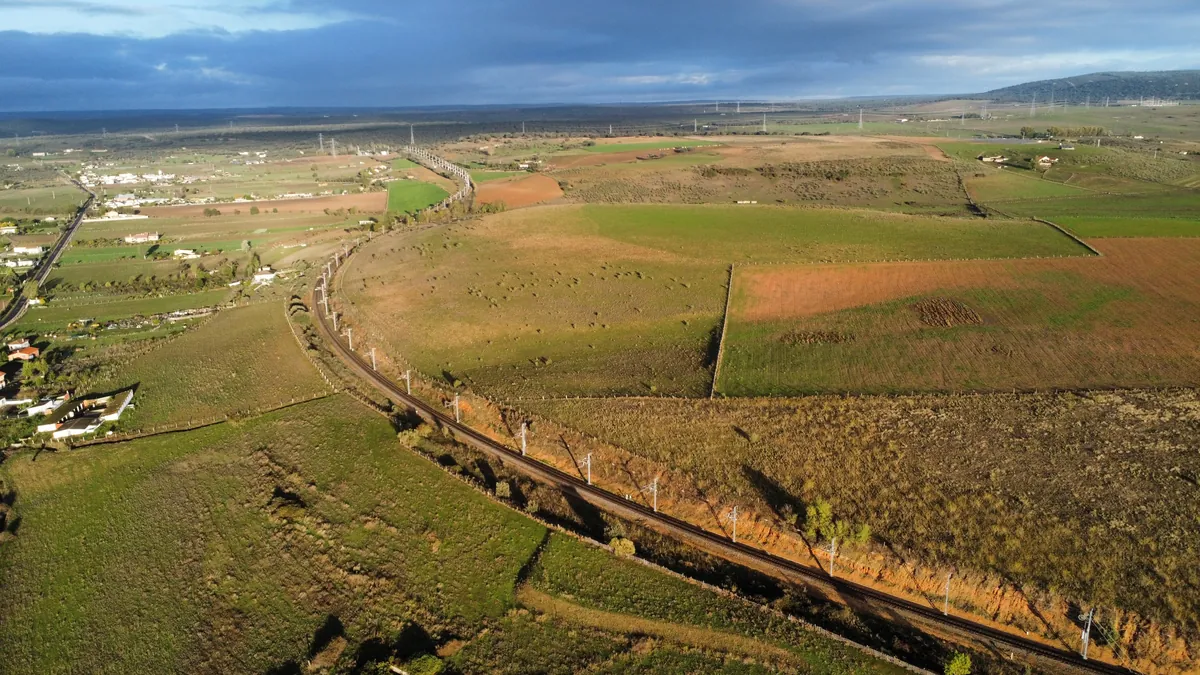
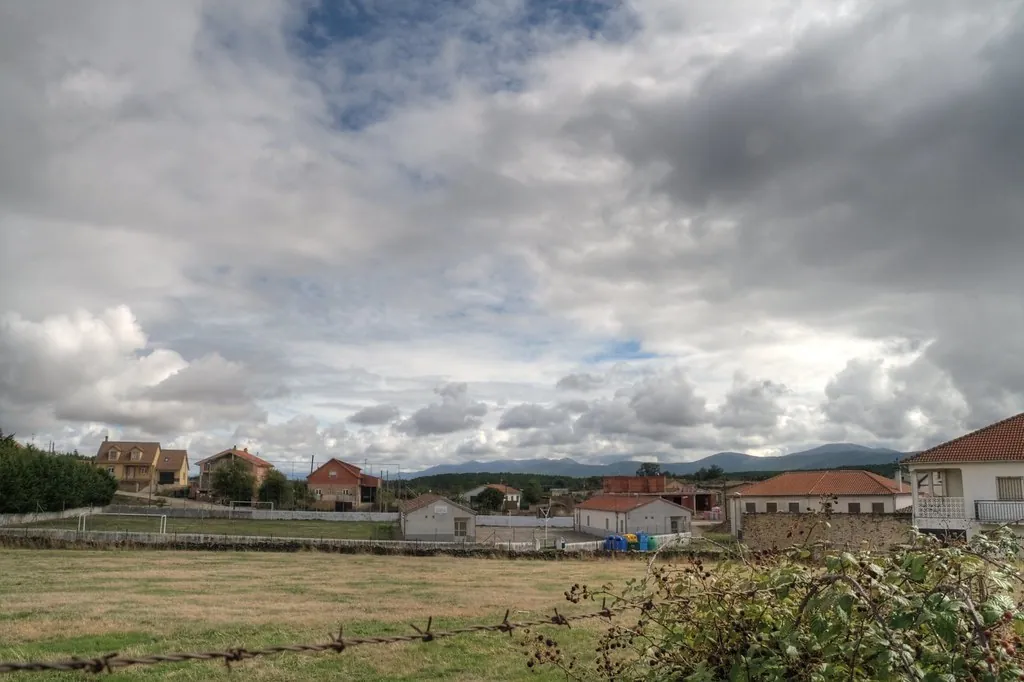
This small municipality in the province of Salamanca has just over a hundred inhabitants. Life here remains closely tied to the dehesa, the traditional pastureland of western Spain where livestock graze among scattered oaks. Cows feed beneath the trees, Iberian pigs appear during the montanera season when acorns fall, and vegetable plots are worked when the weather allows. There are no grand buildings or monumental squares. Instead, there are low houses, many with thick granite walls and wooden gates that have seen several generations pass through.
Stone Streets and a Modest Church
The village centre is easy to cover on foot. In less than an hour, every street can be walked without the need for a map. Some are so narrow that two cars pass each other cautiously, almost brushing the walls.
The parish church, built in stone and generally dated back several centuries, probably around the 16th century, occupies one of the most visible points in the village. It has a simple bell tower and a solid wooden door darkened by age. At certain times of day the sound of the bell spreads across the surrounding meadows, especially when the wind blows from the north.
Details on the façades reflect the local climate. Small windows reduce exposure to heat and cold. Iron grilles guard the openings, and wooden balconies look directly onto the street. Some walls still show the marks of hand-worked granite, an uneven texture that shifts in tone as the afternoon light changes.
The Dehesa Beyond the Last House
Serradilla del Llano is best understood beyond the built-up area. Step outside the village and open pastureland unfolds. Holm oaks stand well apart from one another, and dirt tracks wind through the landscape without clear signposting.
Livestock graze calmly in these fields. Early in the morning or towards evening, a roe deer may appear, or there may be a rustle in the scrub. The area retains a good deal of wildlife, although sightings depend more on patience than luck.
Some of the tracks link Serradilla del Llano with other villages in the comarca of Ciudad Rodrigo, such as La Encina and Los Santos. Not all routes are clearly marked, and at certain old junctions it is easy to hesitate over which direction to take. Anyone planning to walk for several hours should prepare their route in advance or use a simple map on a mobile phone.
Cycling is also possible along these paths, although there are stretches with loose stones where getting off and pushing becomes necessary.
Birds, Changing Seasons and Quiet Fields
Spring and autumn are usually the most rewarding times to explore the countryside here. During the height of summer, many hours of the day turn still and dry under strong heat.
In those milder seasons, birds of prey can often be seen riding thermal currents, and vultures glide fairly low over the dehesa. Thrushes and smaller birds move among the holm oaks. Stand quietly near a pond or beside a stone enclosure and the field gradually fills with sound.
There are no bird hides or explanatory panels. Orientation relies on simple references: the line of a path, the shade of a tree, a low stone wall. The landscape speaks for itself without interpretation boards or marked viewpoints.
Food, Practicalities and Nearby Ciudad Rodrigo
Services within the village are limited and can vary. It is sensible to have a car and to do any shopping in Ciudad Rodrigo, which lies roughly half an hour away by road.
Local cooking remains closely linked to the countryside. Iberian pork features prominently, along with cured sausages prepared in winter. Dishes are hearty and designed for work rather than display. Family vegetable plots also appear in season, producing tomatoes, peppers and potatoes when the time comes.
For a day out, many visitors combine Serradilla del Llano with Ciudad Rodrigo, returning afterwards along the secondary roads that cross the dehesa. These roads can be narrow in places, and encountering livestock near the tarmac is not unusual.
August and the Return of Families
The rhythm of the village changes in August. Many houses that remain closed for much of the year reopen, and families with roots here return.
The patron saint festivities dedicated to San Pedro bring the busiest days of the year. Religious events take place, shared meals are organised, and long conversations unfold in the street as evening falls and the heat eases. The celebration is not designed to attract large crowds. It feels more like an annual reunion among neighbours and relatives.
Reaching Serradilla del Llano
Serradilla del Llano lies in the south-west of the province of Salamanca, within the comarca of Ciudad Rodrigo. The usual access is by secondary road after passing through Ciudad Rodrigo.
The road surface is generally in good condition, although the lanes are narrow and cut through areas of dehesa where animals form part of the landscape. Careful driving is part of the journey.
In Serradilla del Llano, there are no headline attractions or grand statements. What defines the place is quieter: stone underfoot, open pasture beyond the last house, and the way sound travels across cold air at the edge of the plain.