Full Article
about Tenebrón
Small village in the Tenebrilla valley; transitional landscape to the sierra
Hide article Read full article
A place you reach by straying slightly
Some villages are planned destinations. Others appear when the main road slips away and a smaller one takes over. Tenebrón belongs firmly to the second group. That works in its favour, because anyone who arrives already expects something small and unpolished.
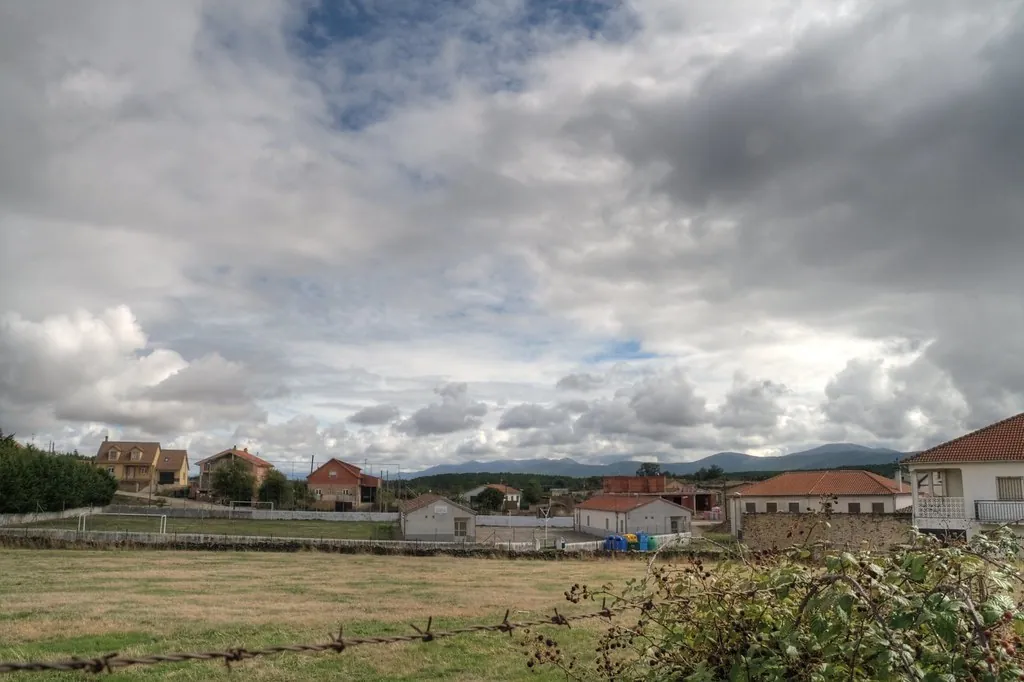
Tenebrón sits in the comarca of Ciudad Rodrigo, in the south-west of the province of Salamanca. Today it has just over 120 residents. Stone houses, a few built with adobe, short streets and a central square that doubles as the meeting point. Nothing here feels designed with visitors in mind, and that absence shapes the experience.
A village that still runs on its own rhythm
Tourism does not drive daily life in Tenebrón. The village follows patterns that have defined this part of the region for generations: agriculture, livestock and a steady routine.
The houses tell much of that story. Thick walls keep out the heat and cold, small windows face the street, and many homes still have adjoining yards. On some streets, large gates remain in place, once wide enough for carts or animals to pass through. There are also closed houses that have stood empty for years, alongside others that residents gradually repair when the weather improves.
The parish church, dedicated to San Pedro, occupies one of the most visible spots in the village. Its appearance is simple, typical of rural churches that sit naturally within their surroundings. It continues to serve as a gathering place during religious celebrations, linking present-day life with long-standing traditions.
Open countryside and quiet surroundings
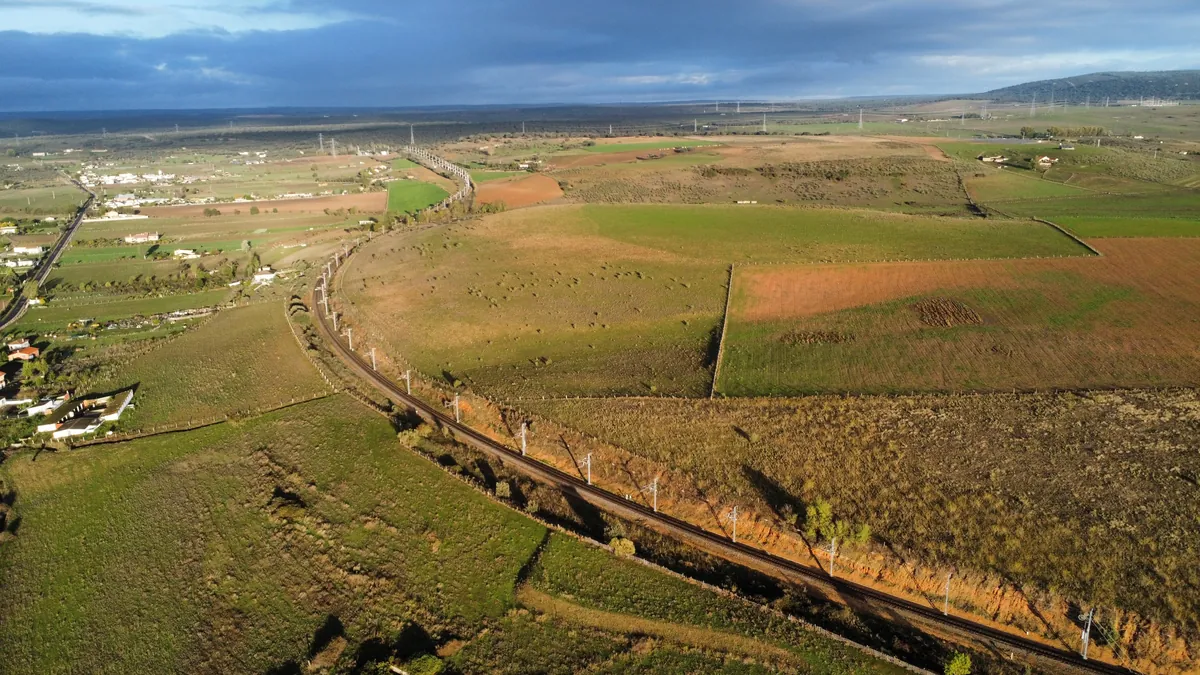
It takes very little effort to leave the village behind. Within a couple of minutes on foot, dirt tracks lead out between fields.
The landscape reflects this part of Salamanca: holm oaks, scattered oaks and plots of land where sheep or cattle are often found. There are no carefully marked walking routes at regular intervals. These are working paths, the same ones that once connected nearby villages such as Aldea del Obispo and El Bodón.
Walking here feels unstructured. The route is secondary to the act of moving through the space. The fields stretch out, the sound of birds carries across the plain, and there is little else competing for attention. For those interested in birdlife, the area can be rewarding, with birds of prey sometimes visible circling overhead.
Traces of earlier ways of life
Around Tenebrón, small details hint at how the village functioned before many residents moved away to larger towns and cities.
Near the Tenebrón river, there are references to an old hydraulic mill, of which only remains are still visible. Old fountains also appear in the area. For years they were essential for supplying water to the village. These are not restored landmarks or curated sites. They are fragments that quietly suggest what everyday life looked like decades ago.
There is also a small chapel dedicated to Santa Ana. It remains in use for occasional celebrations, particularly in summer when people who still have family ties to the village return. At those moments, the population grows slightly and the village takes on a different rhythm, even if only briefly.
Walking without a fixed plan
One of the most natural ways to get to know Tenebrón is simply to walk.
Paths begin near the square and extend outwards into the surrounding countryside. They are not designed as tourist routes, so it helps to rely on a map or a mobile phone for orientation. Carrying water is also sensible if the walk stretches beyond a short outing.
The landscape changes with the seasons. Spring brings wildflowers across the fields. Autumn shifts the colours towards softer tones, with dry leaves underfoot and acorns scattered beneath the holm oaks. This is not a place of dramatic viewpoints or sweeping panoramas. The appeal lies in a quieter type of landscape, one that reveals itself gradually.
Local celebrations and community ties
Festivities in Tenebrón still revolve around San Pedro, traditionally celebrated in June. The programme includes processions, popular music and simple games that have brought together residents and returning families for many years.
The scale remains modest. These are not large events but gatherings of people who have known each other for a long time. Anyone who happens to visit during these dates will see how the community continues to function, shaped by shared history and familiar faces.
Before you go
Tenebrón is small even by the standards of rural Spain. There are no shops open throughout the year and services are limited. For shopping or eating out, the usual option is to head to Ciudad Rodrigo.
That is why Tenebrón is better understood as a quiet stop within a wider route through the comarca, rather than a place packed with activities. A walk, a look at the landscape, a sense of how this part of Salamanca works. That is what it offers.
For many travellers, that is enough. It matches the expectation that comes with turning off the main road and following a smaller one to see where it leads.