Full Article
about Villasrubias
Municipality in El Rebollar with a natural pool and dense woodland; perfect for summer.
Hide article Read full article
A village that keeps its own pace
Some villages seem designed for photographs. Others simply carry on as they always have. Villasrubias belongs firmly to the second group. In the far west of the province of Salamanca, very close to Portugal, it continues to revolve around everyday routines rather than visitors.
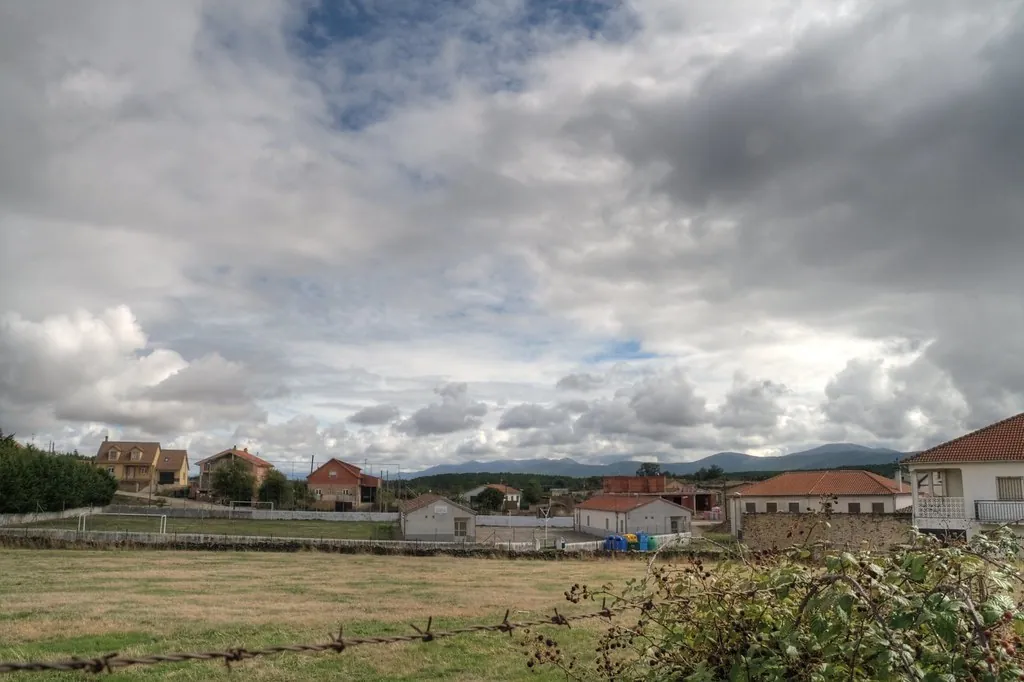
With a population of just over two hundred, the scale is immediately clear. There is no traffic to speak of, no shop windows competing for attention, no sense of a place staged for tourism. The settlement is compact, built from stone and adobe, with tiled roofs that have weathered decades of harsh winters. The streets were not laid out to show the village at its best but to make daily life practical.
This is border country. For centuries there was movement across these lands: shepherds crossing boundaries with their flocks, traders passing through, soldiers in other eras. Today, the trace of that history survives in the layout of the streets and in the houses themselves. Villasrubias still turns around the basics: farmland, neighbours who know each other, and homes that have faced the same landscape for generations.
Rural architecture shaped by climate and work
The church of San Pedro rises slightly above the rest of the village, its stone tower plain and solid. It looks built to withstand the weather rather than to impress. Thick walls, small windows and a simple entrance define the structure. At times the door is left open, and if older residents are nearby it is not unusual for stories to surface about the village or the religious image kept inside.
Beyond the church, the rest of the housing follows a straightforward logic. Narrow streets run between homes with large doorways once designed for carts. Behind many of them are enclosed yards and former animal pens. These spaces once held chickens, vegetable plots or a stable. Traces remain in old iron grilles, worn floor tiles and walls repaired countless times.
On the outskirts stand scattered rural buildings. Some are still in use, others have been restored over the years. They belong to another period, when life here depended almost entirely on agriculture and livestock. The structures are practical and unadorned, tied closely to the needs of the land.
Open landscapes with their own story
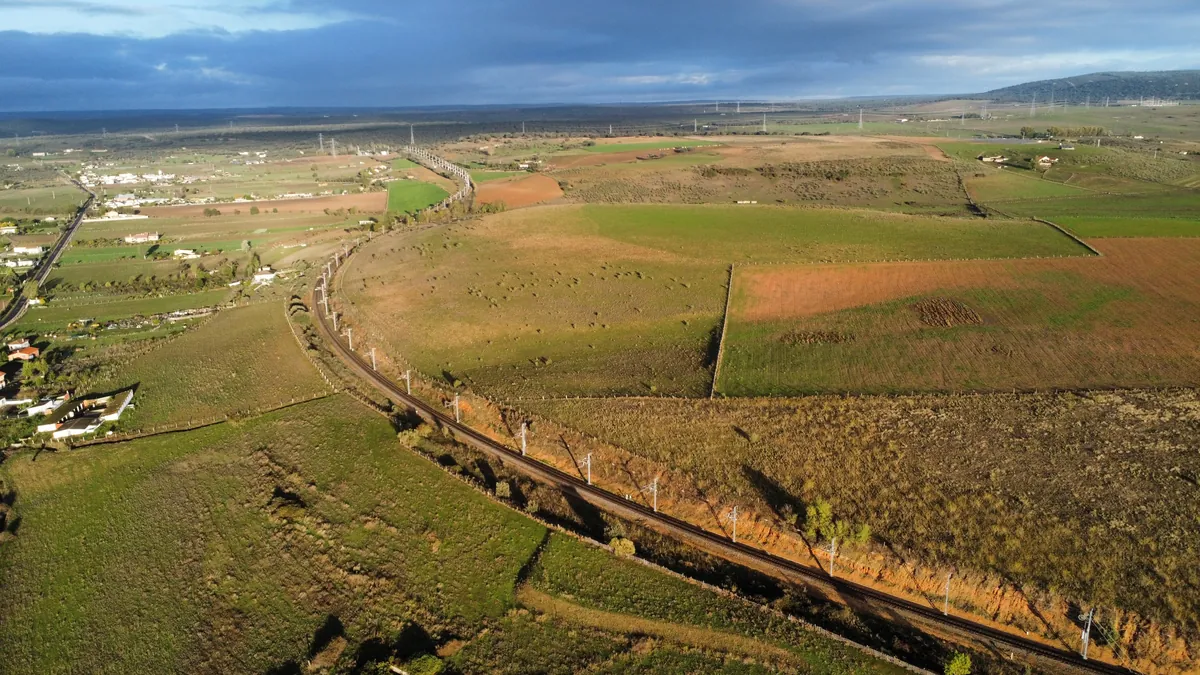
Step beyond the village centre and the surroundings open out quickly. Scattered holm oaks dot the terrain, alongside livestock farms and fenced plots that shape the view. There are no grand viewpoints or explanatory panels. It is a landscape that reveals itself by walking through it.
Several dirt tracks follow old routes once used by shepherds and farmers. Their age can sometimes be guessed from the worn ground or the way they wind between fields. Walking here is generally straightforward, though it is wise to pay attention to gates and fences, as many of the farms remain active.
Some people explore the area by bicycle along the secondary roads. Traffic is usually light. The asphalt, however, shows its age and hard shoulders are limited in places. This is not terrain for speed. It suits a slower ride, with time to look around and take in the countryside.
The sense of space defines this part of the province. Fields stretch out without interruption, broken only by stone walls and the occasional building. The border with Portugal is close, even if it is not always marked in obvious ways on the ground. The impression is of a rural landscape that has changed gradually rather than dramatically.
Cooking at home in the Ciudad Rodrigo style
Eating out is not a central feature of life in Villasrubias. The village is small, and social life tends to revolve around private homes rather than public venues.
The cooking follows the traditions of the wider Ciudad Rodrigo area. These are substantial dishes, created for long days working outdoors. Hornazo, a savoury pie typically filled with meat and associated with celebrations in this part of Spain, appears on festive occasions. Migas, made by frying breadcrumbs often with garlic and other simple ingredients, remain a practical way to use up stale bread. Patatas meneás, a mashed potato dish common in Salamanca province, are a frequent presence at family gatherings.
Slow-cooked stews also form part of everyday life. Pots simmer for hours while conversation moves back and forth around the table. The food is not designed to surprise. It reflects what has long been prepared in homes across the south-west of Salamanca: filling, direct and closely tied to local habits.
Meals often become the setting for maintaining connections. In a place of this size, gatherings matter. Recipes are repeated rather than reinvented, and the rhythm of cooking mirrors the steady pace of the village itself.
Festivities rooted in the community
The main patron saint celebrations usually take place in summer, when people who have spent the year working elsewhere return. For a few days the village regains a louder rhythm, with music and long conversations out on the street.
There are no elaborate stages or large-scale productions. What tends to define these days are simple open-air dances, long tables and neighbours catching up after months apart. The emphasis lies on reunion rather than spectacle.
During Semana Santa, or Holy Week, the atmosphere changes. Events are more restrained, the church fills, and the tone is quieter. It is a local observance, centred on those who live in Villasrubias or maintain close ties to it.
Other dates in the calendar follow a similar pattern. Sometimes a communal meal, a small event in the square or a gathering organised by residents is enough to bring energy to the village for a day. The scale remains modest, consistent with the size of the community.
A border village that carries on
Villasrubias does not function as a getaway packed with activities. It offers something different: a view of how a village on the Salamanca border continues to operate much as it has for decades. Fields surround it, houses pass from one generation to the next, and life moves slowly because it always has.
There is little here designed to draw attention. Instead, what stands out is the persistence of everyday routines. The church of San Pedro, the narrow streets, the rural buildings on the edge of the village, the tracks across the fields and the meals shared at home all form part of the same pattern.
In a time when many places adapt themselves to fit expectations, Villasrubias remains focused on the basics. That, in itself, tends to leave a lasting impression.