Full Article
about Balboa
Picturesque village in the Balboa river valley; known for its traditional pallozas and the ruined castle on the hill.
Hide article Read full article
A small place, easy to grasp
Tourism in Balboa is straightforward. It is a small village with short streets and just over 250 residents. The scale becomes clear almost immediately. From Ponferrada, the drive takes a little over half an hour, and that sense of proximity reinforces how compact everything feels.
Parking inside the village can be awkward when there are more people around. Most visitors leave the car at the entrance and continue on foot. It is not much of a walk. The whole place can be seen in about an hour if you keep moving, though it rewards a slower pace.
Balboa does not present itself as a destination packed with attractions. Its appeal lies in its size and the way it has been kept. The visit is simple: arrive, walk, look around, and move on when you feel you have taken it in.
Getting in and getting around
The layout of Balboa makes movement very direct. Streets are narrow and often sloping, so they are not suited to circling around in search of a parking space. It makes more sense to stop before entering the centre and walk in.
Distances are short. Nothing feels far away once you are on foot, and the village can be crossed without effort. That simplicity is part of its character.
Timing matters a little. Summer and weekends bring more people than you might expect for such a small place. By mid-morning there is already noticeable activity, so arriving earlier can make things quieter.
Stone, wood and everyday buildings
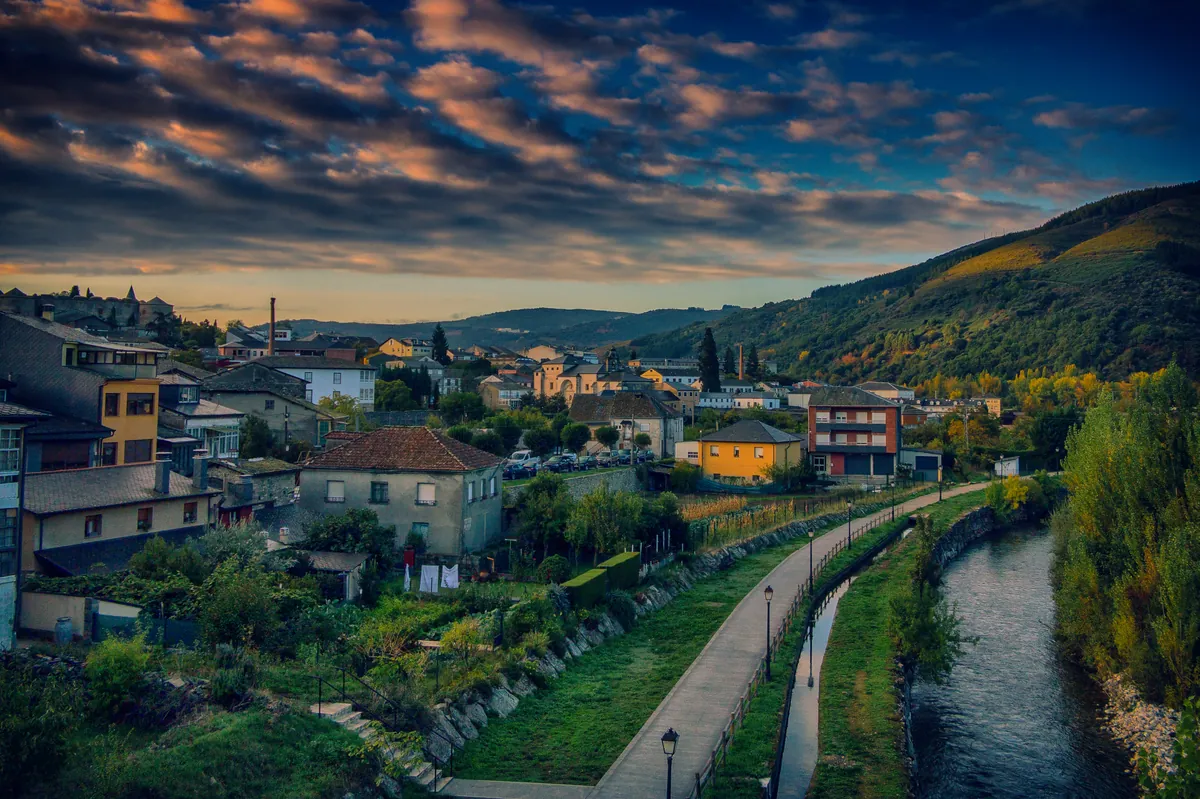
Balboa sits in an elevated position between enclosed valleys and slopes covered with chestnut trees. The setting is rural and consistent with this part of El Bierzo. Houses follow a recognisable pattern: dark stone walls, wooden balconies and slate roofs. The overall look does not feel newly constructed or staged. Many buildings remain what they have long been, with only basic repairs and adjustments over time.
The church of San Esteban stands in the upper part of the village. It dates back to the 16th century, although what you see today is quite restrained. There are no elaborate façades or striking towers. Its presence is more about marking the village than standing out as a major monument.
Between the houses, small hórreos appear. These traditional raised granaries, common in northern Spain, were once used to store food and protect it from damp and animals. In Balboa, some look worn with age. Others are still maintained by their owners and remain upright. They offer a clear trace of when agriculture shaped daily life here.
There are no museums or interpretation centres. The interest lies in walking through the streets and observing how the village has been preserved. It is less about individual sights and more about the overall impression.
Walks into the surrounding landscape
The landscape around Balboa defines much of the experience. Large chestnut trees, oak woods and small streams descending through the valley create a setting that feels close and accessible.
Marked paths leave directly from the village. These are not famous routes or long-distance trails. They are simple walks that allow you to stretch your legs and spend some time among the trees. The scale matches the village itself: modest, quiet and easy to approach.
Autumn stands out as a particularly appealing time to walk here. The ground becomes covered with chestnut leaves, and the colours change the atmosphere of the paths. It adds another layer to what is otherwise a very consistent landscape.
Balboa also works as a starting point for short drives to nearby villages. The western part of El Bierzo and the entrance to Ancares are both within easy reach by car. Roads in the area are narrow and winding, so the pace is naturally slower. The journey becomes part of the experience rather than just a means of getting from one place to another.
Food and atmosphere
Food in Balboa follows the logic of a mountain village in El Bierzo. Dishes are filling and based on local produce, with little complication in preparation. You will find chestnuts in season, cured meats, river trout and hot stews when the weather turns cold.
Variety is limited, and there are no modern or elaborate dining spaces. What you encounter is straightforward cooking and generous portions. The focus stays on familiarity and substance rather than presentation or innovation.
The atmosphere matches the food. Everything feels unhurried and practical, shaped by local habits rather than tourism trends.
A place for a short stop
Balboa works best as a brief stop rather than a long stay. A walk through the village, a short wander into the surrounding woods, and then continuing along the valley is a natural rhythm.
It suits those looking for a quiet place. Anyone expecting a wide range of activities or a busy programme of visits will not find that here. The village offers very little in that sense, and it does not try to be anything else.