Full Article
about Benuza
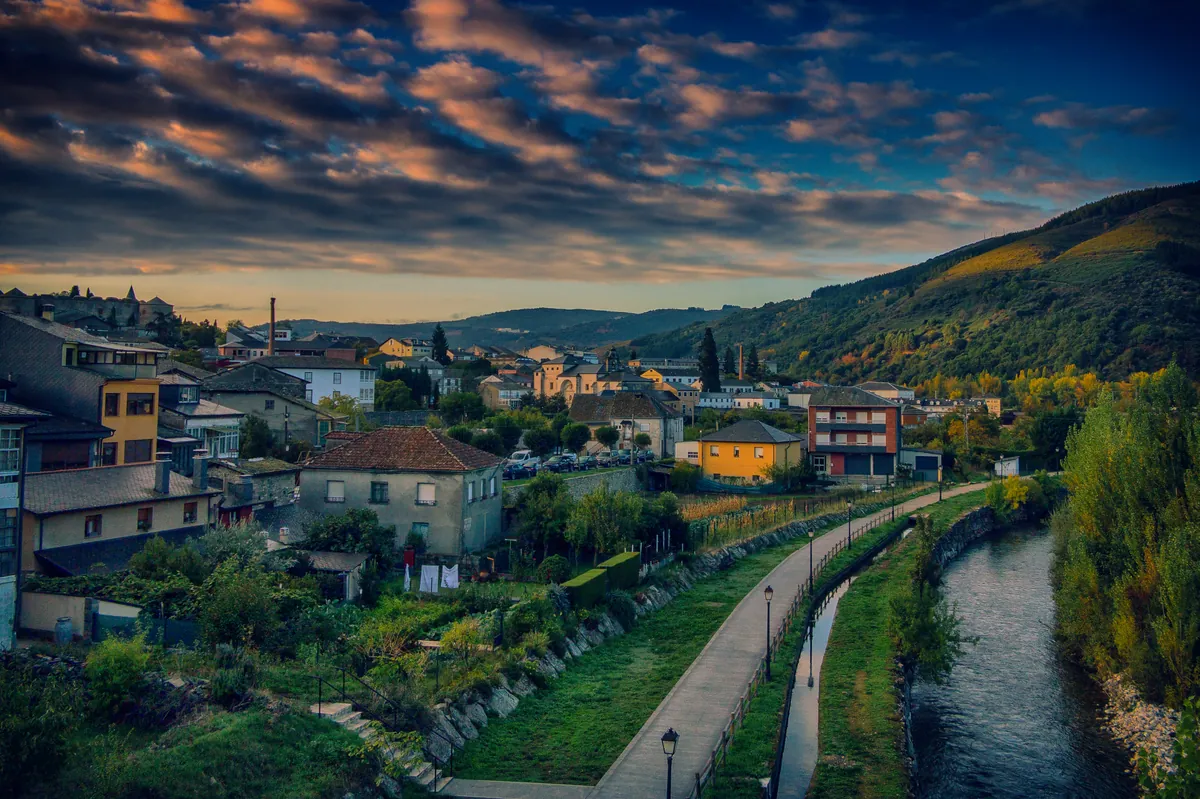
Municipality in the lower Cabrera Berciana; landscape of slate and black traditional architecture.
Hide article Read full article
A scattered municipality in the hills
Benuza sits in the south-west of El Bierzo, a part of Castilla y León known for its varied landscape. The municipality is not a single town but a collection of small villages spread across low hills. Each settlement feels separate, with its own rhythm, and the low population is noticeable as soon as you arrive.
There are no large sights waiting at the end of the road. No museums, no interpretation centres, and very few services aimed at visitors. What you find instead are working villages: narrow paths, farm buildings, small plots of land, and the occasional rural chapel. Life here continues much as it has for years, without adapting itself to tourism.
The appeal lies elsewhere. The setting is defined by open countryside and traditional architecture, especially stone houses with slate roofs that blend into the landscape. Anyone coming to Benuza should expect simplicity and a strong sense of everyday rural life.
Starting from Lomba
Lomba works well as a starting point for exploring the area. It is practical to leave the car along the main streets and continue on foot. Signposting is limited, and some paths cross without warning, so a map on your phone is useful to stay oriented.
From Lomba, several routes lead towards nearby villages such as Silván and Yebra. These are not long or complex walks, and on the ground they are generally easy to follow. The distances allow for unhurried movement between places, with time to take in the surroundings.
The village church in Lomba is simple on the outside. Inside, it preserves some older elements, although access depends on whether it happens to be open when you pass through. There is no structured visiting system, which fits the overall character of the area.
Silván and the character of the villages
Silván offers a clear example of what these mountain villages look like. The buildings are mainly stone, with slightly worn façades that reflect long use rather than restoration. Small vegetable plots surround many of the houses, reinforcing the sense that these are lived-in places rather than preserved displays.
Near the streams, old washing places can still be found. These structures, once used for laundry, remain part of the landscape even if their original purpose has largely faded. Daily life continues at a steady pace, and encounters are likely to be with residents working their land or passing by on a tractor.
Other villages in the municipality follow a similar pattern. There are few formal points of interest, but the overall setting creates a consistent atmosphere. The absence of crowds or commercial activity defines the experience as much as anything visible.
Paths, woodland and working land
The land around Benuza remains both agricultural and forested. Chestnut trees are especially common, forming large areas of woodland known locally as “sotos”. These spaces shape the look of the countryside and play a role in local activity.
In autumn, the colour of the forest changes noticeably, and this shift is visible along the paths that connect the villages. Small streams run through the valleys, adding to the sense of a landscape shaped by natural features rather than design. There are no built viewpoints or walkways. The terrain is straightforward countryside, without added infrastructure.
The routes between villages follow traditional rural tracks. Some sections involve gentle climbs, though nothing particularly demanding. These paths often cross meadows and chestnut groves, linking one settlement to another in a way that has been used for generations. It is possible to walk between a couple of villages in just over an hour at an easy pace.
During chestnut season, people can be seen gathering produce in the groves. This activity is still part of the local economy. Visitors should be aware that many of these areas are privately owned, so it is best to ask before entering a chestnut grove.
Practical notes before you go
A visit to Benuza requires a bit of preparation. There are no shops or bars waiting at the end of a walk, so it is important to arrive with what you need, including water. Planning the route in advance helps avoid confusion, especially given the limited signage.
Daylight makes a clear difference here. As evening approaches, the area becomes very quiet, and movement between villages can feel more isolated. For that reason, it is better to organise walks earlier in the day.
Benuza does not present itself as a destination filled with attractions. Its value comes from the combination of landscape, traditional buildings, and the continuity of rural life. Anyone willing to accept that simplicity will find a place that remains largely unchanged, where the focus stays firmly on the land and the villages that sit within it.