Full Article
about Cacabelos
A Jacobean town and the capital of Berciano wine; it hosts the headquarters of the Regulatory Council and an important Roman site.
Ocultar artículo Leer artículo completo
The queue outside the municipal albergue forms at 12.45 sharp. Backpacks drop onto the pavement of Avenida de España like oversized handbags outside a London pub at closing time. By 13.05 the hospitalero has stamped twenty credenciales and the corridor smells of fabric conditioner and blister ointment. This is Cacabelos: the first place on the Camino Francés where walkers can wash clothes, buy fresh socks and still make the 16 km push to Villafranca before dark—so everyone stops.
River, vines and a beach no one expects
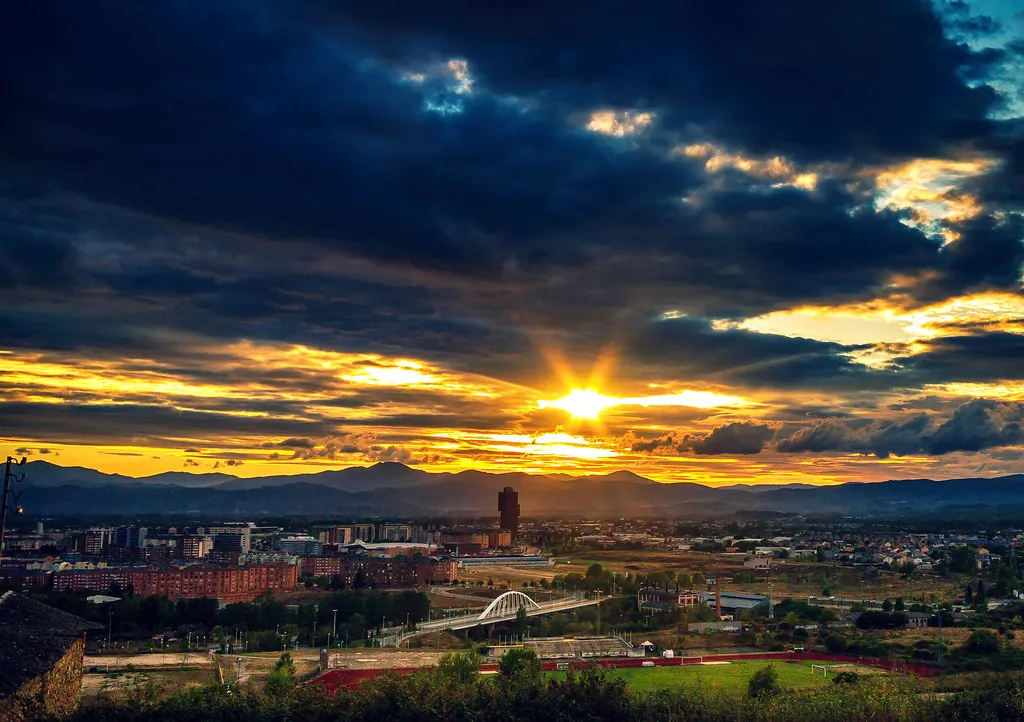
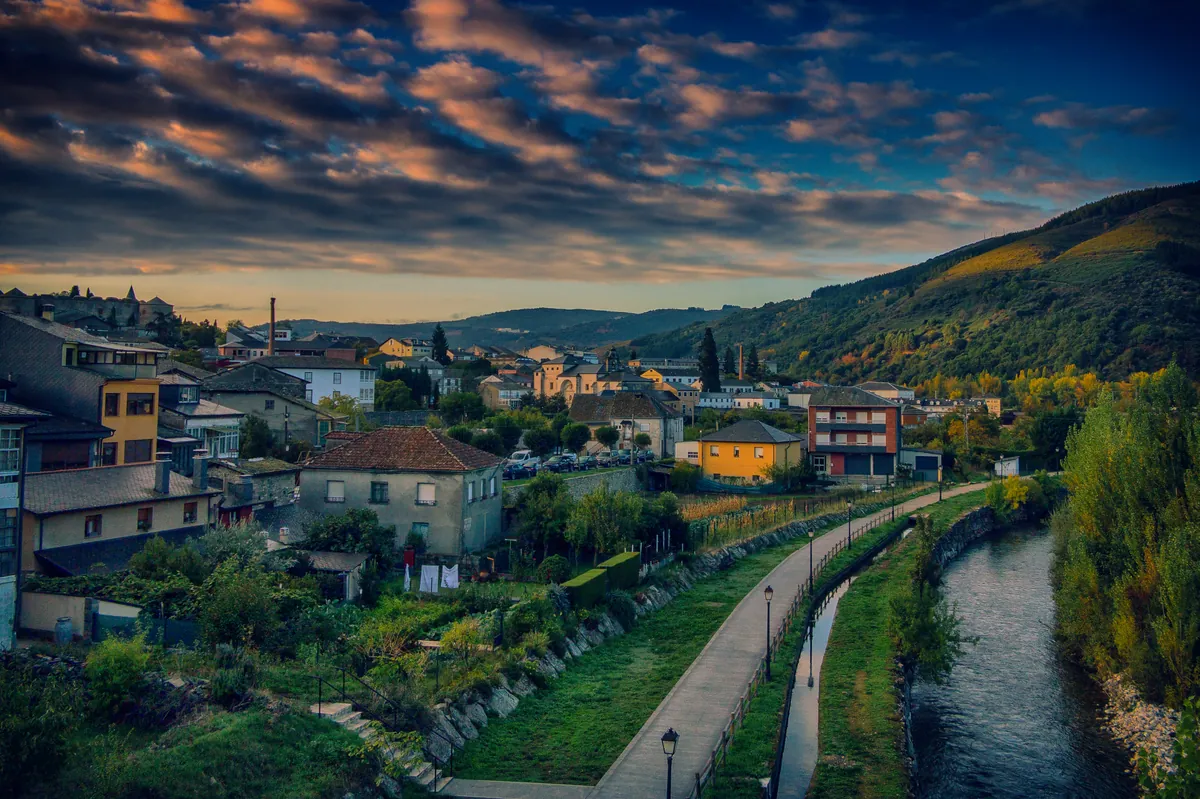
The town sits in a shallow bowl carved by the river Cúa, 450 m above sea level and 14 km west of Ponferrada. Mountains rise on three sides—Teleno to the north, Aquilanos to the south—but they keep a polite distance, far enough away to let the afternoon sun roast the vineyards and warm the stone houses. The result is a pocket-sized Bierzo microclimate: summers two degrees cooler than the Meseta, winters mild enough for olives to survive if someone remembers to wrap them.
Follow the yellow arrows past the 1970s church of San Roque and the water suddenly glints between the poplars. Playa Fluvial, signposted with a hand-painted surfboard, is a 200 m curve of pea-gravel bank reinforced after the 2018 floods. July and August bring a lifeguard, a kiosk selling 1.50 € cans of Estrella and a steady chorus of Galician accents. Outside those months you’ll share the water with herons and the occasional labrador; bring rubber sandals—the stones are river-tumbled glass, painful under a pilgrim’s tender feet.
Wine that predates the Camino
Romans shipped gold down the Cúa and left behind roof tiles stamped “C-CA” now displayed in the Museo Arqueológico (free, Tue–Sat 11–14 & 17–19, Sun 11–14). They also planted the first vines. Walk five minutes uphill from the main drag and the tarmac gives way to earth paths between waist-high wire fences. Small wooden gates bear hand-written names: “Viña María”, “Viña Chente”. Behind them, family bodegas are dug into the clay like horizontal wells—cool, dark chambers where last year’s Mencía still murmurs in 500-litre oak.
Bodega del Camino opens for tastings if you phone the day before (€8, three wines, slab of tetilla cheese). They explain why Bierzo tastes different: slate soils echo Priorat, but the Atlantic breeze keeps alcohol levels a sensible 13 %. Godello, the local white, drinks like a Sauvignon that has spent a semester in Galicia—zesty, faintly saline, no oak in sight. If you prefer labels you recognise, Vinos de León on Calle Real runs a walk-in tasting counter; their €4 “cata express” is generous enough that most walkers skip dinner afterwards.
Churches, shields and a square that never quite closes
The centre is a rectangle of three-storey houses painted the colour of custard, tobacco and dried blood. Iron balconies sag under geraniums; at first floor level stone shields show wolves, stars and the five wounds of Christ—evidence that merchants did well enough here to warrant coats of arms but not so well they needed to move to Madrid. Plaza del Ayuntamiento feels permanently half-asleep; the only traffic is the 09.30 bread van and the 22.30 dog-walkers who circle like moons round the Renaissance sanctuary of Nuestra Señora de las Angustias.
Step inside the church and the smell switches from diesel fumes to beeswax and old timber. The sixteenth-century retablo shows Mary in understated distress, flanked by farmers’ offerings: a bronze wheat sheaf, a silver vine leaf. Drop 50 c into the box and the sacristan flicks a switch that illuminates her face for exactly thirty seconds—long enough to notice the crack running through her left cheek, mended with lead staples in 1937 after a Nationalist shell whistled over from the nearby front.
What to eat when you’re tired of tortillas
Locals lunch at 15.00, pilgrims at 14.00, so the restaurants along Calle Real stagger their menus. Casa Gato still calls its €11 three-courser a “menú peregrino” even though half the clientele arrive by Citroën. Expect vegetable soup thick enough to stand a spoon in, pork shoulder grilled until the edges caramelise, and a half-bottle of house Mencía that punches above its €2 supplement. If the sky is grey, ask for botillo—smoked rib and tail stuffed into a pig’s bladder, then simmered for three hours. La Moncloa de San Lázaro will serve a half-ración (€9) the size of a cricket ball; it tastes like a British hot-pot that has spent a weekend in a smokehouse.
Vegetarians do better than in most Castilian villages: roasted piquillo peppers come drizzled with local olive oil, and most bars will cobble together a revuelto (scrambled eggs) with wild mushrooms if the season’s right. Pudding is usually rice pudding sprinkled with cinnamon; order it “templado” unless you enjoy skin.
Walking on without the rucksack
You don’t need to be a pilgrim to use the paths. A 6 km loop heads south-east along the river to Pieros, a hamlet of fifteen houses and a chapel whose bell still rings at 20.00 sharp. The track is flat, shaded by poplars and posted with yellow arrows every hundred metres—overkill for locals, reassurance for foreigners who worry about getting lost within sight of a mobile-phone mast. Allow two hours including the fifteen minutes you’ll spend watching a farmer coax onions from soil the texture of ground coffee.
If legs feel heavier, hop on the morning bus to Carracedelo (€1.40, 15 min) and walk back along the old railway line—tarmac lifted, bridges left in place, poppies colonising the ballast. Cyclists share the route; keep right and expect a bell ting behind you before the tunnel at kilometre four.
When things go sideways
Sunday arrivals face closed supermarkets and a single open bar whose kitchen shuts at 16.00. Stock up in Ponferrada’s Carrefour or live on tortilla and crisps until Monday. Easter week packs the albergue by 13.15; book Hostal Sotelo opposite (€35 double, towels extra) or push on to Villafranca. November brings mist that creeps up the valley at dawn and refuses to budge until coffee time; bring a torch for the river path and don’t expect sunrise photos.
Cash remains king: the only ATM is inside the Santander branch on Calle Santa María, and it declines UK cards roughly one attempt in three. If the screen flashes “servicio no disponible”, try again at 07.30 before the queues form.
Last glass, last bell
By 21.30 the square has emptied except for two teenagers sharing headphones and an old man walking his spaniel in precise circles. The church bell counts ten, then pauses, as if unsure anyone is still listening. Inside Vinos de León they are stacking chairs, but they’ll pour one more glass if you ask nicely. Outside, the air smells of river water and cooling slate. Tomorrow the walkers will leave before light, heels clicking towards Galicia, and Cacabelos will return to being a market town that happens to make good wine. That’s reason enough to stay an extra night—before the pilgrims discover it again at a quarter to one.