Full Article
about Castropodame
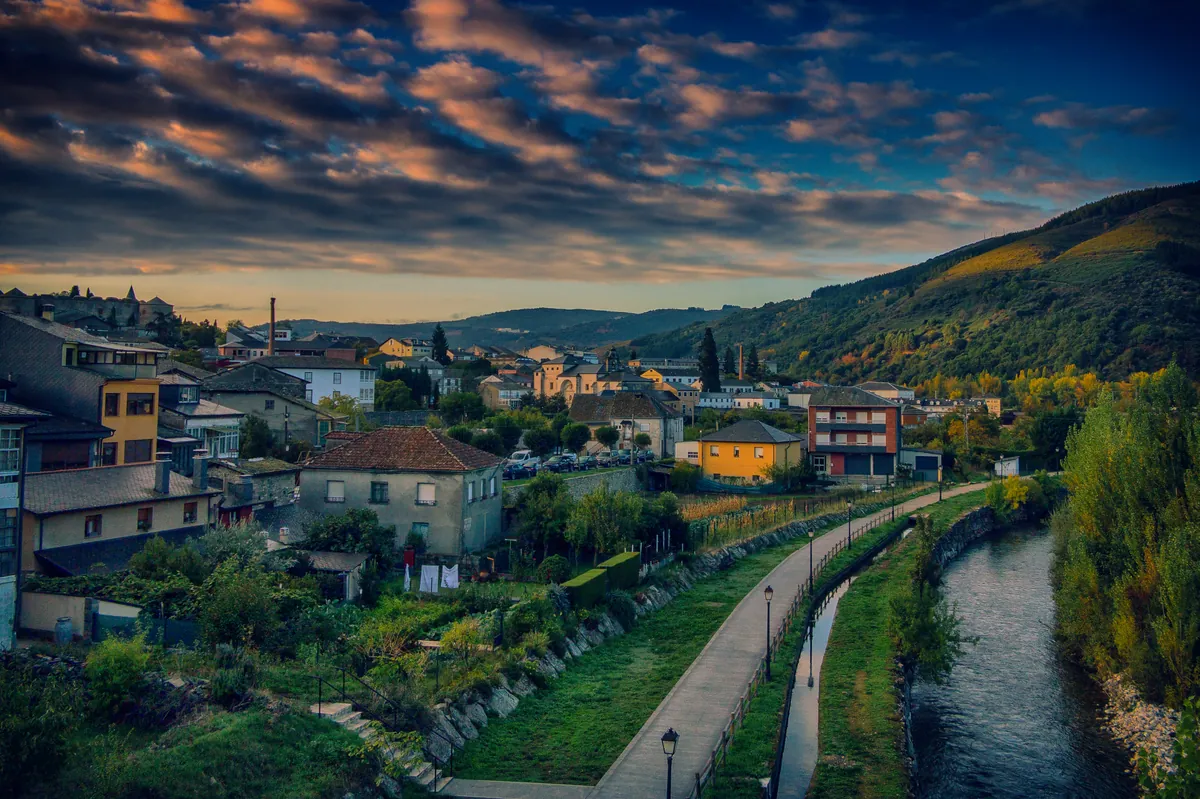
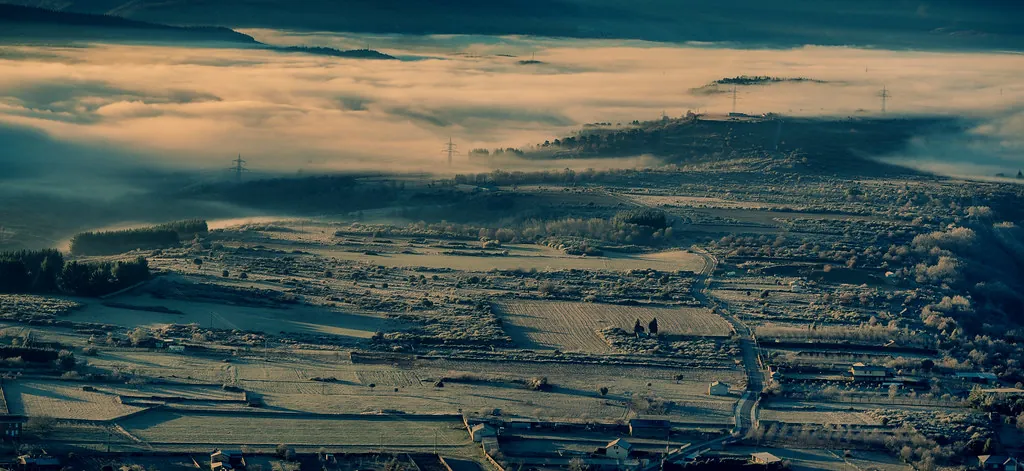
Set on the slopes overlooking the Bierzo Bajo; a transition zone of abandoned mines and vineyards.
Hide article Read full article
At seven in the morning, the stone of the plaza still feels cool. The only sounds are a distant tractor and the scrape of a chair being set outside a doorway. The air smells of damp earth and, faintly, of woodsmoke from a kitchen fire started early. This is how the day begins here.
Castropodame rests on the lower skirts of the Montes Aquilianos in El Bierzo. It sits at about 750 metres, surrounded by small, worked plots of vineyard and chestnut grove. Life is not arranged for spectacle; it follows the older, slower cadence of the land itself.
Grey stone and wooden galleries
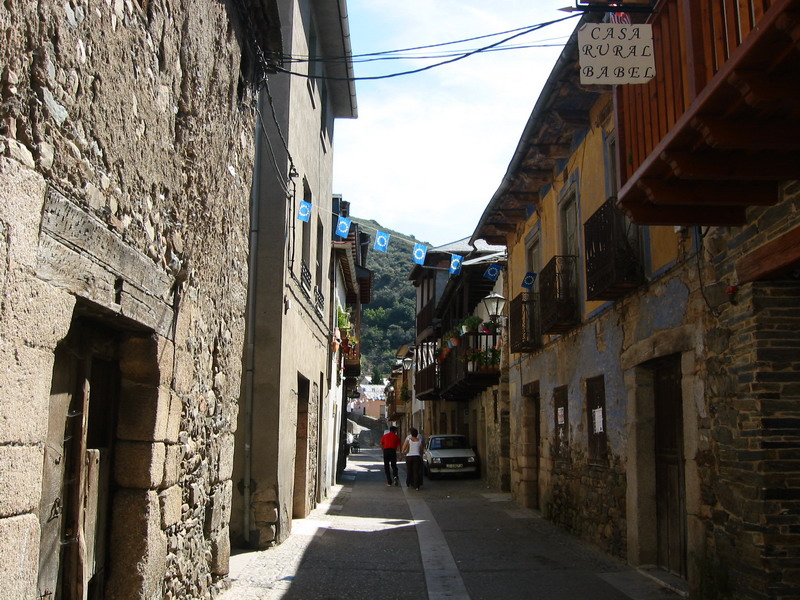
The streets are narrow, paved with uneven stone that has been worn smooth in the centre by generations. Houses are built from a dark local rock, their walls thick enough to keep the heat out in summer and the cold at bay in winter. Some have wooden galleries, their balconies stacked with geraniums in tin cans. If you stand still in the afternoon, you can hear them creak softly as the air moves.
On the village outskirts, you’ll find the bodegas. These are small wine cellars dug into the earth banks, with low wooden doors and grass growing on their roofs. They are private, used for making and storing the household wine. In autumn, their doors stand open, and the smell of fresh must hangs in the air.
The church at the centre
The parish church is not ornate. Its tower is square and solid, made from that same muted grey stone that seems to change colour with the sky. In full sun it turns pale, almost white; under cloud it becomes a darker slate.
It was built in the 16th century and modified since. The entrance is simple. Look up at the corbels supporting the eaves and you might make out figures carved there, now softened by centuries of rain. Inside, the light is dim. The wooden pews are worn smooth at the edges. Everything directs your eye to the Baroque altarpiece behind the altar, a flash of gold in the quiet gloom.
The houses nearby have long balconies and covered passages. They speak of a practical architecture, built for shelter from sun and rain, for watching the street from shade.
A pause on the winter road
The Camino de Invierno, a lesser-travelled branch of the Camino de Santiago, passes through here. Pilgrims used this route to avoid the snows on the higher mountain passes. You’ll see them sometimes, walking steadily through with light packs, their sticks tapping on the stone. They often stop in the plaza to adjust a strap or check a map before moving on towards Ponferrada.
They don’t come in great numbers. Their presence is occasional, a quiet thread in the daily fabric.
The chestnut groves
Walk any path leading out from the village and you’ll soon be among chestnut trees. Their bark is deeply furrowed, twisting like rope. In late October, the ground is a carpet of ochre leaves and spiky husks split open to reveal glossy nuts inside.
Local people still go out to gather them, carrying sacks and wearing thick gloves against the prickles. The paths they use are faint, sometimes just a suggestion through the grass.
Other tracks lead to nearby hamlets like Las Ventas or Valdecañas. These are not hiking trails so much as old connections between places. They wind through terraced vineyards gone wild at the edges, past orchards where apples have fallen and rotted on the ground. Wear shoes that can handle mud; the clay soil here turns sticky and tenacious after even a light rain.
A taste of the place
Wine is in the scenery. The vineyards are mostly planted with mencía grapes. The harvest starts in early September if the summer has been warm enough. You’ll see trailers piled high with crates on back roads then, and people working quickly under the sun.
The local flavour is botillo, a cured sausage made with pork ribs and tail, seasoned with paprika and garlic, then smoked and boiled. It’s served with potatoes and cabbage, a hearty plate for cold weather. In homes after harvest, you might be offered a glass of last year’s wine—young, sharp, and purple-red.
The fiesta for San Pedro comes at the end of June. For a few days, there is music from a portable stage set up in the plaza, and families gather outside until late. It’s a local affair, for neighbours and those who have moved away but return for these dates.
Come on a Tuesday or Wednesday morning. That’s when you’ll feel its rhythm best, when the place is simply itself: stone, vine, chestnut tree, and quiet.