Full Article
about Congosto
Overlooking the Bárcena reservoir, it offers sweeping views of El Bierzo and the Virgen sanctuary.
Hide article Read full article
Morning Light in the Boeza Valley
Early in the day, as the sun begins to touch the fertile plain of the Boeza, Congosto is still half asleep. A car passes slowly through the centre, a rooster calls from a nearby yard, and if the night has brought irrigation or rain, the air carries the smell of damp earth. The stone houses around the main square remain in shadow while the roof tiles gradually start to warm.
Tourism in Congosto has more to do with the steady rhythm of the valley than with headline monuments. The municipality lies at the southern edge of El Bierzo, very close to Ponferrada, just a few minutes away by car. That proximity means many visitors arrive, take a short stroll and continue on their way. Yet anyone who wanders without hurry along the streets leading off the square will find a village that still retains a strong agricultural pulse.
Recent renovations sit alongside older, dark stone walls. Large gateways on certain corners hint at former barns and stables, and it is common to see farm tools resting against a wall or small vegetable plots pressed up against the houses. Life here has not been polished into a display. It continues at a practical pace, shaped by land and season.
Echoes in Stone and Wood
A walk through the old centre reveals small traces of earlier decades. Brick chimneys rise above the rooftops. Some wooden balconies lean slightly under the weight of years. Heavy doors studded with large nails have clearly passed through many hands. On cold days, the scent of firewood lingers in the narrow streets.
The parish church, dedicated to Santa María Magdalena, stands at one of the most visible points in the village. Its interior is simple, with the cool feel of stone and the faint scent of wax typical of rural churches across Spain. At certain hours, soft light filters in through the side windows and settles quietly over the pews.
Beyond the built-up core, auxiliary structures linked to agricultural work remain part of the landscape. Small storehouses, pens and sheds once used for tools still stand on the outskirts. Some continue to serve their original purpose. They form a subtle border between the compact village and the cultivated land that surrounds it.
Congosto does not present itself as a preserved museum. It feels lived in. Everyday details matter more than grand façades, and the overall impression comes from accumulated gestures rather than single landmarks.
Paths Along the Boeza
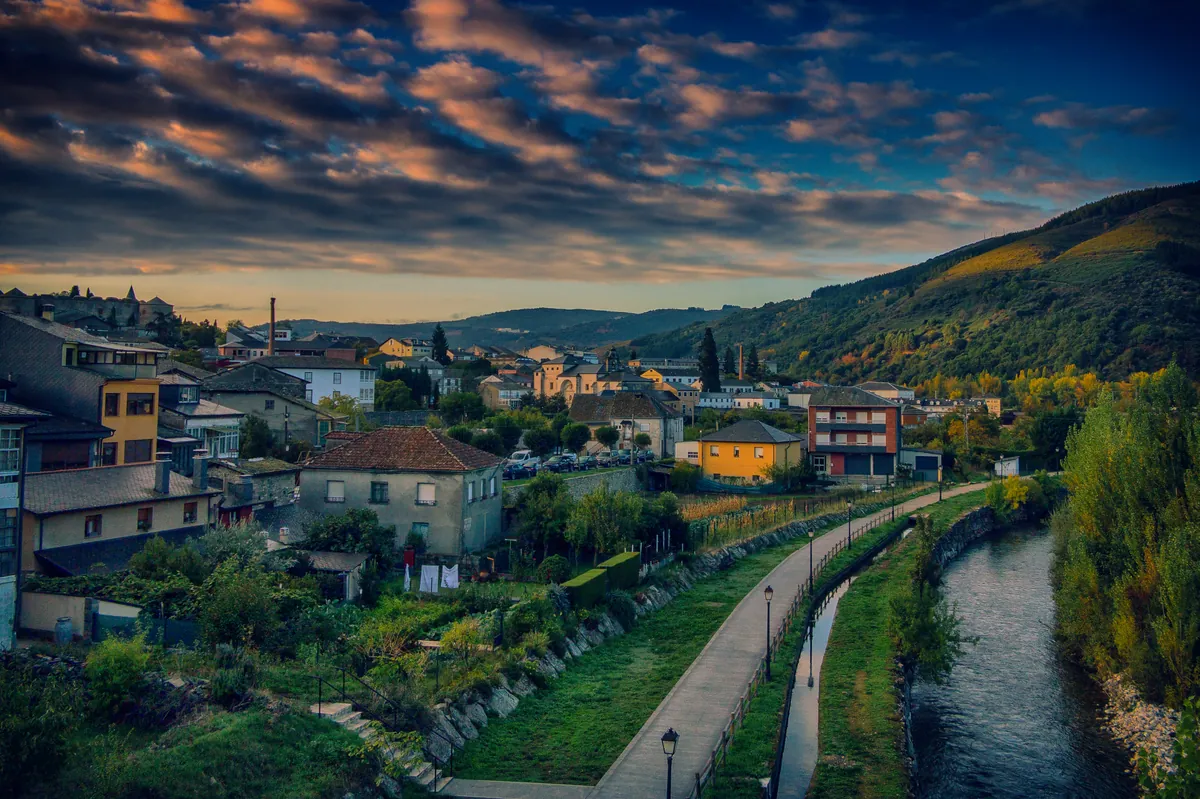
The river Boeza shapes much of the nearby scenery. As it passes Congosto, the water flows between banks lined with poplars and willows. In summer, their shade offers relief from the heat. Dirt tracks follow the course of the river or link the village with nearby plots and vineyards.
These are not signposted walking routes in a formal sense. They are local paths, used by residents for access to fields and vines. After rainfall, sections can become muddy, and in spring vegetation sometimes encroaches on the edges. Sturdy, closed footwear is a sensible choice. At dusk, frogs can be heard in wetter areas, and the steady sound of water moving over stones becomes more noticeable as the light fades.
The surrounding landscape alternates between small cultivated plots and vineyards set on gentle slopes. Patches of chestnut trees appear further from the village. In autumn, when the leaves begin to change colour, the valley takes on deeper reddish tones. The shift is gradual rather than dramatic, but it alters the mood of the whole area.
The relationship between village and river remains close. Paths leading down from the streets towards the Boeza help explain how Congosto fits into its environment. The settlement sits between the valley floor and the first low hills of El Bierzo, with agriculture tying everything together.
The Sanctuary Above the Rock
Above the village, visible from the road and from several points in the valley, stands the Santuario de la Virgen de la Peña. It occupies a raised rock that overlooks the river’s course and the old stone bridge crossing the Boeza.
The ascent is short but steep. From the top, Congosto’s position becomes clear: the compact cluster of houses below, the valley stretching outwards and the first rises of El Bierzo framing the horizon. On clear days, more distant mountains come into view, along with the water of the nearby Embalse de Bárcena.
The sanctuary’s location explains its prominence. It watches over the passage through the valley and over the river that has shaped local life. At certain times of the year, a romería takes place here. A romería is a traditional pilgrimage, often combining religious devotion with a community gathering. Neighbours walk up to the sanctuary together, bringing movement and conversation to the slope.
Even outside those dates, the rock remains a visual reference point. Whether seen from the bridge, the road or the river paths, the sanctuary anchors the wider landscape.
Practical Notes for a Calm Visit
Congosto’s closeness to Ponferrada and to the Embalse de Bárcena affects the flow of traffic, especially in summer. Some afternoons bring heavier vehicle movement on the access roads. Anyone hoping to explore the village at an unhurried pace will find mornings or weekdays quieter.
Parking is usually straightforward outside the busiest days. From the main square or from the area around the church, the village centre can be covered on foot in just a few minutes. Even so, it is worth extending the walk towards the paths that descend to the river. Those tracks offer a better sense of how the valley functions around the settlement.
Congosto does not demand a long itinerary. Its appeal lies in its scale and in the way daily life continues around stone walls, small plots and the steady current of the Boeza. A short visit can feel complete if it includes time to pause in the square, to look up at the Santuario de la Virgen de la Peña on its rock, and to follow the earth paths down towards the water.