Full Article
about Cubillos del Sil
A municipality shaped by energy history and the Bárcena reservoir; now focused on tourism and services.
Hide article Read full article
Cubillos del Sil en El Bierzo
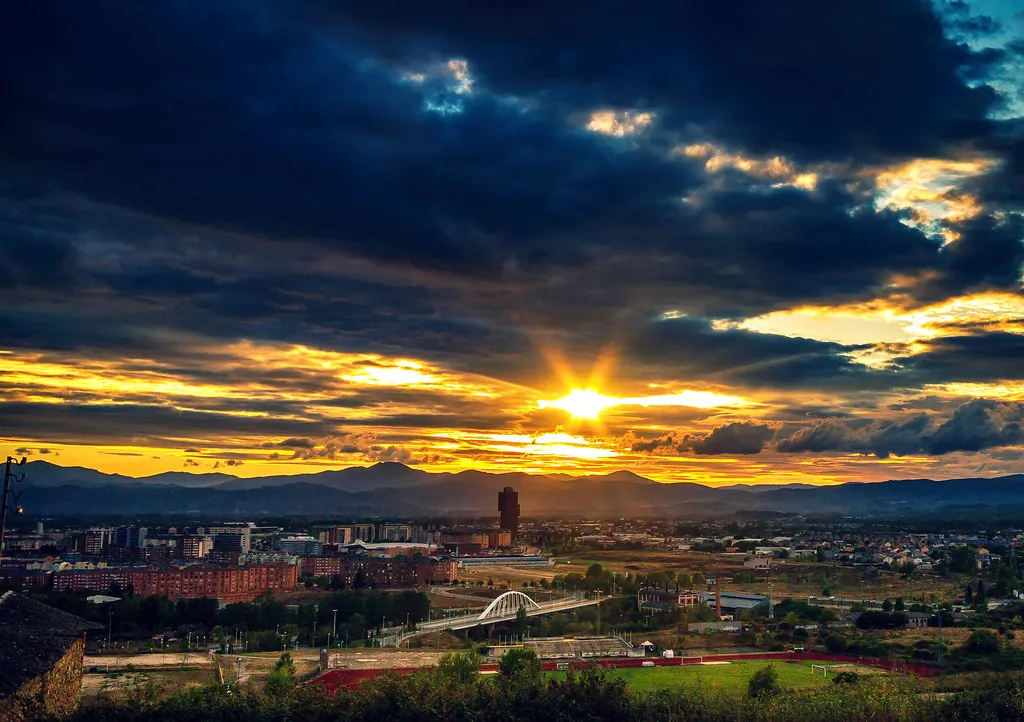
Cubillos del Sil se encuentra en la zona central de El Bierzo, a pocos kilómetros de Ponferrada. Su paisaje es el de un valle del Sil donde se mezclan viñedos, huertas y la huella de una industria reciente. El municipio tiene unos 1.700 habitantes y su posición es de transición: entre la comarca agrícola y las cuencas mineras que marcaron el siglo XX en la región.
Esa doble condición explica lo que se ve. Calles residenciales y parcelas cultivadas junto al río conviven con las infraestructuras, visibles a lo lejos, de la minería del carbón y la producción eléctrica. Fueron actividades que durante décadas definieron la economía local y dejaron una impronta clara en el territorio.
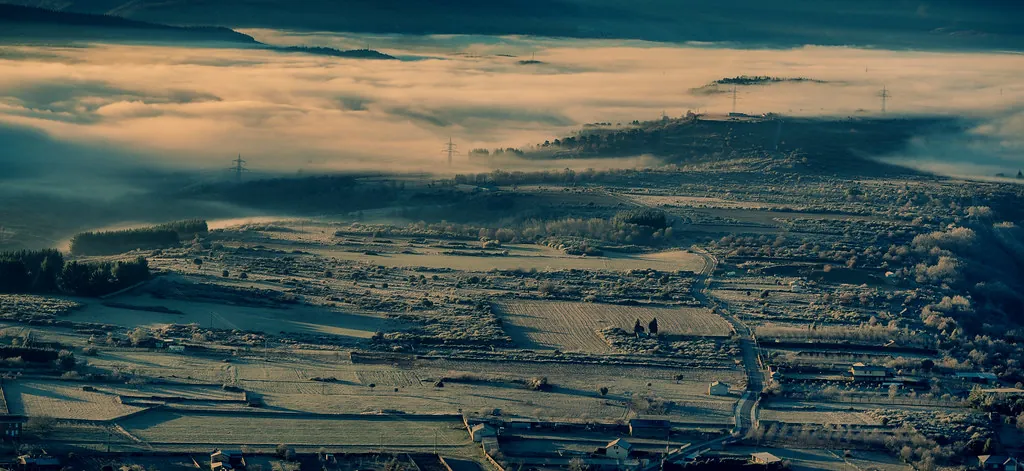
El río Sil pasa muy cerca del núcleo urbano y ha condicionado tanto el asentamiento como la agricultura. Las vegas fértiles se trabajan desde hace generaciones, mientras que las laderas del entorno forman parte del paisaje vitivinícola del Bierzo. Cubillos está dentro de la Denominación de Origen Bierzo, donde la variedad mencía es la más extendida.
La iglesia y el núcleo antiguo
En el centro de Cubillos del Sil está la iglesia parroquial de San Juan Bautista. El edificio actual muestra reformas realizadas entre la Edad Moderna y épocas posteriores, algo habitual en las iglesias rurales bercianas. No se levantó de una vez, sino que fue adaptándose con el tiempo.
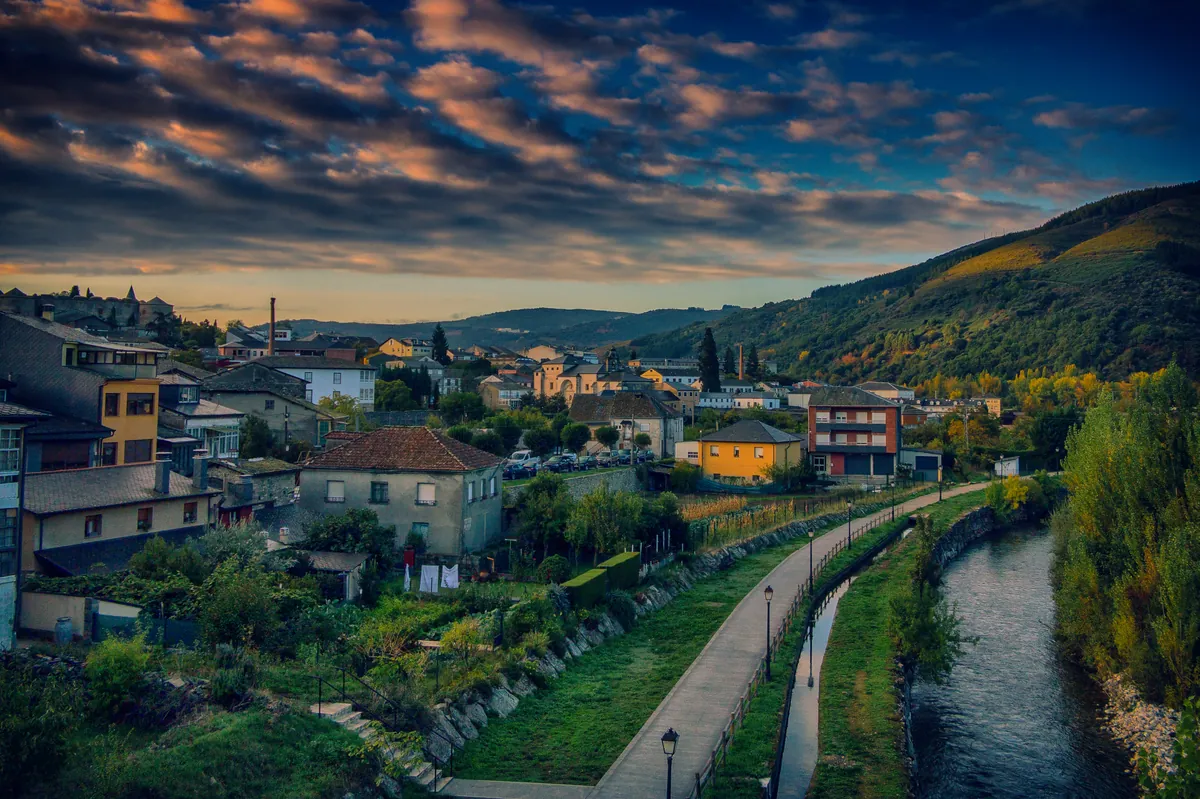
La iglesia articula el pequeño casco histórico del municipio. A su alrededor hay casas de piedra con balcones de madera, junto a construcciones más recientes de la época en que la minería estaba en su apogeo en la zona.
El contraste es notable aquí. La arquitectura tradicional berciana coexiste con viviendas de mediados del siglo XX, cuando el trabajo en las minas y en la central térmica próxima atrajo población. El resultado es un paisaje urbano que habla tanto de la vida rural de largo recorrido como de un capítulo industrial más reciente.
Un paisaje entre el río y la industria
El Sil ha modelado un valle ancho y fértil. Junto a sus márgenes discurren pistas agrícolas y caminos locales que permiten pasear junto al agua en algunos tramos, entre choperas, huertos y parcelas cultivadas. No suelen estar señalizados como rutas oficiales, pero los vecinos los usan con frecuencia.
No lejos de allí permanecen las marcas del paisaje minero que definió gran parte de El Bierzo durante el siglo pasado. Escombreras, antiguas explotaciones y grandes instalaciones industriales se recortan en el entorno. No todos esos espacios son accesibles o están acondicionados para visitantes, pero ayudan a entender cómo cambió la economía de la zona en apenas unas décadas.
El paisaje varía de forma notable con las estaciones. En otoño, los viñedos y los sotos de castaños cercanos se tiñen de rojos y amarillos. En primavera, las vegas del Sil vuelven a un verde intenso, reflejando el ritmo agrícola que aún marca el día a día.
Paseos y alrededores
Cubillos del Sil funciona como base para recorrer esta parte central de El Bierzo. Desde el pueblo salen carreteras locales y pistas rurales que conectan con aldeas próximas, atravesando viñedos y tierras de labor.
Para caminar, muchos vecinos utilizan los senderos que van junto al río o las pistas agrícolas que unen campos y barriadas. Son recorridos llanos, sin apenas desnivel, más apropiados para un paseo tranquilo que para una ruta larga de senderismo.
Para quien se desplace en coche, Ponferrada queda a muy poca distancia, lo que amplía considerablemente las opciones culturales e históricas de una visita. También está cerca el embalse de Bárcena, una gran lámina de agua con un peso visual fuerte en esta parte de la comarca.
Fiestas y vida cotidiana
Las principales celebraciones locales giran en torno al 24 de junio, festividad de San Juan Bautista. Durante esos días cambia el ritmo en Cubillos. Se organizan bailes al aire libre, actividades de las asociaciones locales y encuentros que reúnen a vecinos y a quienes regresan al pueblo por unos días.
Como en muchos pueblos del Bierzo, el verano concentra gran parte de la vida social. Las calles se animan y el ambiente refleja una vinculación fuerte entre la comunidad y el lugar. A pesar de su tamaño modesto, Cubillos del Sil mantiene una continuidad marcada tanto por sus raíces agrarias como por su historia industrial más reciente.