Full Article
about Fabero
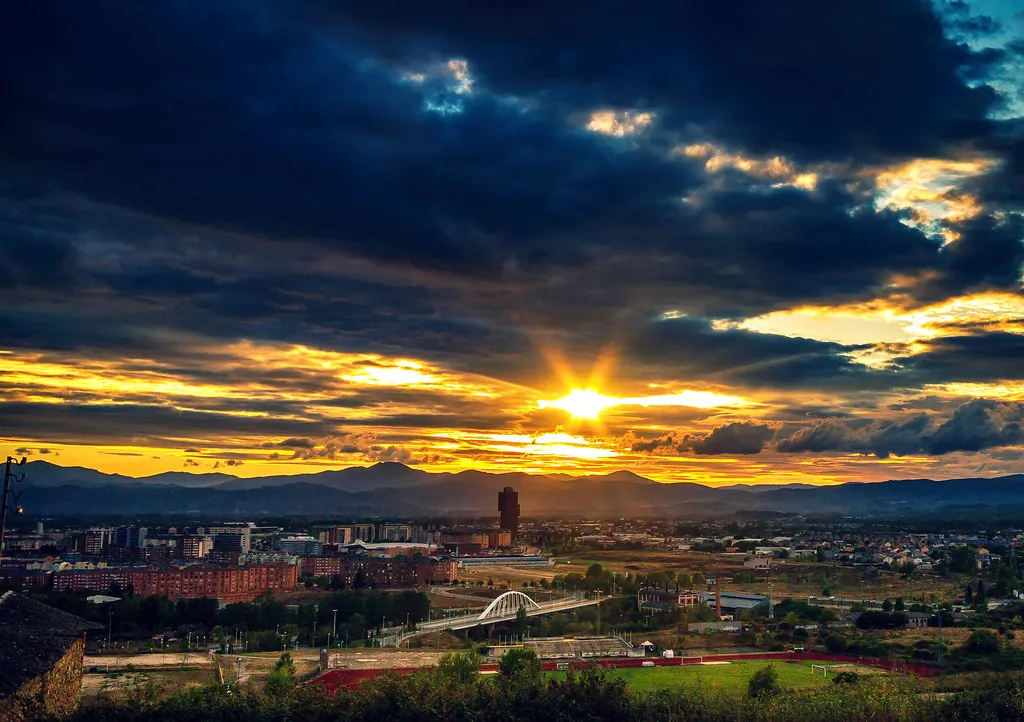
Historic mining basin of El Bierzo; it preserves significant industrial heritage open to visitors, such as the Pozo Julia.
Hide article Read full article
A Valley Shaped by Coal
The Pozo Julia shaft drops more than two hundred metres underground. The original cage, still preserved within the complex, could carry almost twenty miners at a time. Today it forms part of the visit to the former pit, yet the mechanism and the sound of the cable running over the pulleys make it easy to imagine what this valley was like when Fabero had more than eight thousand inhabitants and mine shifts set the rhythm of day and night.
Fabero cannot be understood without its geology. Anthracite, a hard, slow-burning form of coal, lies within the slate layers of this part of El Bierzo and has been known for centuries, although it was barely exploited for much of that time. Change came in the nineteenth century, when mining concessions began to be processed and coal found its place in industrial markets.
From the mid-twentieth century growth was rapid. Between the 1940s and 1960s workers arrived from other parts of León, as well as from Galicia and Asturias. The town expanded with neighbourhoods built quickly: simple houses of adobe or brick, slate roofs, straight streets designed for practicality rather than decoration. Many miners still kept small vegetable plots or livestock, which explains why some of the older streets retain large yards or animal pens.
The Fontoria hydroelectric power station, brought into operation in the 1920s, formed part of the same productive network. Electricity powered the extraction machinery, while coal sustained the wider economic circuit. For decades everything revolved around the mine. The closure of Pozo Julia in the 1990s marked a profound shift from which the municipality is still readjusting. Even so, headframes, spoil heaps and housing linked to former mining companies continue to define the landscape of the valley.
Two Churches, One Story
Fabero has two churches dedicated to San Nicolás. The older one dates back to the sixteenth century, although it has undergone later alterations. It is a modest building of rubble masonry with a slate roof, typical of rural architecture in the area.
As the population grew with the arrival of miners, the original church became too small and a larger one was built in the upper part of the town. This more recent church reflects a sober twentieth-century style, with semicircular arches, exposed brick and a tower of straight lines. There are no grand altarpieces or elaborate decoration inside. From the atrium, however, part of the old mining spoil heaps can be seen, an image that captures the relationship between the town and its industrial past.
The old church remains in use at specific moments in the calendar. The feast of San Blas, at the beginning of February, brings together many residents who continue the custom of carrying the saint in procession through the surrounding streets.
Cooking for Long Shifts
Fabero’s cooking belongs to the broader culinary tradition of El Bierzo, closely linked to physical labour and long working days. These are dishes designed to sustain, often prepared in a single pot and cooked slowly.
The cocido berciano follows a well-established sequence. First comes the soup, then chickpeas served with botillo, and finally cabbage accompanied by the meats. Botillo del Bierzo, a meat product protected by a geographical indication, is the central element of the dish and gives it much of its character.
In autumn, Reineta apples from El Bierzo appear on local tables, used for compotes and tarts. In nearby villages such as Bárcena de la Abadía, traditional romerías, religious gatherings that combine devotion and festivity, and local fairs remain occasions when these foods are prepared outdoors or in family homes.
Food here reflects the same rhythm that once governed the mines: steady, practical and rooted in the seasons.
Between Chestnut Trees and Headframes
The former Pozo Julia mine has been adapted as a visitor site and mining interpretation centre. Visits are usually guided and take in both the exterior installations and some recreated galleries. This allows an understanding of how coal extraction functioned and the conditions in which miners worked underground. In many cases the guides themselves once worked in the mine, and their explanations tend to be precise and grounded in experience.
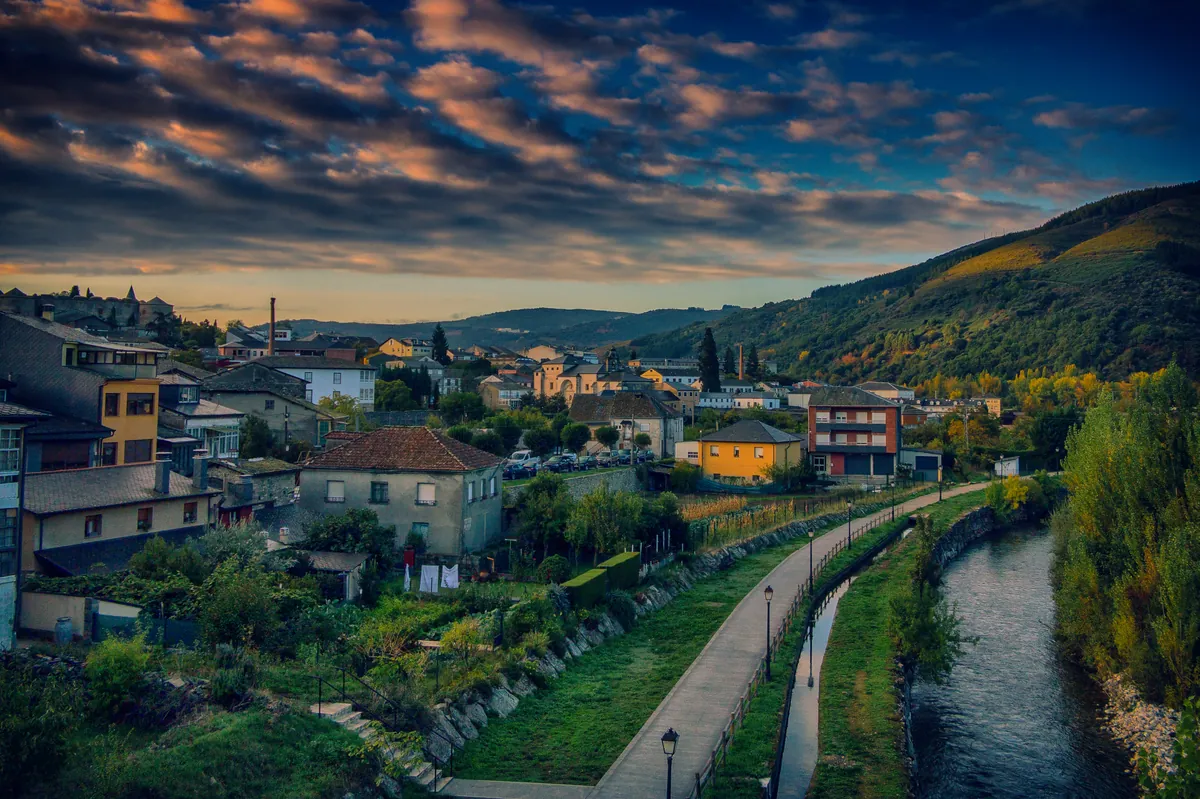
For those who prefer to explore the surroundings without entering the mining complex, the valley of the River Cúa offers several straightforward walks. From the Mercadillo neighbourhood a path follows the river for several kilometres, passing through chestnut groves and riverside vegetation. Along certain stretches there are remains of infrastructure linked to coal transport, including old metal supports and embankments from the former mining railway line.
In autumn the chestnut woods alter the appearance of the entire valley, drawing more people out onto these paths. The contrast between the natural setting and the industrial remnants is part of what defines Fabero today.
Reaching Fabero
Fabero lies in the south-west of the comarca of El Bierzo, just under forty kilometres from Ponferrada by road. The usual access is by car along the route that runs through the valley of the Cúa and connects several historic mining villages.
The urban centre is structured around the growth that took place during the mining decades. Streets extend outwards from the original core, mixing older rural houses with those built during the industrial expansion. Although the pace of life has changed since the closure of the mines, the physical imprint of that period remains visible in everyday spaces.
Fabero’s identity continues to be tied to anthracite, to the memory of the shifts that once organised the day, and to a valley where chestnut trees stand alongside headframes. The past is not presented as a spectacle but as part of the ordinary fabric of the town, evident in its buildings, its food and its landscape.