Full Article
about Molinaseca
Pretty village on the Camino de Santiago with a Roman bridge and cobbled streets; declared a Conjunto Histórico.
Hide article Read full article
Where the river sets the pace
The water of the Meruelo moves slowly beneath the Puente de los Peregrinos. Late in the day, the stone turns a warm gold and the river mirrors the bridge’s almost perfect arch. Much of the tourism in Molinaseca begins right there: people sitting on the slabs by the water, pilgrims pulling off their boots, locals crossing without a second thought because they have done it all their lives.
The sound rarely changes. Water, footsteps on stone, a brief exchange of words. Molinaseca has grown alongside this bridge for centuries, and it still shapes how the place feels and moves.
The bridge and the way in
The bridge is usually dated to the medieval period, though people were crossing here long before that. It once marked the natural approach before reaching Ponferrada, and it still sets the tone for anyone arriving today.
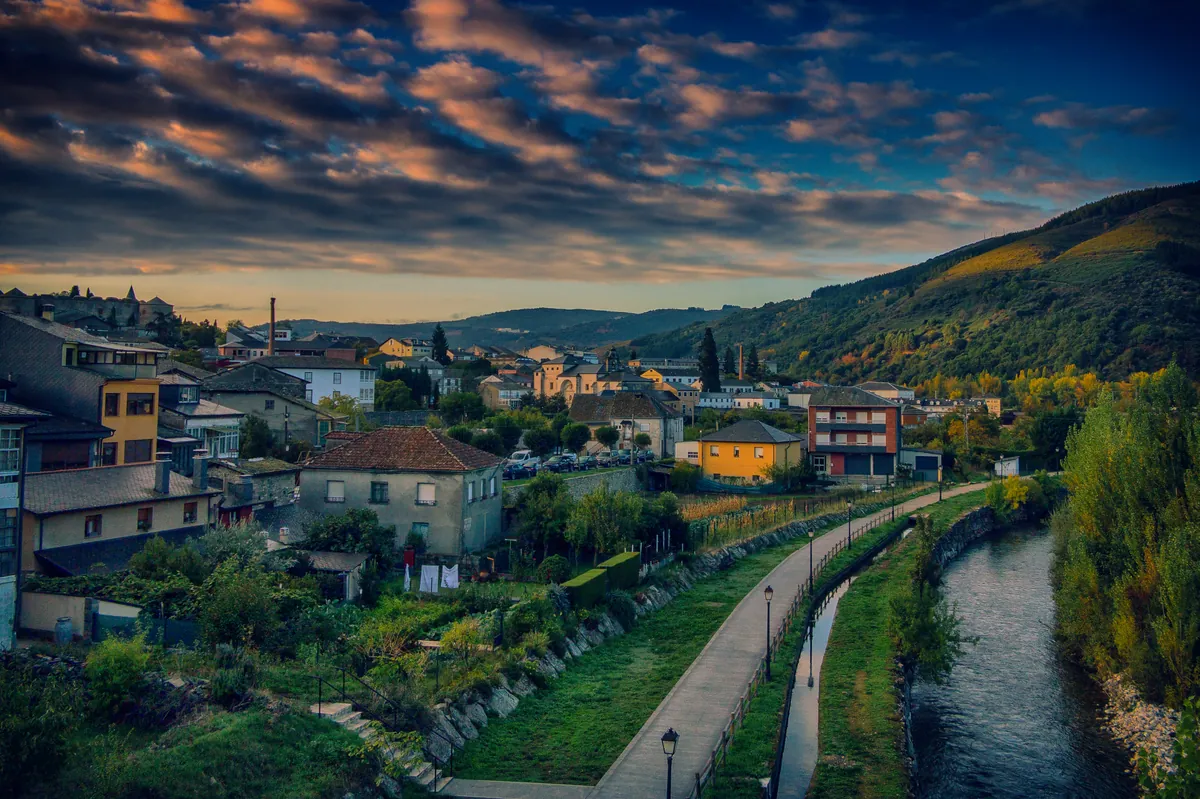
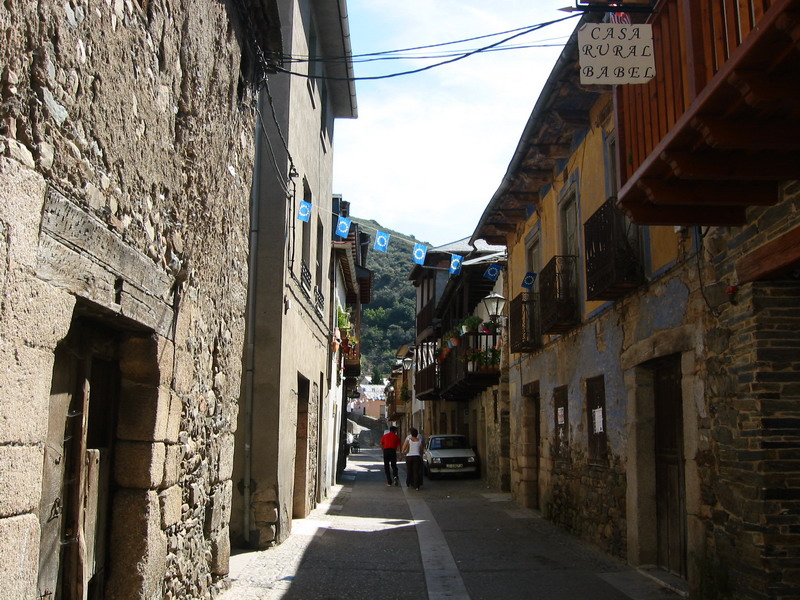
From this point, cobbled streets begin to climb gently. There are dark stone houses, wooden balconies and pots of geraniums that dry quickly in the heat of summer. Some façades have been carefully restored, while others keep their cracks and slightly leaning beams, showing the passing of time without much intervention.
The whole area is protected as a Bien de Interés Cultural, a heritage designation in Spain. Beyond the label, what stands out is continuity. These are buildings still in use, not a staged setting, and daily life continues within walls that have seen many generations come and go.
The square and San Nicolás
The streets gradually open out until they reach the main square. There stands the church of San Nicolás de Bari. Its façade is restrained, while the Baroque tower rises a little higher than expected after walking through such narrow streets.
Inside, there are dark altarpieces and aged wood. Nothing feels grand or showy. When evening approaches and the noise of the day fades, the interior becomes almost silent. It is a good moment to step inside, especially when the village is busy with walkers passing through.
The climb to the sanctuary
At one end of Molinaseca, a slope leads up to the Santuario de Nuestra Señora de las Angustias. The walk is not long, though the incline is noticeable if it comes at the end of a day on the Camino de Santiago.
From the top, the layout of the place becomes clearer. The river curves through the valley, the houses cluster together, and beyond them the Montes Aquilanos close in around the landscape. As the sun drops, the light falls sideways across the rooftops, and the sound of the road below softens into the background.
When the river becomes a meeting place
Near the bridge, small natural pools form along the river. The water stays cold even in the height of summer. In July and August, people gather here, sitting on the stones or jumping in from the lower edges.
Around midday, the atmosphere shifts. Towels spread out, children play, and voices echo against the stone of the bridge. For a quieter moment, early morning or weekdays tend to be calmer. At those times, the river returns to its steady rhythm, and the space feels closer to how it does for most of the year.
The Camino through Molinaseca
The Camino de Santiago runs straight through Molinaseca without detours. It enters over the bridge and continues uphill through the streets before heading out towards Ponferrada. Many pilgrims stop briefly: refill water, rest by the river, and move on.
The next stage is usually short and fairly easy. The route passes through orchards, vineyards and small agricultural plots that are still worked in this part of El Bierzo. It is a quieter stretch, where the landscape opens out and the pace remains unhurried.
When the village fills up
In summer, the atmosphere changes noticeably. The river pools draw people from the surrounding area as well as visitors coming from Ponferrada to spend the afternoon.
August is the busiest month. For a slower view of Molinaseca, it helps to come outside weekends or early in the day. At those hours, the village settles back into its usual rhythm: slow steps on stone, water moving under the bridge, and shutters opening gradually as the day begins.