Full Article
about Palacios del Sil
Mountain municipality in the Alto Sil; home to brown bear and capercaillie, with mixed forests
Hide article Read full article
Palacios del Sil is the kind of place you find because you took a wrong turn, or because someone who lives here told you about it. It doesn't make the glossy lists for a weekend in El Bierzo. You leave the LE-493 and the road starts to coil, following the river. The air gets cooler. Your phone loses a bar of signal. You've arrived.
This isn't a single village with a main square to tick off. It's a whole municipality, a handful of stone hamlets scattered across a valley that feels like it belongs to the river Sil and the chestnut trees first, and to people second. About 800 people live here, but you'd never guess that number standing in Susañe or Salentinos. Life is spread thin and quiet across the slopes.
Caminar donde el río manda
Forget paved promenades. Walking here means following the river's lead on paths made by feet, not tourism boards. The Sil carved this place, and the tracks cling to its gorges or climb away from it through oak woods.
You need to pay attention. The signposting is the discreet kind—a faded mark on a rock, a wooden post where two paths meet. I'd tell you to download a map on your phone before you go. It's not that you'll get lost easily, but you might miss the best part: that narrow trail that drops you right next to a deep, green pool where the water slows down.
The rhythm is set by the landscape itself. One minute you're in full sun on an open hillside, the next you're under the canopy of a chestnut grove so dense it feels like evening. You walk for the sound of water against rock, not for a viewpoint with a plaque.
Pueblos de piedra y rutina
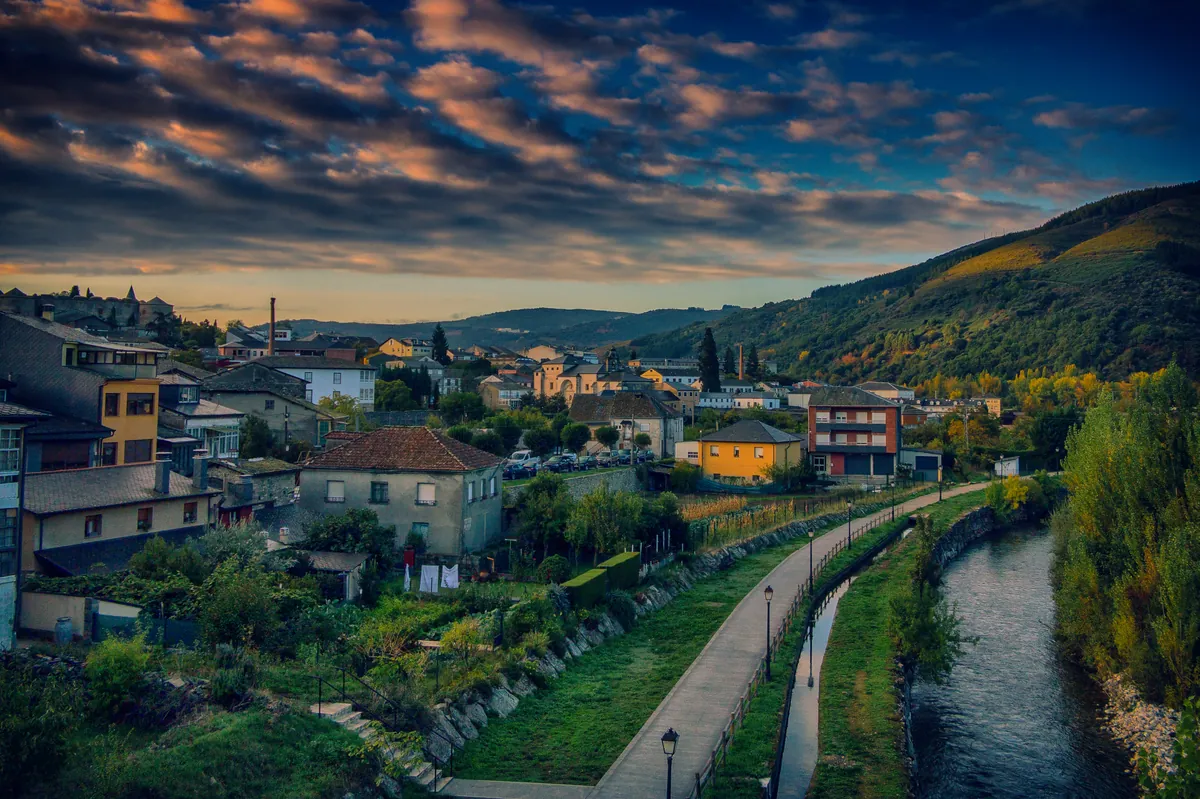
The villages here are built from what was dug out of these mountains: dark slate for the roofs, grey stone for the walls. You'll see hórreos holding up their skirts off the ground and wine cellars that are just a door in a hillside.
What I like is that nothing feels staged. That cart leaning against a wall isn't decor; it's waiting to be used. The bread oven in one alleyway still gets fired up sometimes. You see curtains in windows, tools in yards, wood stacked neatly for winter. You're walking through someone's Monday morning.
There's no monument to queue for. The point is the whole scene—the way the light hits those slate roofs late in the day, or how quiet it gets once you're two streets away from where you parked.
Un bosque que no es decorado
The forests aren't a background. They're the main event for much of the year. In spring, everything turns that intense, wet green that makes even an old wall look new. By October, the chestnut woods go gold and brown, and half of León seems to arrive with baskets looking for mushrooms.
It can be tough walking if you pick a route that heads uphill. Some climbs are steep and exposed. In summer, bring more water than you think you'll need; shade can be a luxury here.
But that rawness is what makes it feel real. This isn't a park. You might pass someone checking on their cattle or gathering windfall chestnuts. It keeps you honest.
Comida de cuchara y sentido común
You eat what makes sense after hours outside: hearty stuff. Expect big plates, local cured meats, and garden vegetables. When it's cold, botillo berciano appears on menus—that fatty, peppery stew of pork parts that sticks to your ribs.
Trout from the Sil turns up too, usually simply grilled. The food matches the place: straightforward, filling, without any fuss. It tastes better because you spent the morning actually working up an appetite on a path somewhere.
Mi opinión: para quién es esto
Palacios del Sil won't give you what Villafranca does: architecture buzz or crowded terraces. Come here if you're okay with making your own itinerary from a network of old paths. Come if you prefer seeing daily life over curated heritage. Stay home if you need a cafe every hundred meters or if "discreet signposting" sounds like a problem.
It’s for when you want El Bierzo without any performance. The valley sets all the rules here. Your only job is to listen