Full Article
about Ponferrada
Capital of El Bierzo and Templar city; administrative and tourist hub with its commanding castle
Hide article Read full article
A city that reveals itself in layers
Tourism in Ponferrada works a bit like that friend who seems serious until you step inside their home and discover an unexpected collection of odd things. You arrive thinking about Templars and the Camino de Santiago, then suddenly you are looking at old radios, talking about cured meats, and inspecting apples from El Bierzo as if they were trophies. The city plays with that contrast. First it shows you its medieval armour, then it shifts into everyday life.
That mix shapes the experience. There is history here that feels solid and defensive, but also a quieter, more domestic side that comes through in its food, its museums, and the way people gather. Ponferrada does not overwhelm at first glance. It unfolds gradually.
The castle that lives up to the hype
The Castillo de los Templarios is one of those places that gets described as enormous and, for once, the description holds up. The complex covers a vast area, filled with towers that look as though they belong in a medieval video game. Walking inside brings a slightly strange feeling: this was not designed for visitors, but for defence against people who were not arriving in a friendly mood.
The double walls, and in some sections almost triple layers, were not built for decoration. They were a clear medieval statement of limits. Today, the tone is very different. You enter without difficulty, wander through courtyards and passageways, and climb towers that once controlled access to the town. It becomes easy to understand why this place mattered so much to pilgrims heading towards Santiago.
Another advantage is how close everything is. The castle sits right beside the old town, so there is no need for planning or transport. A short walk from the centre takes you straight into its interior, which makes it feel like a natural extension of the city rather than a separate attraction.
From iron bridge to botillo culture
The name Ponferrada comes from a reinforced iron bridge built in the Middle Ages to help pilgrims cross the river Sil along the Camino de Santiago. The term pons ferrata gives the city its name. When you think about what it meant to cross a river centuries ago, the importance of that structure becomes clear very quickly.
Food carries similar weight here, especially botillo. For anyone unfamiliar, it is a type of cured meat that takes pork very seriously. Different parts of the animal are used, seasoned with a strong marinade, smoked, and then slowly cooked. The result is a rich, heavy dish, the kind that makes you reconsider any plans involving restraint.
In El Bierzo, botillo is not just food but a social ritual. It is typically shared with berza, potatoes, and red wine made from the mencía grape. Meals like this tend to stretch out, not because of formality but because the setting invites conversation. Once you try it, the pace makes sense.
Museums that change the tone
After spending time among stone walls and towers, Ponferrada shifts gear with a group of museums that feel surprisingly varied.
The Museo del Bierzo occupies what used to be the city’s prison. Inside, local history is presented without excessive drama. Archaeology and ethnography pieces help explain how people lived in this region, offering context rather than spectacle.
The Museo del Ferrocarril looks back to a period when the railway drove much of the mining activity in El Bierzo. Old machinery and wagons fill the space, giving a sense of how industry shaped the area. It appeals especially to anyone with an interest in mechanical history or industrial landscapes.
Then there is the most unexpected stop: the Museo de la Radio “Luis del Olmo”. It is essentially a large collection of radios from different periods. At first glance it may seem like a quick visit, but it tends to draw people in. Many of the devices feel familiar, the kind that echo memories of earlier generations.
When Ponferrada turns medieval
In summer, the city hosts the Noche Templaria, a festival built around its medieval past and centred on the castle. During those days, the historic centre changes noticeably. Markets appear, people dress in tunics, and reenactments bring movement to the streets.
It is the kind of event where curiosity turns into participation without much effort. The atmosphere builds as you move through the area, and by night the illuminated castle gives everything a strong visual focus. The setting helps tie the different elements together, making the celebration feel coherent rather than staged.
Walks between stone and valley
After a substantial meal, a walk through Ponferrada feels like the natural next step. One of the simplest routes connects the castle, the Town Hall square, and the Basílica de la Encina. Everything lies close together, making it easy to explore on foot without a fixed plan.
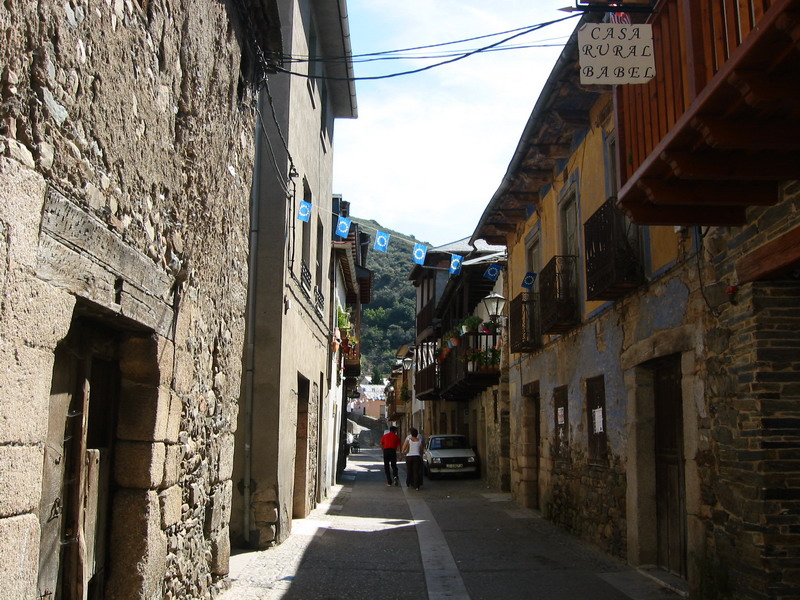
Wandering through the streets at a relaxed pace works well here. The distances are short, and the layout encourages you to drift rather than rush.
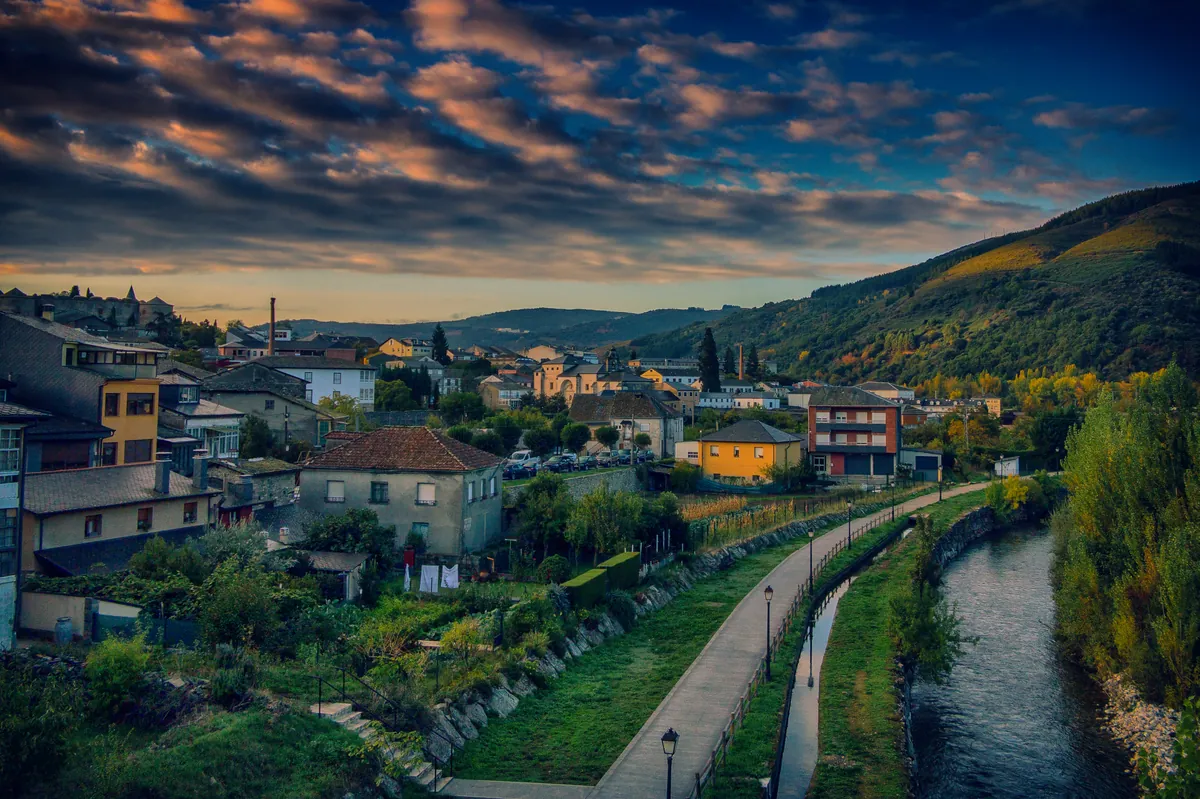
For those who want to go a bit further, there are longer routes around El Bierzo. Some follow old paths or pass through areas where mills once stood. The landscape changes as you move outward. There is more greenery, more presence of the river, and a sense of being in a contained valley that defines the region.
Is it worth stopping?
Ponferrada does not compete with the largest monumental cities. It does not have an endless historic centre or a single cathedral dominating everything around it.
What it offers is something different. The city clearly shows its past as an important point along the Camino de Santiago. Its mining history remains visible, and El Bierzo itself has a distinct identity that comes through in both landscape and food.
A visit tends to follow a simple rhythm. You arrive, explore a Templar castle that feels substantial rather than symbolic, get a sense of the region’s background, and end up sitting with a glass of mencía and something hearty on the table.
A weekend is more than enough to understand how Ponferrada works. A morning at the castle, a walk through the old town, a slow meal, and time for one or two museums in the afternoon. That combination gives a clear picture of this corner of El Bierzo without needing to overcomplicate things.