Full Article
about Priaranza del Bierzo
On the left bank of the Sil; it holds the cliff-top castle of Cornatel.
Ocultar artículo Leer artículo completo
The Village that Isn’t on the Postcard
Five hundred metres above sea-level, the road into Priaranza del Bierzo corkscrews through a chestnut wood and suddenly drops you beside a stone fountain where the water runs year-round. No sign points to the centre; the village simply begins at the fountain and ends three streets later. Roughly 350 people live here—fewer than the passenger capacity of a Cross-Country rail carriage—yet the place supports two bars, a bakery that still sells bread by weight, and a tiny municipal albergue whose logbook is filled with grateful Winter-Camino walkers who expected nothing more than a coffee stop.
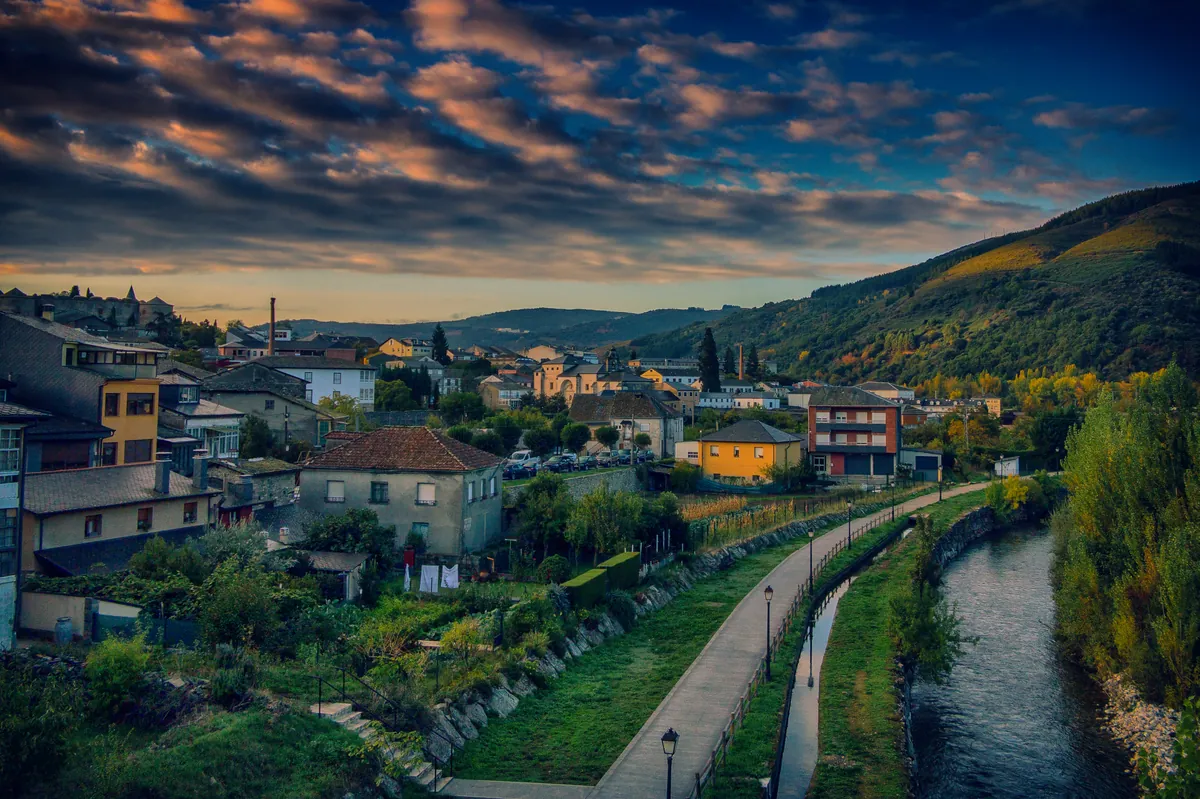
Adobe walls the colour of burnt honey lean over lanes barely wide enough for a tractor. Timber balconies stretch the full length of upper floors, their rails once used for drying maize and peppers. One house has bricked up the old stable arch; another has fitted plate-glass and geraniums. Renovation arrives house by house, not street by street, so the village looks half-awake rather than museum-perfect. That unfinished feel is the point: Priaranza is lived-in, not curated.
A Castle, a Gorge and the Sound of No Buses
Ten minutes uphill on a farm track, the Castillo de Cornatel commands a ridge that drops straight into the Sil canyon. Entry is three euros, cash only, collected by a caretaker who appears when you clang the bell. Inside, walls rise barely higher than a London bus, but the 360-degree view compensates: vineyards stitched across the valley floor, the first snow on Ancares peaks, and not a single tour coach in sight. The castle opens Wednesday to Sunday; Monday and Tuesday the chain looks permanently locked—turn up then and you’ll join the sheep.
Back in the village, the Iglesia de San Pedro keeps more predictable hours. Its medieval bones were re-skinned in the eighteenth century, yet the bell-tower still tilts two degrees off vertical after an earthquake in 1755. Locals claim the lean is deliberate—“so the bells can spill their sound into the valley.” Step inside during evening mass and you’ll catch the church’s real treasure: a sixteenth-century processional cross chased with tiny miners’ hammers, a reminder that El Bierzo’s wealth once lay underground, not in vines.
Chestnuts, Botillo and the €6 Menu
October turns the surrounding woods copper. Families park their cars where the track narrows and fan out with wicker baskets; wild chestnuts are fair game, though the largest, sweetest nuts fall inside private orchards—ask first. A morning’s haul reappears that night at Taberna El Sitio de mi Recreo, roasted and served gratis with a glass of young mencía. The same bar will grill half a botillo (a local chorizo-stuffed pork parcel the size of a rugby ball) if you request a media ración; Brits who baulk at the standard kilo portion can thus sample Bierzo’s signature dish without surgical assistance.
There is no written menu del día. Instead, the owner reels off what his mother cooked at dawn: garlic soup, pimientos del Bierzo (small, sweet, not remotely spicy), trout from the river if someone brought any. Expect to pay six euros for two courses, bread and house wine poured from a plastic jug. Cards are accepted, but the machine sometimes loses signal; cash under twenty euros keeps everyone happier. Breakfast is simpler: tostada drizzled with local honey and a café con leche for €1.80. A full English does not exist—celebrate the absence.
Walking Without Way-markers
Three circular footpaths leave from the fountain; none is signposted in English. The shortest (4 km) follows an irrigation channel to an abandoned water-mill where wagtails nest in the wheel-housing. Mid-April brings drifts of wild peonies along the path edges—pink confetti against green wheat. A longer loop (9 km) climbs to the Ermita de la Magdalena, a twelfth-century chapel whose door stands open but whose roof flew off in a storm twenty years ago. Inside, the stone altar is scored with initial hearts; the view across four valleys is worth the 300-metre ascent.
Paths can be muddy after rain; trainers suffice in summer, but spring and autumn demand proper tread. The tourist office (open Wed-Sun, same days as the castle) stocks free topo maps printed by the regional park: contour lines every twenty metres, no advertising. Mobile coverage is patchy—Movistar works, Vodafone often drops to 3G—so screenshot the route before you set out.
Getting Stuck, Getting Out
Priaranza sits 22 km south-west of Ponferrada on the CL-631, a mountain road that coils through oak forest and suddenly straightens across a high plateau where eagles cruise at bumper height. Car hire from Madrid or Santiago airports takes two and a half hours; the last forty minutes feel longer because the sat-nav loses nerve on every hairpin. Public transport is thinner: one Alsa bus on weekdays, none at weekends. Miss it and the single municipal taxi (book via the ayuntamiento on +34 987 420 806) charges €35 to Ponferrada—cheaper than a night’s unexpected lodging.
There is no cash machine; the nearest is back in Ponferrada, so bring euros before you arrive. The bakery shuts between two and five; buy lunch supplies with your morning coffee or you’ll be negotiating sandwiches out of a Kinder Egg. Winter snow can isolate the village for a day or two—glorious if you’re stocked up, inconvenient if you have a flight to catch.
When to Come, When to Leave
April and late-September offer the kindest light: mornings sharp enough for a fleece, afternoons warm enough to sit outside. In July the valley holds heat like a clay oven; bars stay open later, but the castle’s stone turns furnace-hot by eleven. Easter brings Spanish families who fill the albergue and double the decibel level; walkers seeking silence should aim for the second half of May or early October, weekdays preferably.
Leave before you run out of conversation. Three streets, two bars and a castle will not sustain a fortnight. Instead, treat Priaranza as the pause button on a longer drive through El Bierzo: a place to walk at orchard height, eat pork without a menu, and remember that rural Spain still outnumbers souvenir shops by several hundred to one.