Full Article
about Sobrado
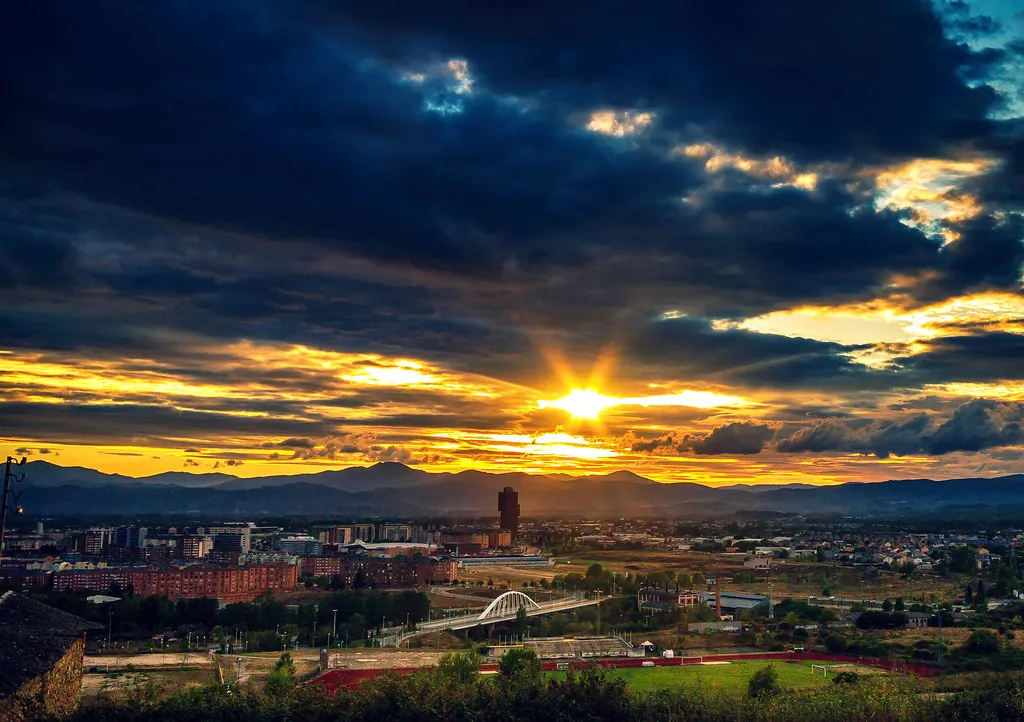
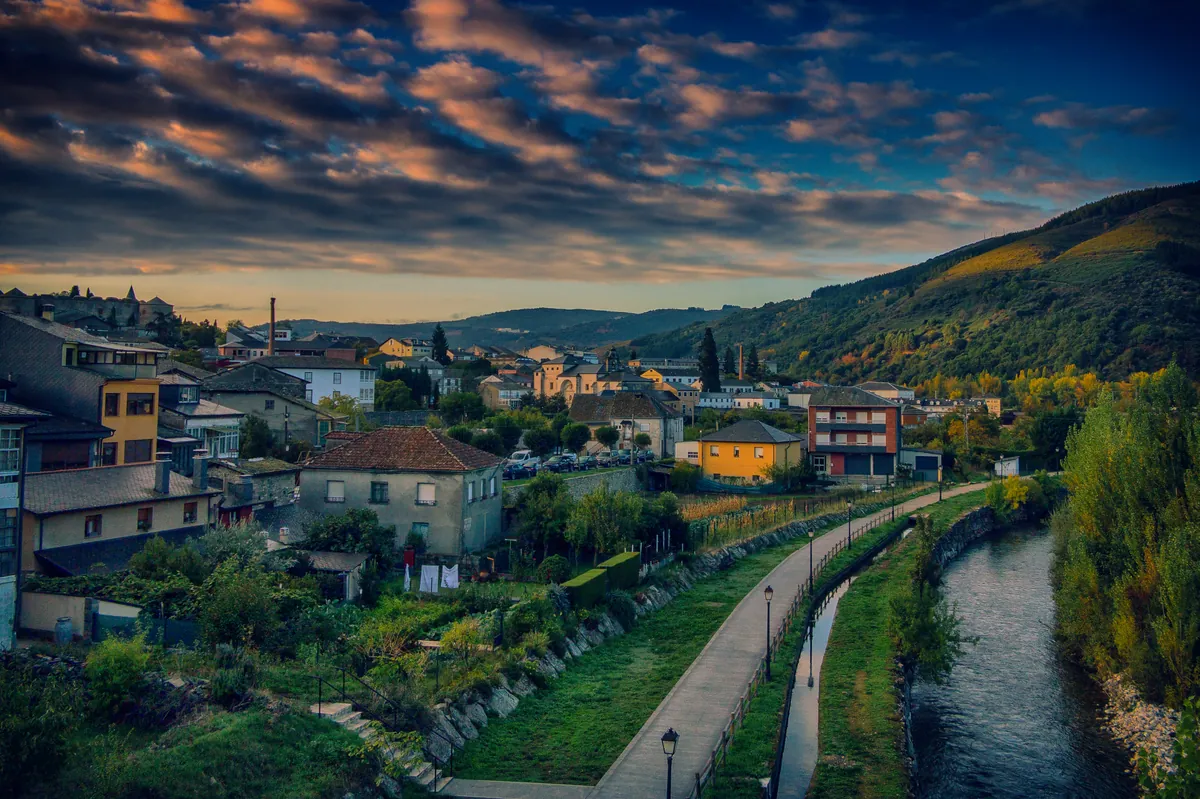
Bercian municipality with a river beach and chestnut trees; known for its fish farm and the Selmo river setting.
Ocultar artículo Leer artículo completo
The road sign at the village edge is bilingual, but not in the way you'd expect. Below the Spanish "Sobrado" sits its Galician twin, because here at 426 metres above sea-level the linguistic border dissolves. Locals swap between languages mid-sentence while they lean against stone houses, arguing over whose chestnuts are drying best under the eaves. It's your first clue that the Bierzo region answers to its own rules.
At first glance Sobrado appears to be one street and a church. A second lap reveals the bodegas—cellars carved into the hillside, their wooden doors painted the same ox-blood colour as the local Mencía wine. Many are still in use; if you pass after sunset you may catch an elderly couple disappearing inside with a plate of chorizo and a transistor radio. The village counts barely 300 souls, yet the place feels lived-in rather than abandoned. Washing flaps on wrought-iron balconies, someone is always sweeping a threshold, and the parish bell rings the hours with an accuracy the British railways would envy.
The Vineyard Ladder
Below the houses the land drops away in a giant staircase of terraces. Generations dry-stacked the slate walls so that every south-facing slope could hold vines. From the mirador near the last lamppost you look across a patchwork of emerald and rust that changes tone every few weeks. No interpretive panel explains the view; instead an abandoned husking shed stands open, its stone floor still scattered with last autumn's chestnut shells. Walkers who tackle the 7 km loop to neighbouring San Román pass cherry trees in April heavy enough to graze your forehead, then oak woods where wild boar have rooted up the path. The gradient is gentle, but after rain the slate turns treacherous—decent boots are advised even for this "stroll".
Those terraces aren't museum pieces. Families harvest by hand in late September, loading grapes into white plastic tubs lashed onto ageing Land Rovers. If you appear at the right moment you may be dragooned into holding a funnel while must glugs into a demijohn. Payment comes as a slosh of half-fermented juice that stains your fingers purple for days.
What Passes for Nightlife
Evenings centre on the only bar that keeps regular hours, Bar Cristina, identifiable by the Real Madrid flag in the window and the smell of drying chestnut wood inside. Tapas are whatever Ángel has decided to cook: perhaps a plate of local cocido thick enough to stand a spoon in, or slices of botillo, the Bierzo's cannon-sized smoked sausage. Order a half-litre of house Mencía and it arrives in a chipped water glass; at €1.80 you stop counting after the second. The television mutters Galician news, volume low enough to hear the dominoes clack at the next table. By 22:30 lights switch off street-side—last orders is non-negotiable Monday to Thursday. Cash only; the nearest ATM wheezes 12 km away in Carracedelo and regularly runs dry on Saturdays.
Seasons that Dictate the Menu
Spring brings blossom and the first outdoor tables, though nights stay chilly enough to appreciate the bar's wood-burner. Wild asparagus appears in scrambled eggs; villagers wield long sticks to hook the spears from roadside verges. Summer is cherry time—Sobrado's orchards supply Madrid's markets, but mis-shapen fruit is sold from wheelbarrows at €2 a kilo. Autumn is the money season: chestnuts, walnuts and mushrooms turn the hills into a free supermarket. Locals guard their mycological spots with the same secrecy a Yorkshire angler reserves for trout pools, so follow a guide or stick to the marked paths. Winter smells of wood smoke and pig fat; every house has a side-room where sausages hang like burgundy candles. Temperatures can dip below zero at night—if you have booked one of the two village rental cottages, confirm the heating works before October.
Reaching the Middle of Nowhere
Public transport is essentially folklore. A school-bus style service leaves Ponferrada at 07:15 and returns at 14:00; there is no weekend run. Most visitors fly to Santiago or Oviedo, pick up a hire-car and drive: the last 25 minutes from the A-6 motorway wriggle through hamlets where satellite dishes point at improbable angles. Fill the tank in Ponferrada—petrol stations disappear after Villafranca del Bierzo. Mobile coverage flickers in the valley; Vodafone fades halfway down the lane to the river.
A Honest Verdict
Sobrado offers no souvenir stalls, no flamenco nights, no castle to justify an entrance fee. What it does offer is a calibration of pace: after 48 hours you catch yourself walking more slowly and counting cherries instead of emails. The downside is that if the weather turns, entertainment shrinks to watching the bar cat chase flies. Come prepared—boots, book, waterproof—and the village repays with conversations you didn't schedule and a silence thick enough to hear your own pulse. If that sounds like hardship, stay in Ponferrada and do the castle tour instead. If it sounds like relief, turn off the main road and keep climbing until the street signs change language.