Full Article
about Toreno
Historic town in the Sil valley with a mining past; heritage includes the Picota and the Roman bridge.
Ocultar artículo Leer artículo completo
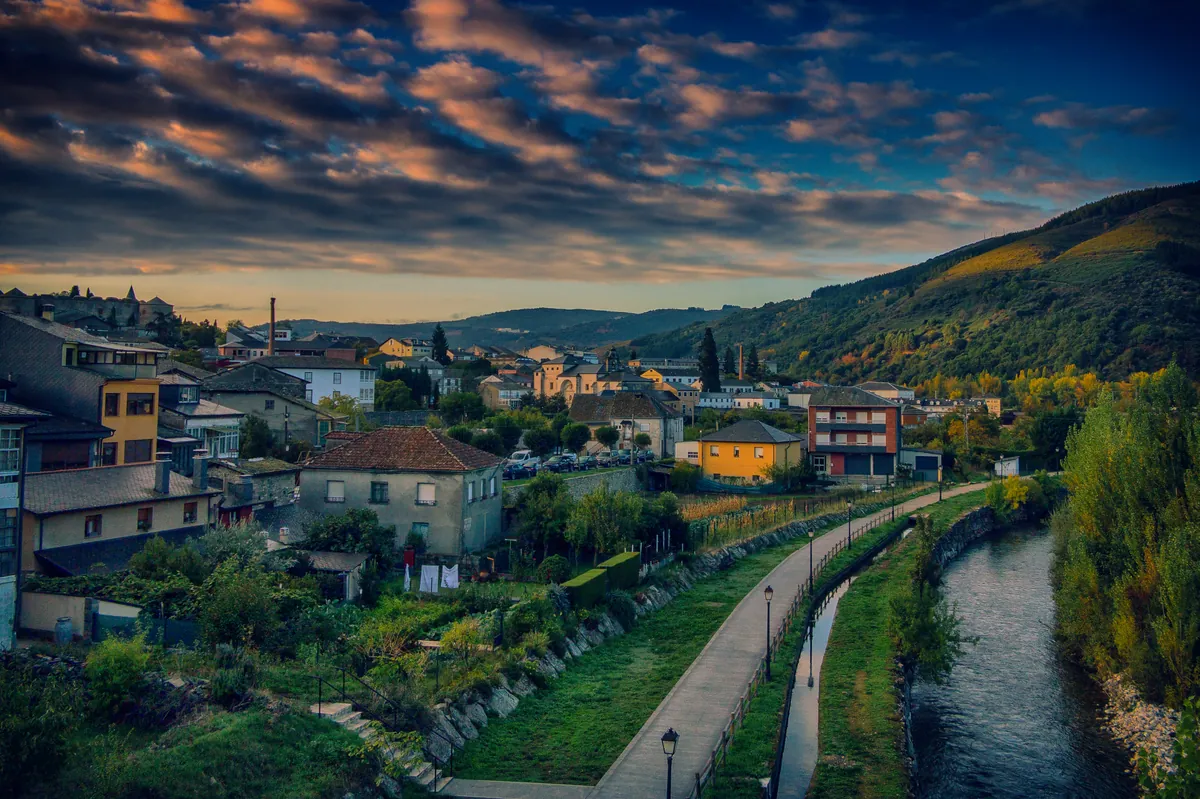
The morning bus from Ponferrada wheezes to a halt at 659 metres above sea level, and the doors open onto air that carries the faint scent of woodsmoke and damp leaves. This is Toreno, a place that spent decades coughing up coal and is now learning to breathe mountain air again. The transition isn't always graceful—abandoned washeries still loom over allotments where elderly neighbours tend leeks—but the village's honesty about its industrial past feels refreshing in a region increasingly polished for tourists.
Altitude and Attitude
At this height, the climate plays tricks. July afternoons can hit 34°C in the valley, yet evenings drop to 18°C once the sun slips behind the chestnut ridges. Winter arrives early; the C-631 is regularly chained-up territory from November onwards, and the single village taxi refuses the last 12 km to Congosto after dusk once frost glazes the bends. Spring brings the reward: clear mornings when the Sil gorge releases wisps of mist like steam from the old pithead baths, and the first castaños burst into lime-green leaf.
Walking options radiate outward rather than upward. The Ruta de las Mascaritas (9 km, way-marked with white-and-yellow flashes) loops through three hamlets without climbing above 800 m—perfect for an afternoon when legs still feel last night's botillo. Serious hikers can link to the PR-LE-14, which follows an old miners' track to Arganza, but carry water: the springs marked on 1:25,000 maps often run dry by late May. Mountain-bikers head south instead, dropping 400 m on firebreaks to the river at San Esteban; the return journey requires thigh muscles of steel or a negotiated lift from whoever is driving the weekly bread-van.
What the Locals Eat (and When)
Food arrives in waves that mirror the agricultural calendar. From mid-October until the first hard frost, every bar displays hand-written signs for "castañas asadas"—a paper cone of chestnuts, split and smoky, for €2. Try them with a small glass of the local hipocrás, a slightly syrupy red wine steeped in cinnamon and orange peel; it tastes like Christmas even when the thermometer still reads 22°C.
The serious dish is botillo del Bierzo, a rugby-ball-sized parcel of marinated ribs and tail that is smoked over holm-oak then boiled. One portion feeds three, but single travellers can usually negotiate a tapa-sized slice if they ask before noon—kitchens start the pot at dawn and when it's gone, it's gone. Vegetarians survive on pimientos del Bierzo, sweet red peppers roasted until the skins blister, then served with a trickle of local olive oil sharp enough to make you cough. Breakfast expectations should be recalibrated: coffee comes instant unless specified, and the "tostada" is a doorstop of white bread rubbed with tomato, salt and little else. Ask for avocado and you'll be met with polite bewilderment.
Sundays, Signal and Other Practicalities
Toreno runs on Spanish village time, amplified by altitude. The Repsol garage shuts at 14:00 on Saturday and does not reopen until Monday; anyone arriving with less than a quarter-tank risks an expensive walk to Congosto for fuel. Cash behaves the same way—there are no ATMs in the municipality, and the nearest Santander branch refuses foreign cards after 18:00 when its security shutter half closes. Bring euros, or be prepared to buy your dinner with the bar-owner's dodgy card-reader that accepts only Spanish debit cards and adds 3%.
Mobile reception is a lottery. Vodafone and EE flicker out entirely in the upper lanes; even Movistar drops to 3G inside stone houses. The village square offers the best chance of a Whatsapp message leaving town, but don't bank on uploading that panoramic shot of the Sil gorge in real time. Accept the disconnection—it's cheaper than switching to roaming, and the lack of constant pings suits the pace.
Accommodation is limited to two guesthouses, both on the road out towards Carracedelo. Casa Cura has three rooms above what used to be the priest's house; bathrooms are new, wi-fi theoretical, price €45 double B&B. Hostal O'Castañu offers five pine-clad rooms over the restaurant, slightly cheaper at €38, but weekend music from the bar below thumps until 02:00 during fiestas. Book ahead for August: the emigrants' return swells the population to 6,000 and even Ponferrada hotels sell out.
Beyond the Village Limits
Toreno works best as a base rather than a box to tick. A 25-minute drive north-west reaches Las Médulas, the Roman gold-mining badlands that look like ochre cathedral organ pipes. Approach via the narrow CV-101 at sunset when the sandstone glows ember-red, but meet oncoming 4×4s with caution—passing places are carved into 100-metre drops and guardrails are Spanish-length, meaning they stop precisely where you need them most.
Wine drinkers head south instead to Valtuille de Abajo, five bodegas within a 12-km radius pouring Mencía that tastes of violets and graphite. The bodegueros still wince at the memory of British stag parties who arrived in 2019 demanding prosecco; arrive asking for "la añada más atlántica" and you'll leave with an invitation to see the 19th-century stone lagares, boots sticky with must.
Back in Toreno, the fiesta programme for 15–18 August looks unchanged since Franco: midday procession, foam machine for children at 17:00, brass band gets drunk, repeat. Visitors are welcome but not fussed over—buy a €4 wristband from the kiosk if you want plastic cups of beer at village prices, otherwise the bars charge an extra euro for the nuisance of opening more kegs. Fireworks echo off the valley walls at 01:00 sharp; earplugs recommended in Hostal O'Castañu whose windows face the square.
Worth the Detour?
Toreno will never feature on glossy regional posters. The industrial scars are still visible, English is rarely spoken, and a rainy Tuesday in March can feel longer than a British February. Yet that very rawness delivers something increasingly rare: a mountain village that hasn't rebranded itself for weekenders. Come for the chestnut woods in October, for the miner-turned-barman who explains why the river turned black, for the simple pleasure of a coffee that costs €1.20 and arrives without a loyalty card. Pack patience, cash and a phrasebook; leave before the church bells strike noon on Sunday and the C-631 still belongs to delivery vans and dog-walkers rather than satellite-navigation optimists.