Full Article
about Villafranca del Bierzo
The 'Little Compostela'; a monumental town with the Puerta del Perdón where the jubilee is earned
Hide article Read full article
At the edge of Castilla, on the road to Galicia
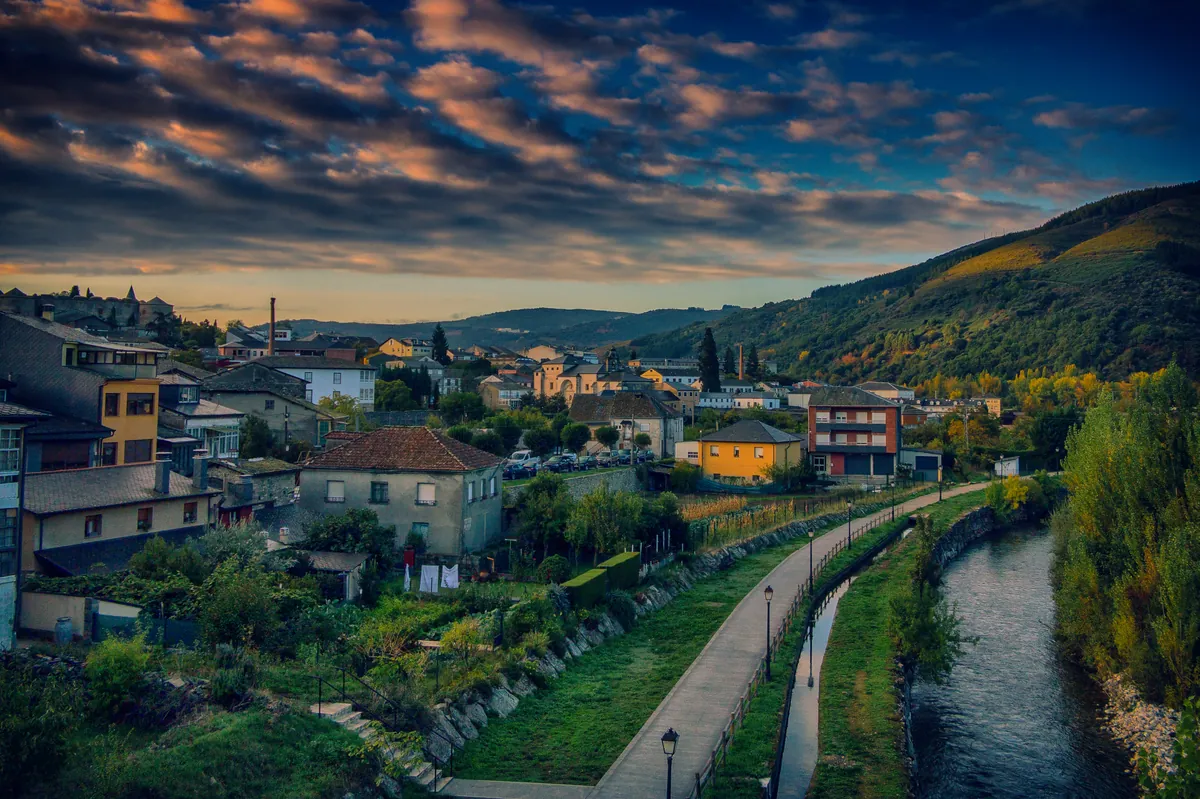
Tourism in Villafranca del Bierzo often begins the same way the Camino does: by crossing the bridge over the river Burbia and entering a town that for centuries acted as a threshold to Galicia. Here, the Camino de Santiago subtly shifts pace. After the open valleys of El Bierzo, the landscape begins to close in, and pilgrims prepare for the ascent towards O Cebreiro.
Within this setting stands one of the town’s most recognisable features: the Puerta del Perdón of the church of Santiago. According to Jacobean tradition, pilgrims who were too ill to continue to Compostela could receive the jubilee here during Holy Years. The door remains on the north façade of the church, a reminder that Villafranca was, for centuries, both a place of passage and a place of care for those arriving exhausted at the edge of Castilla.
A historic meeting point between León and Galicia
Villafranca cannot be understood without its location. The Burbia valley connects with that of the Sil, forming a natural route into Galicia, which gave the area strategic importance from an early period. There was Roman presence in the region, as in much of El Bierzo, linked to gold extraction, although the town itself took shape in the Middle Ages.
Its name is tied to the repopulation efforts promoted by the kings of León. “Villa franca” referred to a settlement where privileges were granted to new inhabitants, many of them Franks associated with Camino routes. This mix of trade, pilgrim traffic and local administration explains why it remained one of the most important centres in El Bierzo for centuries.
The family of the Marquises of Villafranca established their base of power here. Their castle-palace, built in the 16th century on the site of an earlier fortification, still dominates the urban landscape from one end of the historic centre.
Calle del Agua and the marks of old lineages
If one street captures the town’s history, it is Calle del Agua. It is not especially long, yet it gathers several of the most recognisable stately houses in El Bierzo.
Stone façades display coats of arms that recall the families who once held influence here: Pimentel, Zúñiga, Valcarce and other names connected to administration and land ownership in the region. Many of these buildings date from the 16th to 18th centuries, when Villafranca maintained a notable level of commercial activity linked to wine, agriculture and the steady flow of travellers.
The street takes its name from an old watercourse or conduit that once ran through the area. Little of it can be seen today, though it helps explain the gentle slope and the arrangement of some of the houses.
The church of Santiago and its place on the Camino
The church of Santiago forms part of the historic route of the Camino Francés. The current building reflects different phases of construction: a Romanesque base alongside later additions, visible in parts of the structure and in the cloister added in a more modern period.
The well-known Puerta del Perdón opens onto the Camino from the side. Its importance is more symbolic than architectural. It reminded pilgrims that the journey carried a spiritual dimension, and that Villafranca served as a final refuge before entering Galicia.
Nearby stand other religious buildings that point to the town’s dense historical fabric. For centuries there were several convents and monastic foundations, some of which disappeared following the 19th-century disentailment, when church properties were confiscated and redistributed.
Vineyards in the landscape of El Bierzo
Villafranca forms part of the comarca of El Bierzo, a wine-producing area with a long tradition. The slopes surrounding the valley have been cultivated with vineyards for centuries, helped by a milder climate than that of the León plateau.
Today, the Denominación de Origen Bierzo protects local grape varieties well adapted to the terrain, particularly mencía for red wines and godello for whites. Wine remains both an economic and cultural reference across many towns in the region, and around Villafranca it is common to see small vineyard plots interspersed with chestnut trees and vegetable gardens.
Walking through the town
The historic centre can be explored easily on foot. A typical route begins near the castle, continues along Calle del Agua, and then descends towards the church of Santiago and the areas closer to the river.
A walk along the Burbia offers a quieter transition between the old town and the more modern parts of Villafranca. From here, the geography that shaped the town becomes clearer: a narrow valley, sheltered by hills, where the Camino finds one of its last pauses before reaching Galicia.