Full Article
about Antigüedad
Antigüedad: a Cerrato town tied to military aviation history, set amid moorland and valleys perfect for hiking and nature.
Hide article Read full article
A place that takes its time
Some villages reveal themselves quickly: you park, take a short walk, and within half an hour you feel you’ve grasped the place. Tourism in Antigüedad works differently. It feels more like dropping in on a friend who lives in the countryside. At first, it seems as though very little is happening. Then, slowly, it becomes clear that everything is moving to a different rhythm.
Antigüedad sits in the Cerrato area of Palencia, around 830 metres above sea level. The landscape is not the sort that often appears on glossy calendars, yet it holds your attention if you give it a moment. Gentle hills, fields shifting in colour with the seasons, and scattered holm oaks that look as though they were placed without urgency. It is the kind of terrain best understood from the road, especially along secondary routes, rather than through photographs.
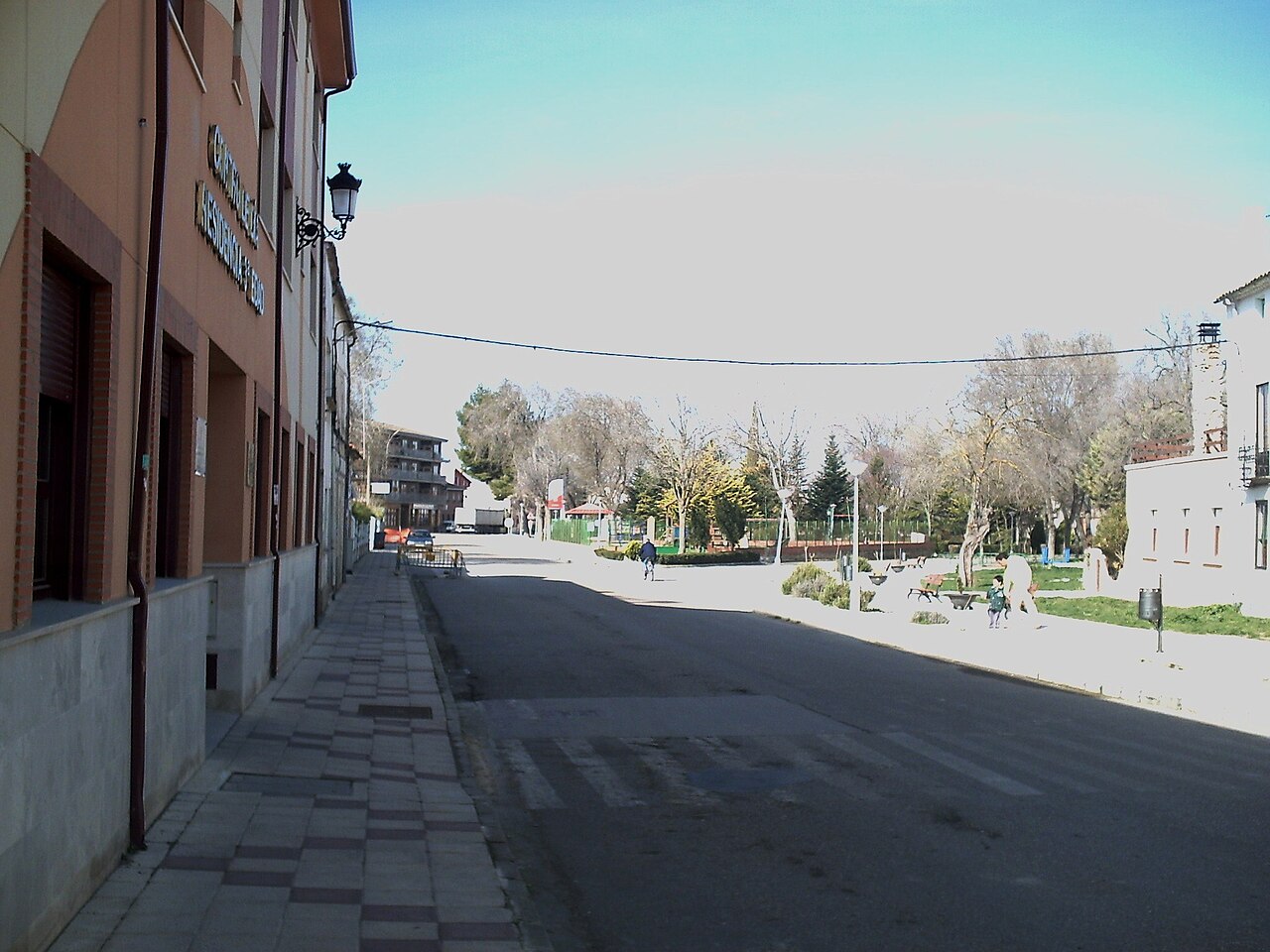
With just over three hundred inhabitants, daily life remains closely tied to the land. You notice it in small groups chatting in the square, in the sound of bells marking the hours, and in the quiet that settles in as soon as you move a couple of streets away.
The church and the houses that tell the story
In villages like this, there is usually one building that anchors everything, and in Antigüedad that role belongs to the church of San Juan Bautista.
Its structure combines Romanesque elements with later additions, something quite common in this part of Spain. Rather than focusing on dates or architectural labels, it is more revealing to think about what the building has meant in practice. Baptisms, funerals, important gatherings, much of village life passed through or around this space for centuries.
Walking through the centre brings up details that speak of an earlier rural way of life. Houses built from stone and adobe, wide gateways designed for carts, animal yards attached to homes, and barns that still preserve their original structure. This is not a carefully preserved monument or an open-air museum. It is a place that has adapted over time without fully erasing what came before.
The small squares add another layer. In summer, they tend to be livelier, especially when people who live elsewhere during the year return. The rhythm shifts slightly, but without losing its underlying pace.
Wine cellars beneath the hills
Look closely at the slopes around the village and you will spot stone vents emerging from the ground. Beneath them lie the traditional bodegas, underground wine cellars typical of the Cerrato.
Across this region, it has long been common to dig galleries into the earth to keep wine at a stable temperature. For many years, each family had its own. Some are still used on specific occasions, particularly during celebrations or gatherings. Others remain closed, but together they continue to shape the landscape.
While walking nearby, it is not unusual to come across a low door set into a hillside. That is often the entrance to one of these cellars. From the outside, they can appear almost incidental, yet they form part of a system that once played a central role in everyday life.
Walking the Cerrato without a plan
One of the most rewarding things about Antigüedad is simply heading out on foot without much preparation.
The agricultural tracks surrounding the village cross open plateaus and small valleys. From slightly higher points, the undulating terrain of the Cerrato becomes clear, along with other villages scattered across the horizon on bright days.
You will not find signposts every few metres. The usual approach is to follow a dirt path, walk between cereal fields, and let the landscape shift gradually around you. With a bit of luck, you might spot kestrels, kites, or a flock moving slowly across the fields.
There is one practical note that becomes obvious quite quickly. Shade is scarce in this area, so a hat and water are almost essential when the sun is strong. The openness that defines the landscape also means exposure.
Food rooted in the land
After walking through the Cerrato, something substantial tends to feel right, and the local cuisine matches that instinct.
Dishes from the oven, pulses, products from traditional pig slaughter, and sheep’s cheese are common across this part of Palencia. Lechazo asado, roast lamb, is probably the best-known dish, typically accompanied by wine from the area or nearby regions.
This is not light or modern cooking. It is food shaped by long working days in the countryside, and that background is still evident on the table.
Festivities and everyday traditions
The main festivities usually take place in summer, when many people who live elsewhere during the rest of the year return. During those days, the atmosphere shifts. There is more noise in the square, activities organised by residents, and processions linked to local tradition.
Beyond specific dates, what stands out is how customs connected to the agricultural calendar and community life continue to exist. They are not presented as a show for visitors, but simply as part of how things are done.
Antigüedad is not a destination built around major monuments or a packed schedule of attractions. It is the kind of place where sitting for a while in the square, looking around, gradually reveals how life has worked here across generations. And sometimes, that is more than enough.