Full Article
about Astudillo
Medieval town declared a Historic Site; it retains an interesting street plan with remnants of a wall and a convent of great artistic value; known for its underground wine cellars.
Hide article Read full article
A slow morning in a Castilian village
Autumn mornings in Astudillo begin quietly. The silence slips through the open windows of the church of San Pedro, carrying the faint scent of wax and old wood. As the sun rises, the sandstone walls take on a muted brown tone, and the light filtering through the stained glass feels warm rather than bright. The main square stays almost empty at that hour, and the whole village seems to move at a slower pace, as if the day has not quite made up its mind yet.
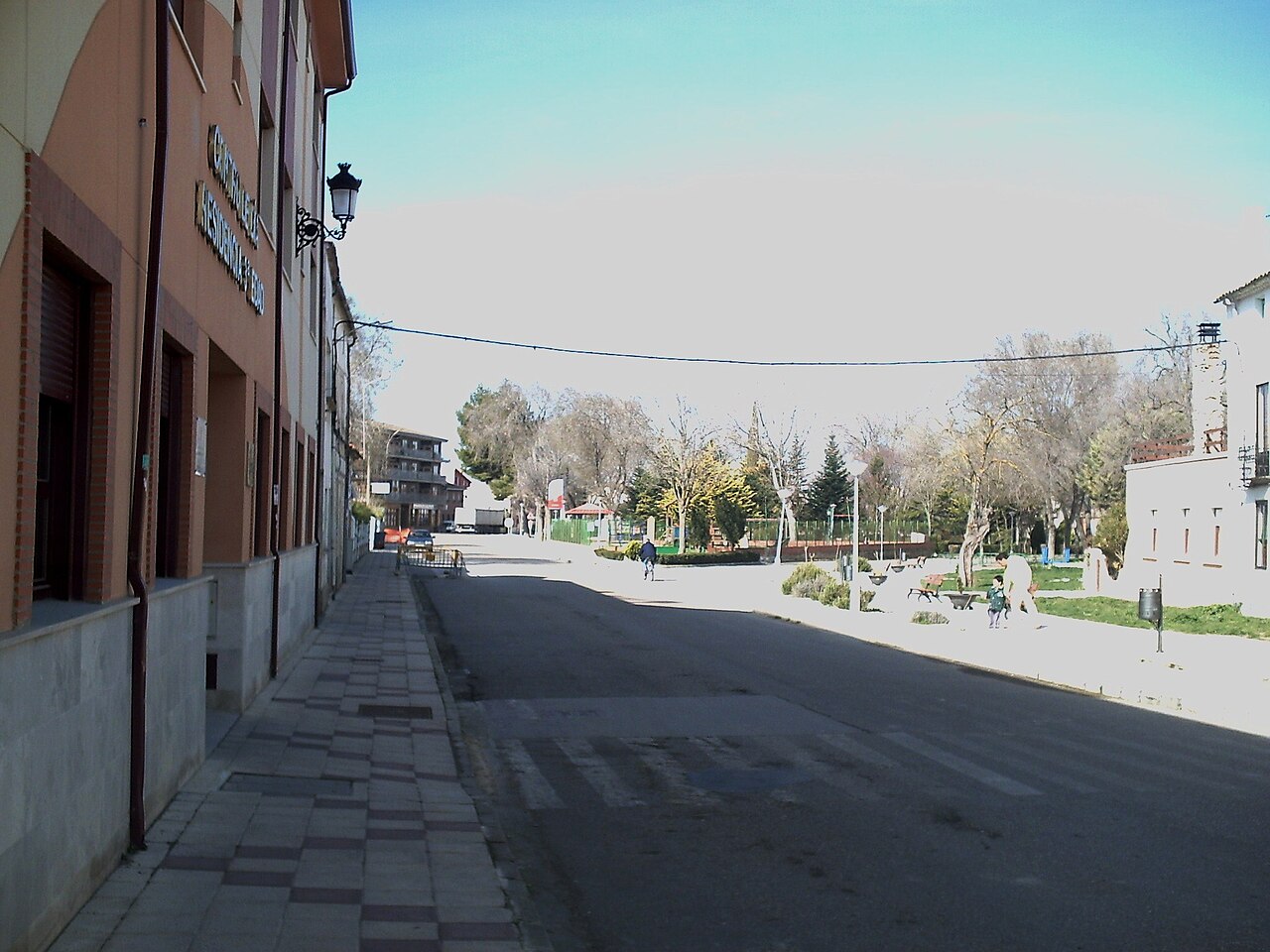
Astudillo has around a thousand residents and a compact historic centre that can be explored almost without noticing the distance. The streets are short, lined with stone and brick houses, and arcades where worn coats of arms still remain. The story of Pedro I, known either as “the Cruel” or “the Just”, surfaces more than once when people speak about the village. His connection to María de Padilla and the convent of Santa Clara places Astudillo firmly within the events of the 14th century, which still shape how the place is understood today.
Churches in warm stone
The church of Santa Eugenia rises above the rooftops with a mix of architectural styles typical of very old buildings. Gothic elements sit alongside later additions, and a Romanesque doorway hints at earlier phases of construction. It is not always open. In villages of this size, it is common to find churches closed, with access depending on whether someone has the key or whether it happens to be one of the times when doors are opened.
A similar situation applies to the church of Santa Marina. It forms part of the village’s historic ensemble and appears quickly when walking through the centre. The surrounding streets are calm, where the most frequent sounds tend to be a door opening or a car passing slowly.
These churches are not presented with elaborate staging or heavy visitor infrastructure. They sit within daily life, part of the same rhythm as the houses and streets around them.
Santa Clara and echoes of the past
The convent of Santa Clara is one of the most frequently mentioned places in Astudillo. Founded in the 14th century, it remained closely linked to María de Padilla for a long time. Its cloister still carries the restrained atmosphere typical of Castilian monastic buildings: pale stone, simple arches, and a quiet that feels dense even when people are present.
Nearby, fragments of the medieval wall appear integrated into the fabric of the village. These are not complete or monumental structures. Instead, they are scattered sections, stretches of wall that emerge between houses or inside gateways. They offer a glimpse of the time when Astudillo had a defensive role, without forming a continuous enclosure.
The sense of history here is not concentrated in a single landmark. It is dispersed, appearing in pieces that require a bit of attention to notice.
Noble houses and unhurried streets
The Palace of the Marqueses de Astudillo, built in the 16th century, appears almost unexpectedly when turning a corner. Its façade, marked by coats of arms, is sober and direct, with straight lines and little decorative excess. It fits easily into the character of the village, where noble architecture exists without drawing too much attention to itself.
Walking through the centre is less about moving from one landmark to another and more about observing details. An arch connecting two houses, a half-erased coat of arms above a doorway, narrow windows protected by dark iron grilles. These elements are best noticed without rushing, either in mid-morning or towards evening, when the light falls at an angle and brings out the textures of the stone.
There is no sense of spectacle imposed on the streets. The appeal lies in how everything remains in place, part of an everyday setting rather than something arranged for display.
The landscape of El Cerrato
Beyond the edge of the village, the surroundings change quickly. Astudillo sits within El Cerrato, a region in the province of Palencia characterised by gentle hills, scattered vineyards and cereal fields that undulate more than they first appear to from a distance.
The colours shift with the seasons. In summer, the land turns a pale yellow, while in spring green spreads across nearly every slope. The agricultural tracks around the village are wide and easy to follow, with no steep gradients. However, during the warmer months it is sensible to carry water and protect against the sun. Long stretches offer little shade, and the wind, which often blows across this landscape, can make the temperature feel milder than it actually is.
Early in the afternoon, the most common sounds are the soft movement of grain in the fields and the occasional bird crossing the open sky. The horizon feels wide and uninterrupted, something that stands out for visitors used to more mountainous terrain.
A small museum with a longer story
The local museum brings together archaeological pieces found across the surrounding area. It provides context for the history of the region long before the Middle Ages. Some of the objects come from nearby Roman-era sites, while others were discovered in different parts of the province.
It is not a large visit, but it helps place Astudillo within a much longer timeline. These plains have been inhabited for far longer than the visible buildings might suggest.
Food rooted in the land
The cooking found in the village’s bars and dining rooms stays close to local produce. Roast lechazo, a traditional dish made from young lamb, is one of the best-known options. Alongside it are morcillas, slow-cooked legume stews, and cheeses made from sheep’s milk.
These are straightforward recipes, prepared in ovens or casseroles, with more emphasis on nourishment than presentation. In winter, they feel especially fitting, when the cold of El Cerrato settles into the streets and a hot meal becomes part of the day’s rhythm after walking.
Wine also has a quiet presence in the area. Small vineyards and family-run wineries still exist in the surroundings, working with local production on a modest scale.
Astudillo does not rely on grand statements or dramatic landmarks. Its character comes through in the pace of its streets, the texture of its stone, and the openness of the land that surrounds it.