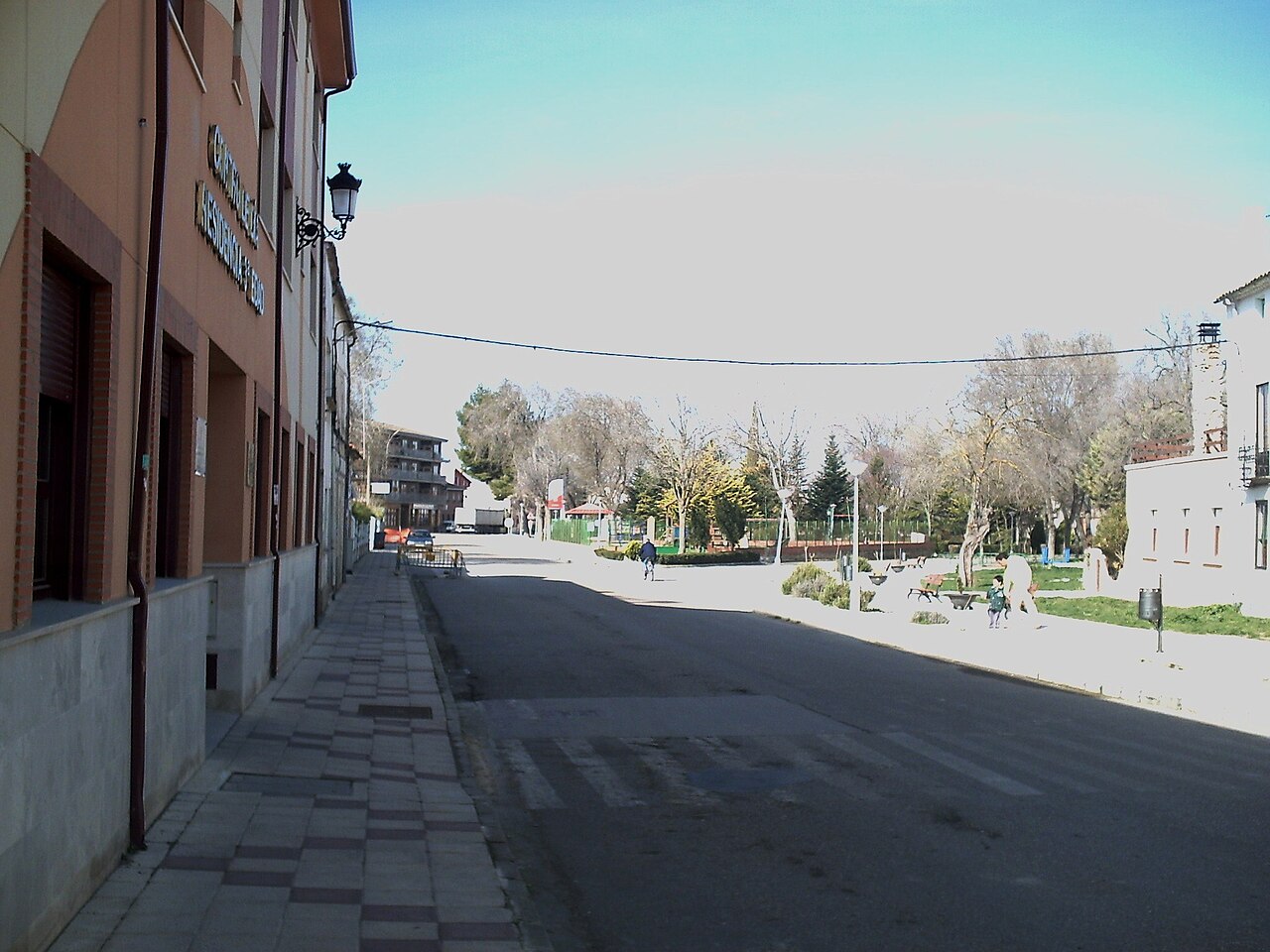
Vista aérea de Castrillo de Don Juan
Instituto Geográfico Nacional · CC-BY 4.0 scne.es
Castilla y León · Cradle of Kingdoms

Castrillo de Don Juan

The church bell tolls twice at noon and only the larks answer back. From the village edge, wheat stubble stretches west until it collapses into a h...

177 inhabitants · INE 2025
830m Altitude

Why Visit

Mountain Church of the Asunción Hiking through the Cerrato

Best Time to Visit

summer

San Antonio (June) agosto

Things to See & Do
in Castrillo de Don Juan

Heritage

  • Church of the Asunción
  • Hermitage of the Salvador

Activities

  • Hiking through the Cerrato
  • Fountain route
  • Cultural visit

Festivals
& & Traditions

Fecha agosto

San Antonio (junio), Nuestra Señora de la Asunción (agosto)

Las fiestas locales son el momento perfecto para vivir la autenticidad de Castrillo de Don Juan.

Full Article
about Castrillo de Don Juan

Castrillo de Don Juan, a Cerrato village on the Burgos border, sits on a slope overlooking the Esgueva valley and keeps its traditional architecture.

Ocultar artículo Leer artículo completo

The church bell tolls twice at noon and only the larks answer back. From the village edge, wheat stubble stretches west until it collapses into a hollow of holm oaks, then rises again in a pale wave against an empty horizon. This is Castrillo de Don Juan, population 200, altitude 830 m, parked on the roof of Palencia’s forgotten province of El Cerrato. No coast, no famous peaks, just a high, rolling plateau where the wind has time to think.

Most maps ignore the place; the A-62 motorway glides past twenty minutes south, carrying freight between Burgos and Valladolid. Turn off at Herrera de Pisuerga, follow the CL-615 for 14 km of empty tarmac, and the first stone houses appear like a half-finished sentence. There is no dramatic gateway, no mirador car park, only a hand-painted sign reading “Castrillo de Don Juan, bienvenido” that flaps in winter gales and fades under summer sun.

Stone, Adobe and the Smell of Threshing Floors

The village obeys the Castilian rulebook: houses shoulder-to-shoulder, streets running uphill to the parish tower. Masonry colours swing from honey to rust depending on which quarry supplied the stone that century. Adobe upper floors bulge gently; their walls, once mixed with straw and donkey urine, have survived 300 years of freeze and thaw. Timber doors still carry the chips of mule carts; knock and you may hear the echo of a grain store rather than a television.

Take the alley that narrows between Calle Real and Calle Iglesia. Halfway along, a coat of arms—two lions and a maltese cross—has been crudely chiselled into a lintel. The family name beneath, “De los Ríos”, is already weathering away. These modest blazons hint at a past when wool money paid for small dignities; today they serve as perches for rock sparrows. Continue to the summit and the 18th-century Iglesia de San Juan Bautista blocks the sky. The tower was shortened after a lightning strike in 1897; the replacement bricks are a shade lighter, a useful dating device for architectural spotters. Inside, the nave smells of candle wax and damp sandstone. A 16th-century virgin with faded gilding stands beneath a neon cross—rural pragmatism at work. If the door is locked (common on weekdays outside fiestas), ask at the house opposite; the key-keeper will appear in slippers and expect a euro in the wall box.

Walk the perimeter in twenty minutes. South of the plaza the land falls away into a dry valley where threshing circles, era in local slang, lie like UFO landing pads. In July families still bring grain to these stone floors, though the draft horses have been replaced by a single green John Deere. Stand still and the only soundtrack is the rasp of cicadas and, if school term has ended, the faint whistle of the baker’s van doing its rounds.

Walking the Sky’s Edge

El Cerrato looks flat on a road map; on foot it is a giant rumpled sheet. Every field track climbs just enough to remind you that the meseta is really a staircase to the Cantabrian cordillera 80 km north. From the village two waymarked loops depart, though “waymarked” here means the occasional concrete post with a faded stripe. The shorter circuit (6 km, 150 m ascent) heads east to the abandoned Ermita de Santa Ana, perched on a limestone bluff. Swallows nest where the altar once stood; the view opens south across a chessboard of wheat and barley that changes from emerald in April to brass in June. Take water—there is no bar, no fountain, and the white soil reflects heat like a mirror.

The longer haul (14 km) follows the old drove road toward Husillos, dropping into the Pisuerga tributary valley and climbing back through quejigo (Portuguese oak) and juniper. The gradient never exceeds 8 %, but the trail is stony; trainers are fine in dry weather, boots wise after rain. Expect to meet more red kites than people: the species recolonised these cliffs in the 1990s and now patrol every ridge. Binoculars help, yet the birds are happy to display their forked tails at chimney height.

Winter transforms the landscape. January wind can knife through three layers, and the sun sets at 17:30 behind the monte where wild boar root for acorns. Roads ice over quickly; if you arrive after a snowfall bring chains or be prepared to abandon the car at the main junction and walk the last kilometre. The reward is silence so complete you can hear wheat stubble crack as it contracts in the frost.

Roast Lamb and the 12:30 Rule

Food is village food: what the land produces plus what fits in the wood-fired clay oven. Lechazo asado—milk-fed lamb slow-cooked at low heat—dominates weekend menus. A half-kilo portion feeds two, costs around €22, and arrives with only a wedge of lemon and a plate of local fries. The meat is pale, almost translucent, the skin blistered into parchment. Order by 12:30 or the single oven load is sold out; Castrillo eats early because farmers start at dawn.

Weekdays you eat where the lorry drivers eat: Bar El Cerrato on the plaza. Daily specials are chalked on a board and seldom exceed €10. Try sopa de ajo—garlic soup thickened with bread and paprika—then huevos rotos with shards of chorizo from the village slaughter that morning. Vegetarians get ensalada de pimientos del piquillo and a lecture on why lentils need ham bone. House red comes from cooperative vineyards near Aranda; it is young, sharp, and costs €1.80 a glass. Cards are accepted, but the terminal sometimes loses signal when the north wind blows.

The bakery window opens at 07:00. Candeal bread, a dense wheaten loaf that keeps a week, is baked twice weekly in a brick oven older than the Second Republic. Buy early; by 11:00 the pensioners have snapped up the best crusts and retired to the bar to dunk slices in coffee thickened with condensed milk.

Getting There, Staying Over, Knowing When to Leave

Public transport is theoretical. One bus leaves Palencia at 14:15 on Tuesdays and Fridays, returning at 06:00 next day. Miss it and a taxi costs €55. Driving remains the sensible option: hire a car at Valladolid airport (75 min), fill up before the minor roads—service stations thin out north of the A-62. Park on the plaza; traffic wardens exist only in the imagination.

Accommodation is limited to Casa Rural La Casona del Cerrato, three stone cottages sharing a pool that is open June–September. Doubles from €65 including breakfast (toast, local honey, thick chocolate served with a spoon). Weekends book up with families from Burgos; mid-week you may have the courtyard to yourself and the owner’s border collie. There is no hotel, no campsite, and wild camping is discouraged—farmers worry about fires.

Come for 24 hours and you will have walked the tracks, eaten lamb, identified three birds of prey. Stay 48 and the village starts to measure you: the baker greets you by second name, the mayor (who doubles as the butcher) asks whether you really need that extra slice of chorizo. Stay longer and someone will try to sell you a ruin with “potential”. Know when to fold: the same empty horizon that first felt liberating can turn oppressive when the August thermometer sticks at 38 °C and the only bar closes for the owner’s nephew’s communion.

Drive out at dawn, rear-view mirror full of wheat gold, and the plateau looks like an ocean paused mid-wave. Castrillo de Don Juan returns to its soundtrack of bells, wind and larks. The village will survive without you; it always has.

Key Facts

Region
Castilla y León
District
El Cerrato
INE Code
34050
Coast
No
Mountain
Yes
Season
summer

Livability & Services

Key data for living or remote work

2024
Connectivity5G available
Housing~5€/m² rent · Affordable
CoastBeach nearby
January Climate4.4°C avg
Sources: INE, CNMC, Ministry of Health, AEMET

Official Data

Institutional records and open data (when available).

  • PALACIO DE LOS GUZMAN Y SANTOYO
    bic Monumento ~6.5 km
  • IGLESIA PARROQUIAL DE SAN JUAN BAUTISTA
    bic Monumento ~6.6 km
  • CASTILLO DEL CONDE DE ORGAZ
    bic Castillos ~0.9 km
  • IGLESIA ENCASTILLADA DE SAN ESTEBAN PROTOMARTIR
    bic Castillos ~5.3 km

Planning Your Visit?

Discover more villages in the El Cerrato.

View full region →

More villages in El Cerrato

Traveler Reviews