Full Article
about Castrillo de Onielo
A Cerrato town with remnants of walls and a medieval feel; noted for its church and limestone architecture.
Hide article Read full article
A village you cross on foot
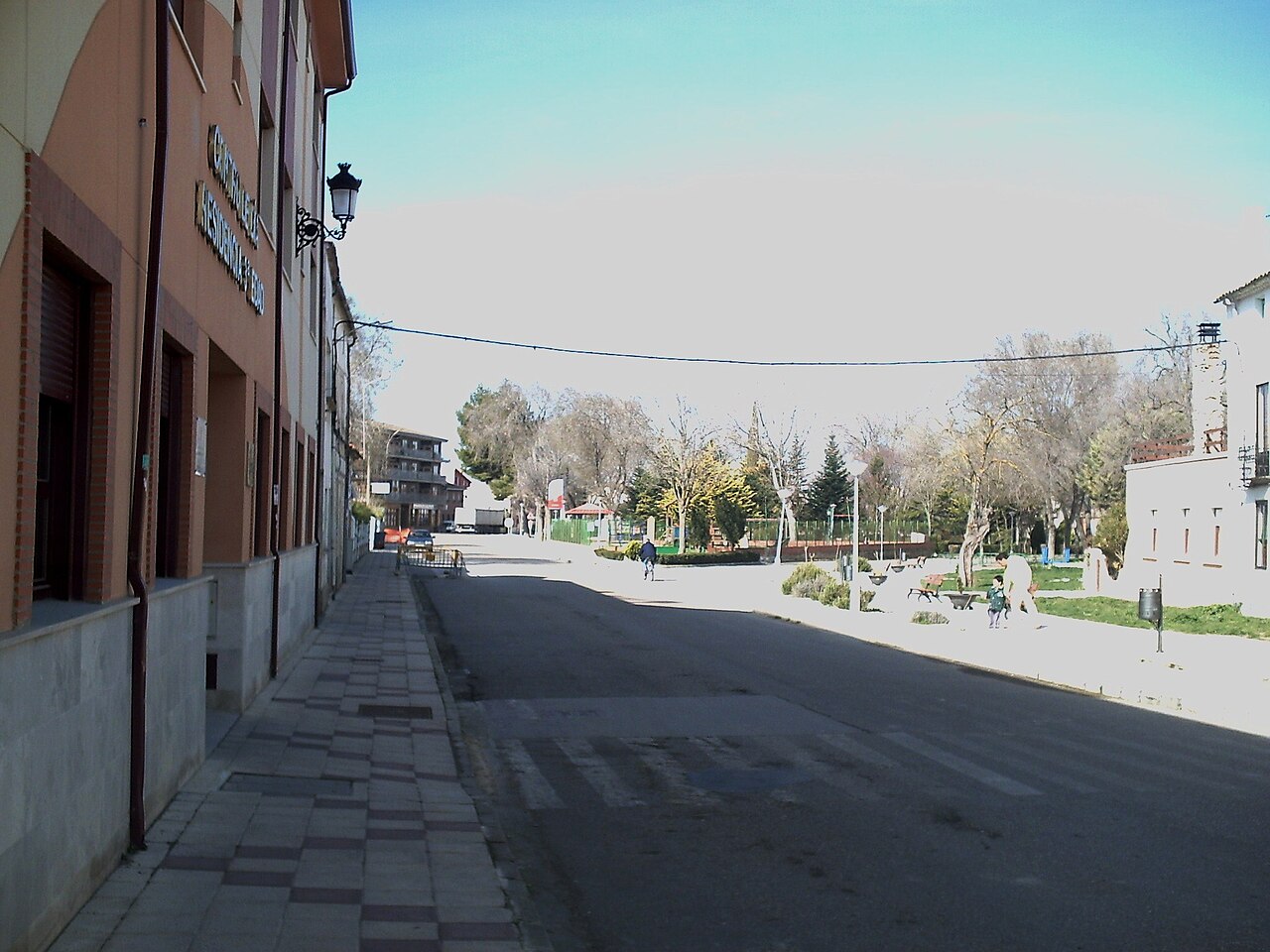
Castrillo de Onielo is quick to see. Park at the entrance and continue on foot, as there are only a few streets and moving the car makes little sense. There is usually space near the entrance or on a nearby open patch of ground.
It helps to arrive with the right expectations. This is a very small village in the Cerrato region of Castilla Leon, and it does not have tourist services. There are no facilities set up for visitors, and daily life carries on without much attention to tourism.
The centre is short and straightforward. Adobe houses, earth-coloured walls and narrow streets define the layout. The streets rise and fall slightly, giving a gentle sense of movement through the village. At its heart stands the church of Nuestra Señora de la Paz. It sets the rhythm of the place more by presence than by grandeur. This is not a monumental building, and it does little more than serve its purpose.
The landscape takes over
The main attraction lies beyond the buildings. The Cerrato opens out in every direction, with cereal fields stretching across soft hills and the occasional patch of holm oak woodland scattered across the terrain. From the edges of the village, the view runs for kilometres with barely any interruption.
This is a landscape defined by space and exposure. There are no dramatic landmarks, just a continuous sweep of cultivated land and low rises. The horizon sits wide and clear, often under an open sky.
Wildlife appears quietly here. Steppe birds can sometimes be seen in the surrounding fields, particularly during the breeding season. Their presence depends on the time of year and a bit of patience, but the setting suits them well.
Walking out into the Cerrato
Several agricultural tracks begin directly from the village. These are wide dirt paths used by tractors rather than formal walking routes. They allow a simple kind of exploration: walk out, follow the land, and turn back whenever it feels right.
There are no marked trails or hiking infrastructure. The experience is informal and self-directed. You move between fields on paths shaped by farming activity rather than tourism.
The terrain is easy to handle. Most of it is flat or gently sloping, so there is little effort involved. After half an hour, the village is already far behind, and the dominant sounds are wind and, depending on the season, agricultural machinery at work.
This simplicity defines the place. There are no signposts pointing out highlights, no structured routes to complete. The appeal lies in stepping into a working rural landscape and observing it as it is.
Light, seasons and atmosphere
Castrillo de Onielo changes character with the seasons, especially in terms of colour. In spring, the fields turn green, covering the hills in fresh growth. By summer, after the harvest, the land shifts to a straw-like tone. The contrast is clear and immediate.
The sky often appears clean and open, which sharpens the line of the horizon. This clarity suits those interested in photographing wide landscapes. There are no obstacles to block the view, and the sense of scale becomes part of the scene.
Shade is scarce, particularly in the warmer months. Midday heat in summer can be intense, and there are few places to shelter from the sun. Earlier in the day or later in the afternoon tends to be more comfortable for walking.
Limited services and a quiet rhythm
Services in the village are minimal. It is common to find no shops or bars open on a regular basis. Anyone needing food or supplies will have to travel to larger nearby towns or to the city of Palencia.
This lack of infrastructure shapes the overall atmosphere. There is little traffic, very few people, and long stretches of quiet. Outside specific moments in the year, the pace remains slow and uneventful.
The absence of activity is part of the experience rather than a drawback. It reinforces the sense that this is a place tied closely to its surroundings rather than to visitors.
Local traditions and summer gatherings
Like many small villages, Castrillo de Onielo sees its busiest period during the patron saint festivities. These usually take place in summer, when people who live elsewhere return.
The celebrations bring together the local community and those with ties to the village. A procession forms part of the programme, along with shared meals and activities organised by the residents themselves.
Outside these dates, the village returns to its usual calm. Movement drops, and the quiet becomes more noticeable again.
When to come and what to expect
Any time of year works if the aim is to see the Cerrato landscape. Each season offers a slightly different view, especially in terms of colour and light.
Summer requires some care due to the heat and lack of shade. Earlier or later hours of the day are more suitable for walking. At other times of year, conditions tend to be milder.
Castrillo de Onielo works best as a brief stop rather than a main destination. It makes sense if you are already travelling through the Cerrato and want to pause, walk for a while, and continue your route. A longer journey solely to visit the village may feel disproportionate to what it offers.
This is a place that does very little to draw attention to itself. Its interest lies in its scale, its quiet, and its relationship with the surrounding land.