Full Article
about Cevico de la Torre
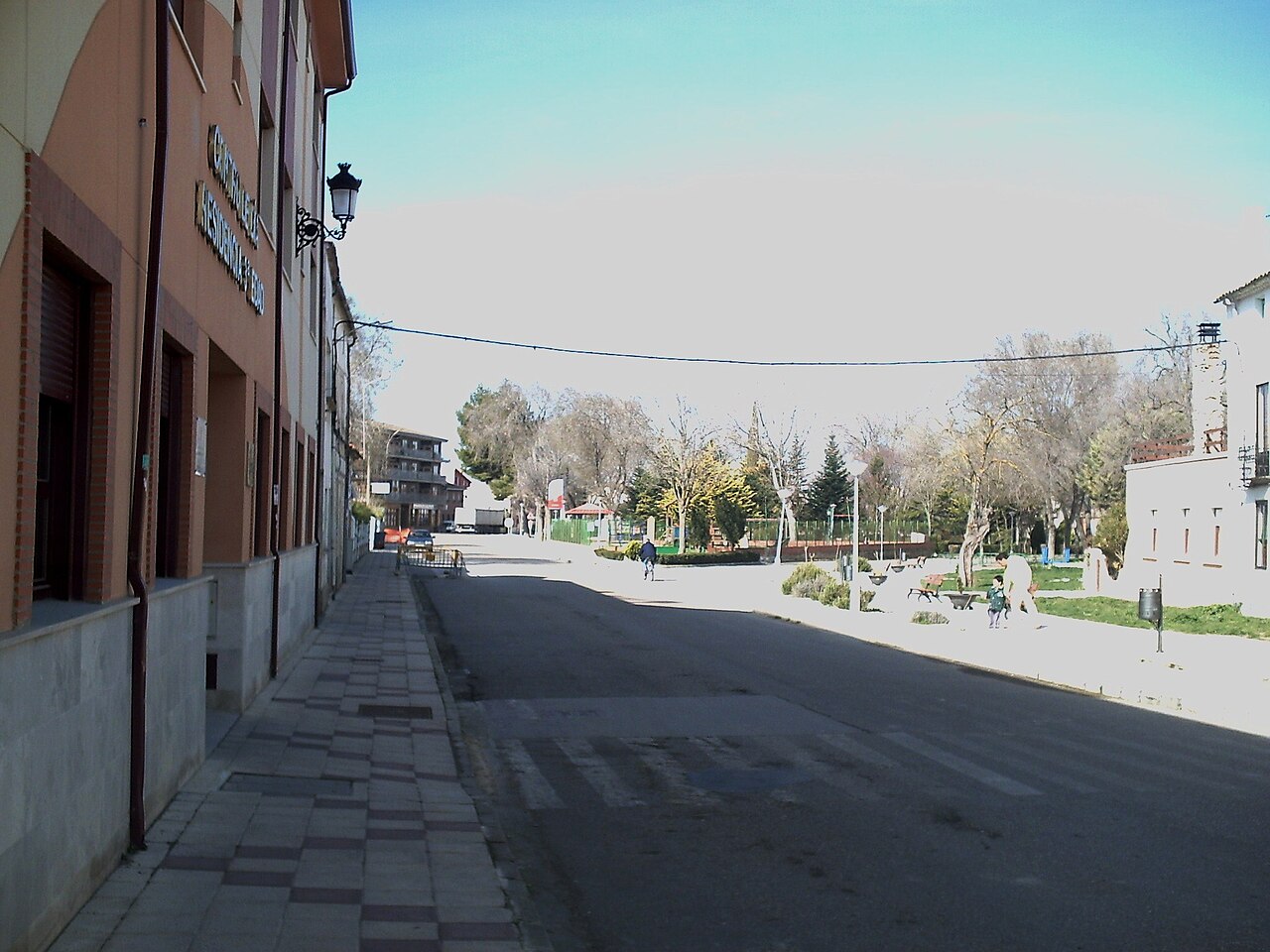
Stepped village on a Cerrato slope; noted for its traditional architecture and the views from the upper part.
Hide article Read full article
A Village That Keeps Its Rhythm
Some places run like a quiet clock. Nothing dramatic happens, yet everything moves to a steady beat. Cevico de la Torre is very much like that. It sits in the heart of the Cerrato palentino, a rural area in the province of Palencia, surrounded by cereal fields and patches of vineyard. Life here continues much as it has for generations.
Fewer than five hundred people live in the village, many of them connected to farming in one way or another. Anyone arriving as a visitor finds a place that makes no attempt to reinvent itself. There are no grand monuments and no historic quarter that demands constant photographs. Instead, there are narrow streets, houses built from adobe and tapial, and numerous wine cellars dug into the surrounding slopes.
It is architecture shaped by climate. Thick walls make sense when summer heat presses down and winter brings sharp winds. Everything feels practical, built to endure rather than to impress.
Streets to Wander, Not to Tick Off
Cevico de la Torre is not a village to “do” in the conventional sense. It is somewhere to walk. A slow circuit reveals large wooden gates, quiet corners and lanes that slope gently towards the wine cellars. Gradually, the layout begins to make sense.
The houses follow traditional patterns: solid walls, interior courtyards and façades that combine older adobe with more recent brickwork. There is no rigid grid. Streets bend and adjust to the terrain, as often happens in settlements that have grown gradually, without grand urban plans.
The atmosphere is calm and unforced. There is little traffic and few distractions. The interest lies in observing how daily life fits into the built environment, how storage spaces, homes and agricultural buildings sit side by side.
Iglesia de San Miguel
The most recognisable building from a distance is the Iglesia de San Miguel. It stands in the centre of the village with quiet authority. The church is not monumental in scale, yet it has a solid presence: sturdy stone, balanced proportions and the air of a building that has witnessed many generations.
Inside, there are usually Baroque altarpieces and some simple religious carvings. The decoration is not excessive. If the church happens to be open, stepping inside offers a clearer sense of how it connects to local history and tradition. It reflects the same straightforward character found in the rest of the village.
San Miguel also gives its name to the patronal festivities held towards the end of September. During those days, the village changes rhythm slightly. There is a procession, music and gatherings among neighbours. Many people who now live elsewhere return for the celebrations, so the population briefly swells and familiar faces reappear.
Wine Cellars in the Hills
One of the most distinctive features around Cevico de la Torre is its network of traditional wine cellars. Many are excavated into small earthen hills on the outskirts. From the outside, what stands out are the doors and the ventilation chimneys that rise from the ground like short, rounded vents.
For centuries these underground spaces were used to produce and store wine at a stable temperature. Some are still in use today. Others remain as part of the Cerrato landscape, a reminder of how important vine cultivation has been in this comarca, or region.
Wine is still made locally for private consumption in houses and in some of the cellars. It is not something widely promoted, yet it forms part of daily life and family tradition. The presence of vineyards among the cereal fields underlines that mixed agricultural identity.
Walking near the cellars gives a clearer sense of how closely the village and the land are linked. These are not decorative features. They were, and in some cases remain, working spaces.
Open Fields and Big Skies
Beyond the last houses, Cevico de la Torre opens out into farmland. The landscape of the Cerrato is defined by gentle hills that shift in appearance with the seasons. In summer, the dominant colour is the yellow of harvested cereal. In autumn, darker tones appear as freshly turned earth replaces the dry stubble.
Agricultural tracks connect the village with nearby settlements. They are straightforward routes, suitable for walking or cycling without much difficulty. The terrain is open, so views stretch far across fields and low rises.
For those interested in birdlife, the area can be rewarding, especially early in the morning. In these wide expanses it is not unusual to spot great bustards, red kites or small field birds moving between plots. The sense of space is part of the experience.
The weather, however, should not be underestimated. Even on a calm-looking day, wind can arrive unexpectedly in the Cerrato. A jacket is rarely a bad idea.
Food and Festive Days
The cooking typical of this part of inland Castilla follows familiar Castilian lines. There are hearty stews, roast lamb when there is something to celebrate, and plenty of sheep’s produce, particularly cured cheeses. It is straightforward food designed to satisfy.
Meals are closely tied to the agricultural calendar and to family gatherings. During the patron saint festivities of San Miguel at the end of September, food plays its role alongside processions and music. These are village celebrations in the most direct sense: neighbours meeting, relatives returning and streets briefly busier than usual.
The scale remains modest. Cevico de la Torre does not transform into a large event venue. Instead, the festivities reinforce the sense of continuity that defines the place throughout the year.
A Pause in the Cerrato
Cevico de la Torre is not a destination for a packed itinerary. There is no long checklist of sights. It works better as a pause, a way to understand how this part of the Cerrato functions.
A short walk through its streets, a glance towards the hills dotted with wine cellars, a look across the cereal fields, these are simple acts. If a conversation with a local happens naturally, it adds another layer. If not, the landscape and the buildings speak quietly for themselves.
In a region shaped by agriculture and weather, Cevico de la Torre continues at its own pace. Sometimes that steady rhythm is reason enough to stop, look around and then carry on.